
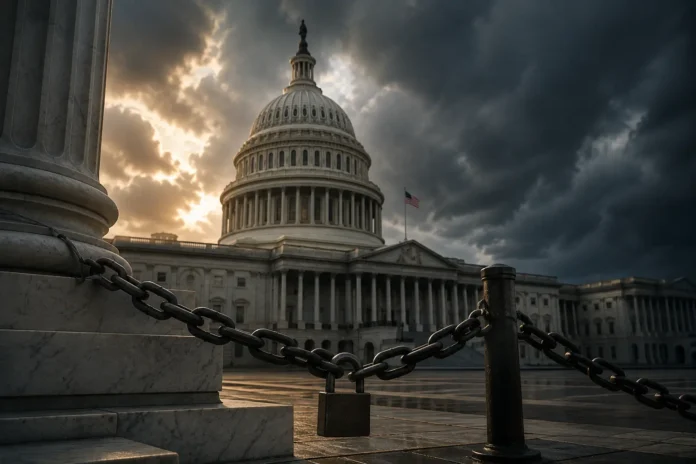
Understanding Government Shutdowns, Political Gridlock, and Their Real-World Impact
Every year, the United States Congress faces one of its most important responsibilities: funding the federal government. While debates over taxes, healthcare, immigration, and national security often dominate headlines, none of those programs can function without money.
That is where the federal budget comes in.
In an ideal world, Congress would pass all necessary spending bills before the start of the new fiscal year, ensuring that government agencies continue operating without interruption. In reality, however, political disagreements frequently delay the process.
When Congress fails to pass a budget—or at least a temporary funding measure—the consequences can be significant. Federal agencies face uncertainty, government employees may be furloughed, public services can be disrupted, and financial markets often become nervous.
For millions of Americans, the question is simple: What actually happens when Congress cannot agree on a budget?
The answer reveals much about how the U.S. government works, why political gridlock occurs, and how budget battles can affect everyday life.
Why Congress Must Pass a Budget
The federal government cannot legally spend money without authorization from Congress.
Under the U.S. Constitution, Congress holds the “power of the purse.” This means lawmakers determine how taxpayer dollars are allocated across government programs and agencies.
Each year, Congress is expected to approve spending legislation covering areas such as:
- National defense
- Social programs
- Transportation
- Education
- Healthcare
- Scientific research
- Homeland security
- Federal employee salaries
The federal fiscal year begins on October 1 and ends on September 30 of the following year.
Before that deadline arrives, Congress is supposed to pass appropriations bills that provide funding for federal operations.
When lawmakers fail to do so, problems begin to emerge quickly.
What Causes Budget Deadlocks?
Congressional budget disputes are rarely about simple accounting.
More often, they involve larger political disagreements over priorities and policy goals.
Democrats and Republicans may disagree about:
- Government spending levels
- Tax policies
- Border security funding
- Healthcare programs
- Military spending
- Social welfare initiatives
- Environmental programs
In highly polarized political environments, reaching compromise becomes increasingly difficult.
When neither side is willing to make concessions, budget negotiations can stall.
As deadlines approach, lawmakers often engage in intense negotiations aimed at avoiding a government funding lapse.
Sometimes those talks succeed.
Sometimes they do not.
The Role of Appropriations Bills
Many Americans assume Congress passes one giant federal budget each year.
The reality is more complicated.
Congress generally funds the government through multiple appropriations bills that cover different areas of federal activity.
These bills must be approved by both the House of Representatives and the Senate before being signed into law by the President.
If one or more of these bills fail to pass before the funding deadline, affected agencies may face funding interruptions.
Because the process involves multiple moving parts, delays can occur even when lawmakers broadly agree on spending levels.
What Is a Continuing Resolution?
When Congress needs more time to negotiate a budget, lawmakers often use a temporary measure known as a Continuing Resolution, or CR.
A Continuing Resolution allows the government to continue operating at existing funding levels for a specified period.
Think of it as a temporary extension.
Rather than shutting down government operations immediately, a CR buys additional time for negotiations.
Congress has relied heavily on Continuing Resolutions in recent decades because full budget agreements have become increasingly difficult to achieve.
While CRs prevent immediate disruption, they are not ideal.
Agencies often struggle to plan long-term projects when operating under temporary funding arrangements.
What Is a Government Shutdown?
If Congress fails to pass either a budget or a Continuing Resolution before funding expires, portions of the federal government shut down.
This is known as a government shutdown.
A shutdown does not mean the entire government stops functioning.
Instead, federal agencies classify employees and services into two categories:
Essential Functions
These activities continue operating during a shutdown.
Examples include:
- Military operations
- Air traffic control
- Border security
- Federal law enforcement
- Emergency medical services
- National security functions
Employees performing essential duties generally continue working, although they may not receive pay until funding is restored.
Non-Essential Functions
Many administrative functions are temporarily suspended.
Affected employees may be furloughed, meaning they are placed on unpaid leave until government funding resumes.
This can affect thousands—or even hundreds of thousands—of federal workers.
How Federal Employees Are Affected
Government shutdowns often have an immediate impact on federal employees.
Workers may face:
- Delayed paychecks
- Temporary furloughs
- Financial uncertainty
- Workplace disruptions
Although Congress has historically approved back pay for affected employees after shutdowns end, the interruption can still create significant hardship.
Many federal workers live paycheck to paycheck, making even short-term delays financially stressful.
Contract workers often face even greater challenges because they may not automatically receive compensation for missed work.
Impact on Government Services
The effects of a shutdown vary depending on its length and severity.
Some services continue normally, while others experience delays or suspensions.
Potential impacts include:
National Parks and Museums
Many federally managed parks, monuments, and museums may close or reduce operations.
Tourism-dependent communities often feel the economic effects quickly.
Passport Processing
Passport applications and related services may experience delays, particularly if staffing levels are reduced.
Small Business Loans
Programs that support entrepreneurs and small businesses may face interruptions.
Federal Permits and Approvals
Applications involving federal agencies can become delayed, affecting businesses, infrastructure projects, and development initiatives.
Research Programs
Scientific research supported by federal agencies may be postponed or temporarily halted.
How Shutdowns Affect the Economy
Government shutdowns can have broader economic consequences beyond federal operations.
Economists often monitor shutdowns because they can:
- Reduce consumer confidence
- Slow economic activity
- Delay government contracts
- Increase market uncertainty
- Disrupt business planning
When federal workers lose income temporarily, local economies can also suffer.
Restaurants, retailers, and service providers located near federal facilities may experience reduced spending.
The longer a shutdown lasts, the greater the economic impact becomes.
Financial Markets and Investor Confidence
Investors generally dislike uncertainty.
When Congress appears unable to reach a budget agreement, financial markets often react cautiously.
Stock prices may become more volatile.
Investors may worry about:
- Economic disruption
- Political instability
- Credit rating concerns
- Reduced consumer spending
While markets do not always experience dramatic declines during shutdowns, prolonged budget battles can contribute to broader economic uncertainty.
Confidence is a critical factor in economic growth, and political dysfunction can undermine that confidence.
Does Social Security Stop?
One of the most common questions during budget crises involves Social Security.
The good news for recipients is that Social Security benefits generally continue during government shutdowns.
This is because Social Security is funded through mandatory spending rather than annual appropriations.
Similarly, Medicare benefits typically continue.
However, some administrative functions involving benefit processing and customer service may experience delays if staffing levels are affected.
What About the Military?
Military personnel generally continue performing their duties during a shutdown.
National security functions are considered essential.
However, service members may experience delayed pay if funding lapses continue.
Historically, Congress has often taken steps to ensure military compensation continues even during budget disputes.
Nonetheless, uncertainty can create challenges for military families and defense operations.
Historical Government Shutdowns
Government shutdowns are not new.
The United States has experienced multiple shutdowns over the past several decades.
Some of the most notable occurred during disputes involving:
- Federal spending priorities
- Healthcare legislation
- Border security funding
- Deficit reduction efforts
Several shutdowns lasted only a few days.
Others extended for weeks.
The length of a shutdown often depends on how quickly political leaders can reach a compromise.
History suggests that public pressure frequently increases as shutdowns drag on.
Why Budget Negotiations Become Political Showdowns
Budget battles often serve as proxies for larger ideological conflicts.
Lawmakers may use funding deadlines to advance policy priorities or gain negotiating leverage.
Issues commonly linked to budget debates include:
- Immigration policy
- Healthcare reform
- Environmental regulations
- Tax policy
- Defense spending
Because these topics are politically sensitive, compromise can be difficult.
As a result, budget negotiations sometimes become high-stakes political confrontations watched closely by voters, businesses, and international observers.
The Public’s View of Shutdowns
Public opinion often plays a major role in budget disputes.
When government services are disrupted, voters frequently demand action from elected officials.
Polls have shown that Americans generally dislike government shutdowns regardless of which political party is involved.
Citizens often expect leaders to find practical solutions rather than engage in prolonged partisan battles.
Political leaders understand this dynamic, which is why shutdowns frequently generate intense media coverage and public scrutiny.
Can Congress Prevent Shutdowns?
Yes.
Congress has several tools available to prevent funding lapses.
These include:
- Passing full appropriations bills
- Approving Continuing Resolutions
- Negotiating bipartisan agreements
- Establishing longer-term budget frameworks
Successful negotiations typically require compromise.
Although partisan divisions can be significant, lawmakers generally face strong incentives to avoid prolonged government disruptions.
The challenge lies in balancing competing political priorities while maintaining government operations.
Why Budget Fights Matter Beyond Washington
It is easy to view congressional budget battles as distant political drama.
In reality, they affect millions of Americans.
Federal spending touches nearly every aspect of national life.
Budget delays can influence:
- Employment
- Infrastructure projects
- Public services
- National security
- Economic growth
- Scientific research
- Business investment
When Congress struggles to perform its basic funding responsibilities, the effects extend far beyond Capitol Hill.
Communities, businesses, workers, and families often feel the consequences directly.
The Future of Budget Politics
As political polarization continues, budget negotiations may become increasingly challenging.
Many analysts believe that future Congresses will face ongoing disputes involving spending priorities, debt levels, entitlement programs, and national security investments.
Technology, demographic shifts, healthcare costs, and economic transformation will place additional pressure on federal finances.
The ability of lawmakers to reach agreements will remain a key test of governmental effectiveness.
Whether through bipartisan compromise or continued confrontation, budget politics will continue shaping the direction of the United States.
Conclusion
When Congress fails to pass a budget, the consequences can ripple across the entire country. Government shutdowns, delayed services, economic uncertainty, and political tensions often follow.
Although essential services continue operating, millions of Americans can still be affected through disruptions in government programs, delayed approvals, and broader economic impacts.
Budget battles are more than procedural disputes—they are reflections of competing visions for the nation’s future. How lawmakers resolve those conflicts determines not only government funding but also public confidence in American democracy itself.
For citizens trying to understand Washington, few issues reveal the strengths and weaknesses of the political system more clearly than the annual struggle to fund the federal government.