
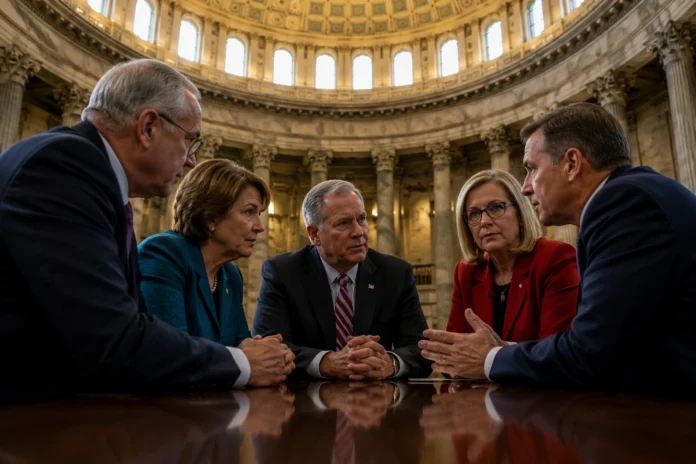
American politics has always been noisy, passionate, and deeply competitive. From the nation’s earliest days, political factions battled over the role of government, economic policy, and America’s place in the world. Yet despite fierce disagreements, leaders from opposing parties often found ways to work together when the stakes were high.
Today, however, many Americans wonder whether that spirit of cooperation still exists.
Political polarization has become one of the defining characteristics of modern American life. Cable news, social media, partisan media ecosystems, and increasingly ideological voter bases have created an environment where compromise is often viewed as weakness rather than leadership.
As Washington becomes more divided, an important question emerges: What is the future of bipartisan politics in America?
Can Democrats and Republicans rediscover common ground, or is the era of bipartisan cooperation fading into history?
The answer may shape not only future elections but also the country’s ability to solve major challenges ranging from economic growth and healthcare to immigration and national security.
Understanding Bipartisanship
Bipartisanship occurs when members of both major political parties work together to pass legislation, address national challenges, or advance shared goals.
Throughout American history, bipartisan efforts have often emerged during moments of national importance.
Major examples include:
- Civil rights legislation
- Infrastructure investments
- National security initiatives
- Disaster relief funding
- International trade agreements
- Scientific and technological programs
Bipartisanship does not require politicians to agree on everything.
Instead, it requires a willingness to negotiate, compromise, and recognize that durable solutions often require support from both sides.
For decades, this approach was considered a normal part of governing.
Today, it has become increasingly rare.
How America Became So Politically Divided
Political polarization did not happen overnight.
Several long-term trends have contributed to the growing divide.
Geographic Sorting
Americans increasingly live among people who share similar political views.
Urban areas tend to vote heavily Democratic, while many rural regions lean Republican.
This geographic separation reduces exposure to differing perspectives and reinforces existing beliefs.
Media Fragmentation
The rise of partisan media has dramatically changed how people consume information.
Many Americans now receive news from sources that largely reflect their existing views.
As a result, people often experience entirely different versions of political reality.
Social Media Amplification
Social media platforms reward emotional and controversial content.
Outrage generates engagement, clicks, and shares.
Unfortunately, this often encourages conflict rather than constructive dialogue.
Primary Election Pressures
Many elected officials face greater political risk from challengers within their own party than from opponents in general elections.
This dynamic can push politicians toward more ideologically rigid positions.
Together, these factors have created an environment where cooperation can be politically difficult.
Why Bipartisanship Still Matters
Despite growing divisions, bipartisan cooperation remains essential for effective governance.
The United States faces complex challenges that rarely fit neatly into partisan categories.
Issues such as:
- National debt
- Infrastructure modernization
- Artificial intelligence regulation
- Cybersecurity threats
- Healthcare costs
- Border security
- Energy policy
often require long-term solutions that extend beyond a single administration.
When major policies receive support from both parties, they tend to be more stable and durable.
Businesses gain certainty.
Investors gain confidence.
Citizens gain trust that policies will not change dramatically after every election cycle.
In many ways, bipartisanship serves as a stabilizing force in American democracy.
Americans Want Solutions More Than Political Theater
While political leaders often dominate headlines with partisan clashes, public opinion can tell a different story.
Many voters may identify strongly with one party, but they also express frustration with constant political conflict.
Polls consistently show that Americans want elected officials to solve problems rather than simply score political points.
Most citizens care less about partisan victories and more about practical outcomes:
- Affordable housing
- Better jobs
- Lower inflation
- Safe communities
- Quality education
- Reliable healthcare
For voters struggling with everyday challenges, ideological battles in Washington often feel disconnected from real life.
This disconnect could eventually create pressure for more bipartisan governance.
The Rise of Independent Voters
One of the most important political trends in recent years has been the growth of independent voters.
Millions of Americans now identify as politically independent rather than strictly Republican or Democratic.
This shift reflects growing dissatisfaction with partisan politics.
Independent voters often support candidates from either party depending on the issue, personality, or performance.
As this group expands, politicians may find greater incentives to appeal beyond their party’s most loyal supporters.
Candidates who can attract moderates and independents could become increasingly competitive in future elections.
This may encourage more pragmatic political approaches.
Areas Where Bipartisan Cooperation Is Still Possible
Despite the headlines, bipartisan cooperation has not disappeared completely.
Several policy areas continue to offer opportunities for cross-party agreement.
Infrastructure
Roads, bridges, airports, ports, and broadband networks generally receive support from lawmakers across the political spectrum.
Infrastructure investments create jobs while improving economic competitiveness.
Technology and Artificial Intelligence
Both parties recognize the strategic importance of emerging technologies.
Concerns about AI regulation, cybersecurity, and technological competition often generate bipartisan discussions.
National Security
Foreign policy disagreements exist, but protecting national interests remains an area where cooperation frequently emerges.
Shared concerns about cyber threats, military readiness, and strategic competition can encourage bipartisan action.
Supply Chain Security
Recent disruptions highlighted vulnerabilities in global supply chains.
Policymakers from both parties increasingly support efforts to strengthen domestic manufacturing and reduce strategic dependencies.
These issues demonstrate that common ground remains possible when national interests align.
The Generational Shift in Politics
A new generation of political leaders is beginning to reshape American politics.
Younger voters often prioritize different issues than previous generations.
Topics such as:
- Housing affordability
- Student debt
- Climate policy
- Technological change
- Economic mobility
are increasingly influencing political debates.
At the same time, younger Americans are often less attached to traditional party loyalties.
This could create opportunities for new political coalitions and less rigid ideological divisions.
Future leaders may approach political disagreements differently than their predecessors.
Whether that leads to greater cooperation remains an open question.
Social Media’s Double-Edged Sword
Social media is frequently blamed for increasing polarization.
There is some truth to that criticism.
Algorithms often promote content that sparks emotional reactions, reinforcing partisan divisions.
However, social media can also create opportunities for broader engagement.
Politicians can communicate directly with voters.
Citizens can organize around specific issues rather than party labels.
Grassroots movements can emerge quickly and influence public policy.
The challenge will be determining whether technology can be used to encourage dialogue rather than deepen divisions.
The answer may significantly influence the future political landscape.
The Economic Factor
Economic conditions often play a major role in shaping political behavior.
When the economy is strong, partisan tensions sometimes become less intense.
When inflation rises, unemployment increases, or economic uncertainty grows, political divisions often become more pronounced.
Economic challenges can also create incentives for cooperation.
If lawmakers face pressure to address recession risks, debt concerns, or financial instability, bipartisan negotiations may become more likely.
History shows that major economic moments often force politicians to work together, even when ideological differences remain.
Can Congress Become More Functional?
Congress has become a symbol of political gridlock for many Americans.
Legislative battles frequently dominate headlines, while major policy initiatives can take years to advance.
Yet periods of dysfunction are not unique to modern politics.
American history includes numerous eras of intense partisan conflict.
The difference today is the speed at which disagreements spread through media and social platforms.
Some political analysts believe congressional reforms could improve cooperation.
Potential ideas include:
- Electoral reforms
- Open primaries
- Independent redistricting commissions
- Greater transparency in legislative negotiations
While none of these solutions would eliminate polarization, they could create incentives for broader collaboration.
The Role of Governors and State Leaders
Interestingly, bipartisan governance often appears more achievable at the state level than in Washington.
Governors frequently face practical challenges that demand immediate solutions.
Roads must be repaired.
Schools must operate.
Budgets must be balanced.
Natural disasters require rapid responses.
These realities often encourage cooperation regardless of party affiliation.
Some political observers believe successful state-level partnerships could provide a model for future federal governance.
As voters witness effective bipartisan leadership in states, they may increasingly expect similar results from national leaders.
The Influence of Major National Crises
History shows that national crises often reshape political dynamics.
Events such as wars, economic downturns, terrorist attacks, and public health emergencies can temporarily reduce partisan divisions.
Shared challenges create shared interests.
While no one wishes for crisis-driven unity, these moments demonstrate that cooperation remains possible when leaders recognize a common purpose.
Future crises—whether economic, technological, environmental, or geopolitical—could similarly encourage bipartisan action.
The question is whether cooperation can emerge without the pressure of an emergency.
Why Compromise Is Becoming Politically Risky
One of the biggest obstacles to bipartisanship is the changing perception of compromise itself.
In previous generations, compromise was often viewed as a sign of leadership.
Today, some voters view compromise as surrender.
Politicians who work with the opposing party can face criticism from activists and ideological groups within their own base.
This creates a difficult balancing act.
Leaders must satisfy loyal supporters while also appealing to broader audiences.
Until political incentives change, bipartisan cooperation may remain challenging.
What the Future Might Look Like
The future of bipartisan politics in America is unlikely to be defined by a sudden return to the consensus-driven politics of decades past.
Instead, a more realistic scenario may involve selective cooperation.
Under this model:
- Competition remains intense during elections.
- Parties continue to disagree on major ideological issues.
- Cooperation occurs on specific national priorities.
- Temporary coalitions form around shared interests.
- Practical solutions receive greater attention than partisan victories.
This approach would not eliminate political conflict.
Nor should it.
Healthy democracies depend on debate and competing ideas.
The goal is not to end disagreement but to ensure disagreement does not prevent governance.
The Road Ahead
America’s political future remains uncertain, but one reality is clear: the challenges facing the nation are becoming increasingly complex.
Artificial intelligence, economic transformation, global competition, cybersecurity threats, healthcare costs, and demographic changes will require thoughtful policymaking.
No single party possesses all the answers.
The most effective solutions may emerge when leaders combine different perspectives and work toward common goals.
Whether driven by voter demand, economic necessity, generational change, or evolving political incentives, bipartisan cooperation could eventually regain importance in American politics.
The path will not be easy.
Yet history suggests that American democracy has repeatedly adapted to periods of intense division.
Conclusion
The future of bipartisan politics in America remains one of the most important questions facing the nation’s democracy.
Political polarization is real, and the incentives that fuel division remain powerful. However, the demand for practical solutions, the rise of independent voters, and the need to address increasingly complex challenges may create new opportunities for cooperation.
Bipartisanship is unlikely to look exactly as it did in previous generations. Instead, it may evolve into a more selective and issue-focused form of collaboration.
The future will likely include both fierce political competition and moments of meaningful cooperation.
For many Americans, that balance may ultimately determine whether Washington can move beyond gridlock and meet the demands of a rapidly changing world.