
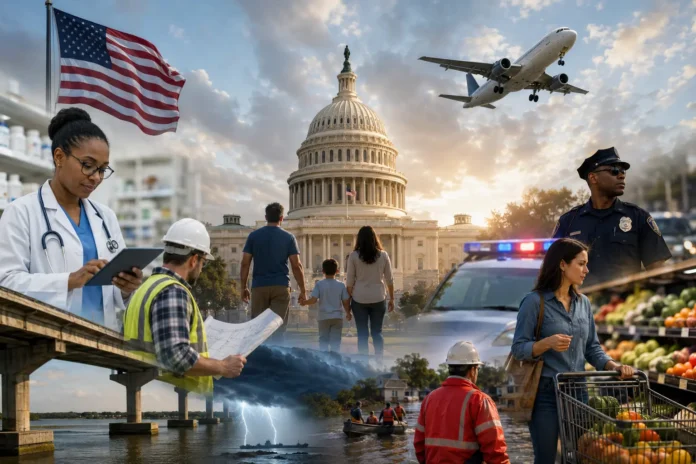
When most Americans think about the federal government, they often picture elections, Congress, the White House, or heated political debates in Washington. Yet much of the government’s influence on daily life comes from institutions that rarely dominate headlines: federal agencies.
From the moment Americans wake up in the morning until they go to sleep at night, dozens of federal agencies quietly shape their lives in ways many people never notice.
The water flowing from a kitchen faucet, the safety standards of a new car, the medicine in a pharmacy, the weather forecast on a smartphone, and even the security of a bank account often involve the work of federal agencies.
These organizations may seem distant, but their decisions affect millions of people every day.
Understanding how federal agencies impact everyday Americans offers valuable insight into how the government functions beyond politics and elections.
What Are Federal Agencies?
Federal agencies are government organizations responsible for carrying out laws, regulations, and public programs.
Congress passes legislation, and the President signs it into law. Federal agencies then help implement those laws and oversee programs designed to serve the public.
Some agencies focus on public health.
Others regulate transportation, protect consumers, enforce environmental standards, or oversee financial institutions.
Together, these agencies form a large network that helps keep the country functioning.
While political leaders often change after elections, many federal agencies continue their work regardless of which party controls Washington.
Their mission is to provide continuity and stability in critical areas of American life.
The Food You Eat Is Constantly Being Monitored
Most Americans rarely think about government agencies while eating breakfast.
Yet federal oversight plays a major role in food safety.
Federal regulators help monitor food production, processing, packaging, and distribution to reduce risks from contamination and foodborne illnesses.
Without these systems, outbreaks of dangerous bacteria or contaminated products could become far more common.
Food inspections, labeling requirements, ingredient disclosures, and recall systems help ensure that consumers receive accurate information and safer products.
When a food recall appears in the news, it often reflects the behind-the-scenes work of federal regulators tracking potential health risks.
The result is a food supply chain that many Americans take for granted but that depends heavily on continuous oversight.
Healthcare and Medicine Depend on Federal Oversight
Imagine a world where medications reached pharmacy shelves without safety testing.
Or where medical devices could be sold without quality standards.
Most Americans would find that difficult to accept.
Federal agencies play a critical role in evaluating medicines, vaccines, medical devices, and healthcare products before they become widely available.
These agencies help ensure treatments are effective and reasonably safe before reaching consumers.
Their responsibilities extend beyond approvals.
They also monitor products after release, investigate safety concerns, and issue warnings when problems emerge.
Whether someone picks up a prescription medication, undergoes surgery, or receives a vaccine, federal oversight is often involved somewhere in the process.
Safe Air Travel Doesn’t Happen by Accident
Millions of Americans board airplanes every year with little concern about whether the aircraft is safe.
That confidence is largely built upon decades of regulation, inspection, training requirements, and safety standards.
Federal aviation regulators oversee numerous aspects of air travel, including:
- Aircraft certification
- Pilot training
- Air traffic control systems
- Airport operations
- Airline safety requirements
Commercial aviation has become one of the safest forms of transportation partly because of these extensive oversight systems.
Passengers may never see the inspectors, engineers, and specialists involved, but their work contributes significantly to aviation safety.
Federal Agencies Help Protect Consumer Rights
Consumers face an increasingly complex marketplace.
Online shopping, digital subscriptions, financial services, artificial intelligence tools, and emerging technologies create opportunities but also risks.
Federal agencies help protect consumers from fraud, deceptive business practices, and unfair competition.
These protections can include:
- Investigating scams
- Monitoring advertising claims
- Enforcing financial regulations
- Protecting personal information
- Addressing unfair market practices
When companies violate consumer protection laws, federal regulators may impose penalties or require corrective actions.
For many Americans, these protections provide an important safeguard in a rapidly evolving economy.
Your Money Is More Secure Because of Federal Oversight
Most people deposit money into banks without worrying about whether those institutions will still exist tomorrow.
That level of confidence did not emerge automatically.
Federal banking oversight helps maintain trust in the financial system.
Regulators monitor banks, assess financial risks, and enforce standards designed to protect consumers and maintain stability.
During periods of economic uncertainty, these agencies often play critical roles in preventing broader financial disruptions.
Their responsibilities can include:
- Supervising financial institutions
- Monitoring economic risks
- Protecting deposits
- Enforcing lending regulations
- Addressing systemic threats
The stability of the financial system affects nearly every American household.
Weather Forecasts Save Lives
Checking the weather has become a daily habit for millions of Americans.
Whether planning a commute, a vacation, or a weekend event, people rely on accurate forecasts.
Federal weather agencies collect massive amounts of atmospheric data through satellites, radar systems, aircraft observations, and ocean monitoring networks.
This information supports:
- Daily forecasts
- Hurricane tracking
- Tornado warnings
- Flood alerts
- Climate monitoring
Severe weather warnings provide critical time for communities to prepare and respond.
In many cases, accurate forecasting helps save lives and reduce property damage.
Transportation Infrastructure Shapes Daily Life
Federal agencies influence how Americans move from place to place.
Roads, bridges, rail systems, ports, and airports all depend on federal involvement in some capacity.
Transportation agencies help:
- Set safety standards
- Fund infrastructure projects
- Coordinate interstate transportation systems
- Support public transit programs
- Improve traffic safety
The average commuter may never think about federal transportation policies, yet those policies influence travel times, infrastructure quality, and public safety.
Every repaired bridge or upgraded airport often reflects years of planning and coordination involving federal agencies.
Environmental Protection and Public Health
Clean air and clean water are among the most important public health achievements of the modern era.
Federal environmental agencies help establish standards designed to limit pollution and protect natural resources.
Their work often includes:
- Monitoring air quality
- Water safety standards
- Hazardous waste management
- Industrial emissions oversight
- Environmental research
Environmental policies can sometimes generate political debate, but their impact on public health is substantial.
Communities across the country benefit from efforts to reduce pollution and protect ecosystems.
Disaster Response During Emergencies
When hurricanes, wildfires, floods, or major storms strike, federal agencies often become highly visible.
Emergency management organizations coordinate disaster response efforts with state and local governments.
Their responsibilities can include:
- Emergency shelter support
- Disaster recovery funding
- Search and rescue coordination
- Infrastructure restoration
- Public assistance programs
Natural disasters can overwhelm local resources.
Federal assistance helps communities recover more quickly and rebuild after major events.
For affected families, these services can make a significant difference during difficult times.
Veterans Depend on Federal Services
Millions of military veterans rely on federal programs for healthcare, education benefits, housing assistance, and disability support.
Federal agencies administer a wide range of services designed to assist former service members and their families.
These programs can include:
- Medical care
- Mental health services
- Education benefits
- Employment assistance
- Home loan programs
For veterans transitioning to civilian life, these resources often provide essential support.
Education Funding and Support
Education is primarily managed at the state and local level, but federal agencies still play an important role.
Federal programs help support:
- Student financial aid
- Research grants
- Educational equity initiatives
- School improvement programs
- Special education services
Millions of students receive financial assistance that helps make higher education more accessible.
Federal research funding also supports universities, scientific discoveries, and innovation across the country.
National Security Beyond the Military
When people think about national security, they often picture soldiers, ships, and aircraft.
However, modern security involves much more than traditional defense.
Federal agencies work on issues such as:
- Cybersecurity
- Border security
- Counterterrorism
- Critical infrastructure protection
- Intelligence gathering
Many of these activities occur behind the scenes.
Their purpose is to identify and address threats before they become crises.
As technology evolves, these responsibilities continue to expand.
The Growing Role of Technology Regulation
Artificial intelligence, digital privacy, cybersecurity, and emerging technologies are becoming increasingly important policy issues.
Federal agencies are now grappling with questions that did not exist a generation ago.
These include:
- Data privacy protections
- AI governance
- Cybersecurity standards
- Digital consumer rights
- Technology competition
As society becomes more connected, government agencies are playing a larger role in establishing rules for the digital economy.
The decisions made today may shape innovation and privacy for decades.
Why Federal Agencies Sometimes Face Criticism
Despite their importance, federal agencies are not immune to criticism.
Some critics argue that regulations can become overly burdensome.
Others believe agencies occasionally exceed their authority or move too slowly.
Concerns may include:
- Bureaucratic inefficiency
- Regulatory complexity
- Delayed decision-making
- Political influence
- Compliance costs
These debates are a normal part of democratic governance.
The challenge is balancing oversight and public protection with efficiency and innovation.
Most Americans support agency functions that protect health, safety, and security while also wanting government to operate effectively.
How Federal Agencies Adapt to Changing Challenges
America today faces challenges that previous generations could barely imagine.
Artificial intelligence, climate resilience, cyberattacks, biotechnology, and global supply chain disruptions require new approaches.
Federal agencies must continually adapt.
This means:
- Updating regulations
- Investing in technology
- Recruiting specialized experts
- Strengthening partnerships
- Responding to emerging risks
The pace of change is accelerating, and agencies are increasingly expected to address issues that cross traditional boundaries.
Success often depends on their ability to remain flexible and forward-thinking.
Why Most Americans Notice Agencies Only During Crises
Ironically, federal agencies often receive the most attention when something goes wrong.
A transportation accident.
A disease outbreak.
A financial crisis.
A major storm.
During these moments, the public becomes acutely aware of government systems that usually operate quietly in the background.
Yet their greatest successes often go unnoticed.
When airplanes land safely, food remains uncontaminated, financial systems remain stable, and severe weather warnings arrive on time, the work of federal agencies tends to blend into everyday life.
Their effectiveness is often measured by problems that never occur.
The Future of Federal Agencies
Looking ahead, federal agencies will likely play an even larger role in addressing emerging challenges.
Future priorities may include:
- Artificial intelligence oversight
- Cybersecurity protection
- Climate adaptation
- Public health preparedness
- Advanced transportation systems
- Space exploration
- Economic competitiveness
As society evolves, government institutions will continue adapting to new realities.
The effectiveness of these agencies may influence everything from economic growth and public health to national security and technological innovation.
Conclusion
Understanding how federal agencies impact everyday Americans reveals a side of government that often receives less attention than elections and political debates.
These agencies help ensure food safety, oversee medicines, support transportation systems, protect consumers, respond to disasters, monitor weather, regulate financial institutions, and safeguard public health.
Most Americans interact with the results of their work every day, even if they rarely think about the agencies themselves.
While debates about regulation and government authority will continue, there is little doubt that federal agencies remain deeply woven into the fabric of daily life.
Whether protecting a family’s savings, ensuring the safety of a prescription medication, or providing advance warning before a hurricane strikes, these institutions play a vital role in helping modern America function.