
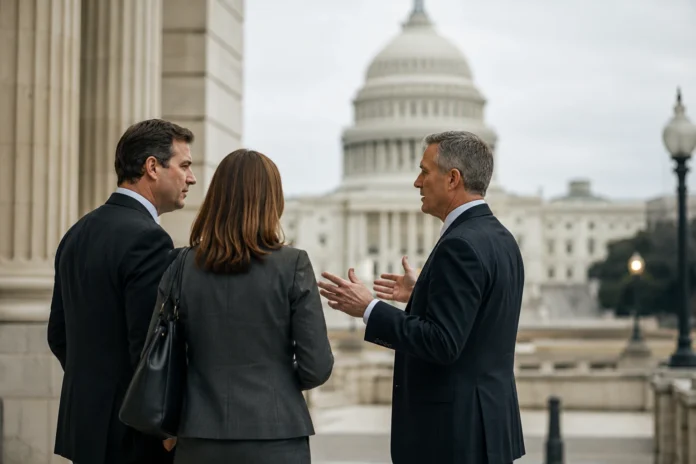
Washington, D.C. is often described as the center of American political power. The White House, Congress, the Supreme Court, and dozens of federal agencies make decisions that affect nearly every aspect of American life. But beyond the televised hearings and election campaigns lies another powerful force that quietly shapes public policy every day: the lobbying industry.
For many Americans, lobbying remains one of the most misunderstood parts of government. The word itself often brings images of wealthy corporations, closed-door meetings, and powerful insiders influencing politicians behind the scenes. While some of those perceptions contain elements of truth, the reality is far more complex.
Lobbying is both a constitutionally protected activity and a multi-billion-dollar industry. It can help lawmakers understand complicated issues, but it can also raise concerns about money, influence, and unequal access to government.
To understand how Washington really works, it is impossible to ignore the role of lobbyists.
What Is Lobbying?
At its core, lobbying is the act of attempting to influence government decisions.
Individuals, businesses, nonprofit organizations, labor unions, trade associations, universities, and advocacy groups all engage in lobbying. Their goal is simple: persuade lawmakers or government officials to support policies that benefit their interests or causes.
The right to petition the government is protected by the First Amendment of the U.S. Constitution. That means lobbying itself is legal and considered an important part of democratic participation.
However, modern lobbying has evolved into a sophisticated profession. Many lobbyists are former politicians, congressional staffers, attorneys, policy experts, economists, or industry specialists who understand how government works and know the people making decisions.
Their expertise can be highly valuable in a political system where lawmakers must make decisions on everything from artificial intelligence and healthcare to agriculture and national security.
The Size of Washington’s Lobbying Industry
Lobbying is not a small side activity in Washington. It is a massive industry involving thousands of registered lobbyists and billions of dollars in spending every year.
Major corporations invest heavily in government relations teams. Industry groups hire lobbying firms to represent their interests. Nonprofits advocate for social causes, while labor unions push for worker protections.
The industries that typically spend the most on lobbying include:
- Healthcare
- Pharmaceuticals
- Technology
- Financial services
- Energy
- Defense
- Telecommunications
- Insurance
These sectors often face extensive federal regulation, making government decisions directly tied to their financial success.
When Congress debates tax laws, environmental regulations, healthcare reforms, or technology policies, lobbyists are usually working behind the scenes to ensure their clients’ voices are heard.
How Lobbyists Actually Influence Policy
One of the biggest misconceptions about lobbying is that influence comes primarily from campaign donations or secret deals.
In reality, much of lobbying involves information.
Members of Congress and their staff handle hundreds of policy issues simultaneously. Few lawmakers can become experts on every subject they vote on.
Lobbyists fill that information gap by providing:
- Research reports
- Economic studies
- Policy proposals
- Industry data
- Expert testimony
- Draft legislative language
For example, if Congress is considering regulations for artificial intelligence, lawmakers may consult technology companies, academic researchers, consumer advocates, and industry associations. Lobbyists often coordinate these interactions.
Because they specialize in specific issues, lobbyists frequently become trusted sources of information.
Critics argue that this creates an imbalance because organizations with greater financial resources can provide more information and gain greater access than ordinary citizens.
Supporters counter that policymakers need expert knowledge to make informed decisions.
The debate continues today.
The Revolving Door Phenomenon
One of the most controversial aspects of Washington lobbying is the so-called “revolving door.”
This refers to government officials leaving public service and later becoming lobbyists.
Former members of Congress, congressional aides, agency officials, and political advisors often possess valuable insider knowledge and professional relationships.
After leaving government, many are recruited by lobbying firms or corporations seeking access to decision-makers.
Supporters argue that former officials bring expertise that helps organizations navigate complex regulations.
Critics contend that the practice creates conflicts of interest and may encourage officials to prioritize future employment opportunities while still serving in government.
Various ethics laws and cooling-off periods attempt to limit these concerns, but the revolving door remains a persistent topic of debate.
Corporate Lobbying vs. Public Interest Lobbying
Not all lobbying is conducted on behalf of large corporations.
Washington is also home to thousands of advocacy organizations working on issues such as:
- Civil rights
- Environmental protection
- Healthcare access
- Consumer rights
- Education reform
- Veterans’ issues
- Religious freedom
- Public health
These groups lobby lawmakers just as corporations do.
For example, environmental organizations may push for stronger climate regulations, while business groups may argue for policies that minimize economic costs.
Both sides compete to influence legislation.
This competition is often viewed as a key feature of democratic governance because multiple perspectives are represented during policymaking.
The challenge is ensuring that less wealthy organizations can still be heard alongside powerful corporate interests.
The Role of Campaign Contributions
Lobbying and campaign finance are frequently discussed together, although they are technically different activities.
Lobbyists may help organize fundraising events or connect donors with political candidates. Political Action Committees (PACs) and other groups contribute money to campaigns within legal limits.
Critics argue that large donations can create the appearance of favoritism or privileged access.
Defenders note that campaign contributions are regulated and publicly disclosed, making them transparent compared to political systems in some other countries.
While direct vote-buying is illegal, political donations remain one of the most controversial aspects of American politics because they raise questions about influence and access.
The perception that wealthy interests have a louder voice than ordinary citizens continues to fuel calls for campaign finance reform.
Lobbying Beyond Congress
Many people associate lobbying exclusively with Congress, but federal agencies are also major targets.
Government agencies write and enforce regulations that affect industries across the economy.
Organizations frequently lobby agencies such as those responsible for:
- Environmental regulation
- Healthcare oversight
- Financial supervision
- Transportation safety
- Communications policy
In many cases, regulatory decisions can have as much impact as legislation passed by Congress.
Lobbyists often participate in public comment periods, meet with agency officials, and advocate for specific regulatory approaches.
This means influence in Washington extends far beyond Capitol Hill.
Foreign Lobbying in Washington
Washington’s influence on global affairs attracts international interest as well.
Foreign governments, international organizations, and overseas companies frequently hire lobbying firms to represent their interests in the United States.
These activities are governed by laws such as the Foreign Agents Registration Act (FARA), which requires certain individuals and organizations representing foreign interests to disclose their activities.
Foreign lobbying can involve issues such as:
- Trade agreements
- Defense partnerships
- International sanctions
- Investment policy
- Diplomatic relations
Because U.S. decisions often affect global markets and security, Washington remains one of the world’s most important lobbying centers.
Why Critics Say the System Is Broken
Despite its legal status, lobbying remains unpopular with many Americans.
Critics point to several concerns.
Unequal Access
Organizations with significant financial resources can hire experienced lobbyists, commission research, and maintain a constant presence in Washington.
Ordinary citizens generally cannot compete at the same level.
Policy Capture
Some critics argue that industries occasionally gain excessive influence over the agencies meant to regulate them.
This phenomenon is often referred to as “regulatory capture.”
Public Distrust
When voters believe government decisions are being shaped primarily by powerful interests rather than public needs, trust in institutions can decline.
Revolving Door Concerns
The movement of officials between government and lobbying firms continues to generate concerns about conflicts of interest.
Together, these issues fuel ongoing calls for stricter ethics rules and greater transparency.
Why Defenders Say Lobbying Is Necessary
Supporters of lobbying argue that the system serves important democratic functions.
Expertise Matters
Modern government deals with highly technical issues.
Lawmakers frequently rely on outside experts to understand complex industries and technologies.
Representation of Diverse Interests
Lobbying allows organizations of all kinds—not just corporations—to present their views to policymakers.
Advocacy groups, charities, universities, and local governments all use lobbying to make their voices heard.
Better Policymaking
When decision-makers hear from multiple stakeholders, supporters argue that policies become more informed and practical.
Constitutional Rights
Advocates also emphasize that lobbying reflects a fundamental constitutional principle: citizens and organizations have the right to petition their government.
From this perspective, lobbying is not a flaw in democracy but a feature of it.
Transparency and Reform Efforts
Over the years, Congress has enacted numerous reforms aimed at increasing transparency.
Lobbyists must generally register and disclose information regarding:
- Clients represented
- Issues lobbied
- Government contacts
- Lobbying expenditures
Ethics rules also regulate gifts, travel, and interactions between lobbyists and government officials.
However, reform advocates argue that loopholes remain.
Some individuals influence policy through consulting, strategic advising, public relations, or other activities that may not require formal registration as lobbyists.
As a result, debates over transparency continue.
Recent reform proposals have included:
- Longer cooling-off periods for former officials
- Expanded disclosure requirements
- Campaign finance changes
- Stronger ethics enforcement
- Greater transparency regarding political spending
Whether such reforms will significantly reduce concerns about influence remains an open question.
The Future of Lobbying in Washington
The lobbying industry continues to evolve alongside technology and politics.
Artificial intelligence, cybersecurity, cryptocurrency, biotechnology, and clean energy are creating entirely new policy debates.
As these industries grow, so does the demand for experts capable of explaining them to lawmakers.
Digital advocacy is also transforming how influence works.
Organizations increasingly mobilize supporters through social media campaigns, online petitions, email outreach, and grassroots activism.
This allows ordinary citizens to participate in advocacy efforts more easily than ever before.
At the same time, major corporations continue to invest heavily in traditional lobbying operations.
The result is a political landscape where influence comes from both financial resources and public engagement.
Conclusion
The lobbying industry is woven deeply into the fabric of Washington politics.
To some, it represents a system where wealthy interests gain privileged access and shape policy behind closed doors. To others, it serves as a vital mechanism that helps lawmakers understand complex issues and hear from a wide range of stakeholders.
The truth lies somewhere in between.
Lobbying is neither inherently corrupt nor entirely benign. It is a powerful tool that can be used to advance public interests, private interests, or both.
Understanding how lobbying works is essential for anyone seeking to understand how decisions are actually made in Washington.
As debates over money, influence, transparency, and accountability continue, the lobbying industry will remain one of the most influential—and closely watched—forces in American government.