
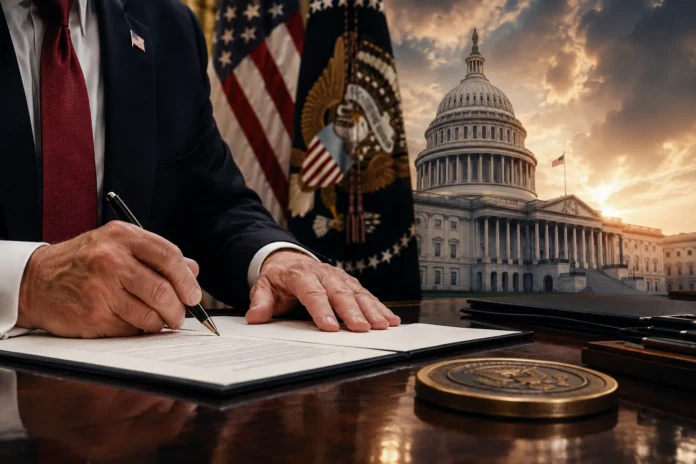
Understanding the Presidential Tool That Can Change America Overnight
When Americans think about major policy changes, they often imagine Congress debating legislation for months before a new law is passed. Yet some of the most significant shifts in U.S. policy have happened much faster—through executive orders signed by the President of the United States.
From desegregating the military to responding to national emergencies, executive orders have played a powerful role in shaping American governance. They can influence immigration, healthcare, environmental regulations, national security, and countless other aspects of daily life.
But what exactly are executive orders? How much power do they give a president? And why do they often spark fierce political debates?
Understanding executive orders is essential for anyone interested in American politics because these presidential directives can have immediate and far-reaching consequences. They represent one of the most influential tools available to a president, capable of shaping policy without waiting for Congress to act.
What Is an Executive Order?
An executive order is a written directive issued by the President to federal agencies and government officials. It tells the executive branch how to implement and enforce laws or manage government operations.
Unlike legislation passed by Congress, executive orders do not require approval from lawmakers. Instead, they derive their authority from the Constitution and existing federal laws.
Executive orders have been part of American government since the nation’s earliest days. President George Washington issued some of the first executive orders to guide the operation of the young federal government.
Today, presidents use executive orders to address pressing issues, clarify administrative priorities, and direct federal agencies on how to carry out their responsibilities.
However, executive orders are not unlimited in scope. They must operate within the boundaries of the Constitution and federal law.
The Constitutional Foundation of Executive Orders
The U.S. Constitution does not explicitly mention executive orders. Instead, their authority comes primarily from Article II, which vests executive power in the President.
The Constitution requires the President to ensure that laws are faithfully executed. To fulfill this responsibility, presidents often issue directives explaining how federal agencies should implement laws passed by Congress.
Over time, executive orders have become an accepted and established part of American governance. Courts have generally recognized their legitimacy when they are based on constitutional or statutory authority.
This constitutional foundation allows presidents to exercise significant influence over policy while still operating within a system of checks and balances.
How Executive Orders Work
The process of issuing an executive order is relatively straightforward.
First, presidential advisers and legal teams draft the order. The document is reviewed to ensure it aligns with constitutional requirements and existing laws.
Once finalized, the President signs the order. It is then published in the Federal Register, making it an official government directive.
Federal agencies are expected to comply with the order and implement any instructions it contains.
Because executive orders can take effect immediately, they often become a powerful mechanism for rapid policy action.
For example, a president may direct federal agencies to revise regulations, change enforcement priorities, establish new administrative initiatives, or respond to national emergencies.
Historical Examples That Changed America
Executive orders have shaped some of the most significant moments in American history.
The Emancipation Proclamation
Perhaps the most famous executive order-like action was President Abraham Lincoln’s Emancipation Proclamation in 1863.
Issued during the Civil War, it declared that enslaved people in Confederate states were free. While it did not immediately end slavery nationwide, it fundamentally altered the course of American history and paved the way for the 13th Amendment.
Desegregation of the Military
In 1948, President Harry Truman issued Executive Order 9981, which ended racial segregation in the U.S. Armed Forces.
At a time when discrimination remained widespread, this directive represented a major step toward civil rights and equality.
Japanese-American Internment
Not all executive orders are viewed positively.
Executive Order 9066, signed by President Franklin D. Roosevelt during World War II, authorized the relocation and internment of Japanese Americans.
Today, it is widely regarded as one of the most controversial executive actions in U.S. history and serves as a reminder of how executive power can be misused.
Modern Immigration Policies
Recent presidents have frequently used executive orders to address immigration challenges.
These actions have affected border enforcement, refugee admissions, visa policies, and deportation priorities, demonstrating how executive orders can quickly reshape national policy debates.
Why Presidents Rely on Executive Orders
Presidents often face political obstacles that make legislative action difficult.
Congress may be divided along party lines, making it challenging to pass major bills. In such situations, executive orders provide a way to advance policy goals without waiting for legislative approval.
Executive orders also allow presidents to:
- Respond rapidly to emergencies
- Set administrative priorities
- Manage federal agencies efficiently
- Clarify enforcement strategies
- Demonstrate leadership on key issues
For many presidents, executive orders become an important tool for turning campaign promises into action.
However, reliance on executive orders can also raise concerns about presidential overreach.
Executive Orders and Immigration Policy
Immigration policy is one area where executive orders have had particularly significant effects.
Because federal agencies play a central role in immigration enforcement, presidents can influence how immigration laws are applied through executive directives.
Executive orders have been used to:
- Strengthen border security measures
- Adjust refugee admission programs
- Modify enforcement priorities
- Expand or restrict immigration benefits
- Implement travel restrictions
These actions often generate intense public debate because immigration affects national security, economic policy, and humanitarian concerns.
Changes implemented through executive orders can impact millions of people, making them among the most closely watched presidential actions.
The Impact on Environmental Policy
Environmental policy provides another clear example of executive power in action.
Presidents frequently use executive orders to influence environmental regulations, energy development, and climate initiatives.
Depending on the administration, executive orders may:
- Promote renewable energy projects
- Expand fossil fuel production
- Strengthen environmental protections
- Reduce regulatory burdens on businesses
- Set climate-related goals for federal agencies
Because environmental issues often involve long-term planning, executive orders can significantly alter the direction of national policy even without new legislation.
Economic and Labor Policy Through Executive Action
Executive orders can also affect economic and labor policy.
Presidents have used them to:
- Raise minimum wages for federal contractors
- Expand workplace protections
- Encourage domestic manufacturing
- Address supply chain challenges
- Implement federal procurement reforms
Although executive orders cannot directly rewrite labor laws, they can influence how federal agencies and contractors operate.
These actions often have ripple effects throughout the broader economy.
National Security and Emergency Powers
National security is one area where executive orders carry substantial influence.
Presidents may use executive orders to:
- Impose sanctions on foreign governments
- Freeze financial assets
- Strengthen cybersecurity measures
- Coordinate emergency responses
- Address international crises
During emergencies, executive orders can facilitate rapid government action.
Supporters argue that this flexibility is essential for protecting national interests. Critics, however, sometimes worry about the concentration of power in the executive branch.
Can Executive Orders Be Challenged?
Yes.
Executive orders are not immune from scrutiny.
There are three primary ways an executive order can be challenged:
Judicial Review
Federal courts can determine whether an executive order exceeds constitutional authority or conflicts with existing laws.
Several high-profile executive orders have faced legal challenges and been modified or blocked by the courts.
Congressional Action
Congress can pass legislation that overrides the effects of an executive order, although this may require overcoming a presidential veto.
Lawmakers can also limit funding for programs associated with executive actions.
Presidential Reversal
One of the most common ways executive orders are undone is by a future president.
A new administration can revoke, amend, or replace executive orders issued by previous presidents.
This explains why policy shifts often occur when political leadership changes.
The Debate Over Executive Power
Executive orders frequently spark debate about the balance of power in American government.
Supporters argue that executive orders allow presidents to govern effectively, particularly during periods of political gridlock.
They contend that modern challenges require swift action and that executive orders help ensure government responsiveness.
Critics, however, warn that excessive reliance on executive orders can undermine the legislative process.
They argue that major policy decisions should be debated and approved by Congress rather than implemented through unilateral executive action.
This tension reflects a broader constitutional question: How much power should the President have?
The answer continues to evolve through political battles, court decisions, and public opinion.
How Executive Orders Affect Everyday Americans
While executive orders may seem like technical government documents, their effects often reach ordinary citizens.
Executive actions can influence:
- Healthcare access
- Student loan programs
- Workplace regulations
- Environmental protections
- Immigration procedures
- Public health initiatives
- Federal employment policies
In many cases, Americans feel the impact of executive orders long before they notice changes resulting from congressional legislation.
This immediate effect helps explain why executive orders receive significant media attention.
Executive Orders in the Digital Age
Modern technology has amplified the visibility and influence of executive orders.
News organizations, social media platforms, and digital publications can spread information about executive actions within minutes.
As a result, executive orders often become central topics in national conversations.
The digital era has also increased public scrutiny, allowing citizens, legal experts, advocacy groups, and journalists to analyze executive actions more closely than ever before.
This transparency contributes to greater accountability while also intensifying political debate.
The Future of Executive Orders
Executive orders are likely to remain a major feature of American governance.
As political polarization continues and legislative compromise becomes more difficult, presidents may increasingly rely on executive authority to pursue policy goals.
At the same time, courts, Congress, and public opinion will continue to serve as important checks on presidential power.
Future debates will likely focus on questions such as:
- How far can executive authority extend?
- When does executive action become executive overreach?
- What role should Congress play in major policy decisions?
- How can the balance of power be preserved?
These questions will shape not only future administrations but also the broader evolution of American democracy.
Conclusion
Executive orders occupy a unique and powerful place in the American political system. They allow presidents to act quickly, direct federal agencies, and influence policy across a wide range of issues.
Throughout history, executive orders have produced transformative changes, from advancing civil rights to responding to national emergencies. They have also generated controversy, highlighting the ongoing tension between effective governance and constitutional limits.
Whether viewed as necessary tools of leadership or potential sources of executive overreach, executive orders undeniably shape the direction of American policy.
For citizens seeking to understand how government decisions affect their lives, understanding executive orders is essential. These presidential directives often determine how laws are implemented, how agencies operate, and how national priorities evolve.
In a political landscape where change can happen rapidly, executive orders remain one of the most influential instruments through which American presidents leave their mark on history.