













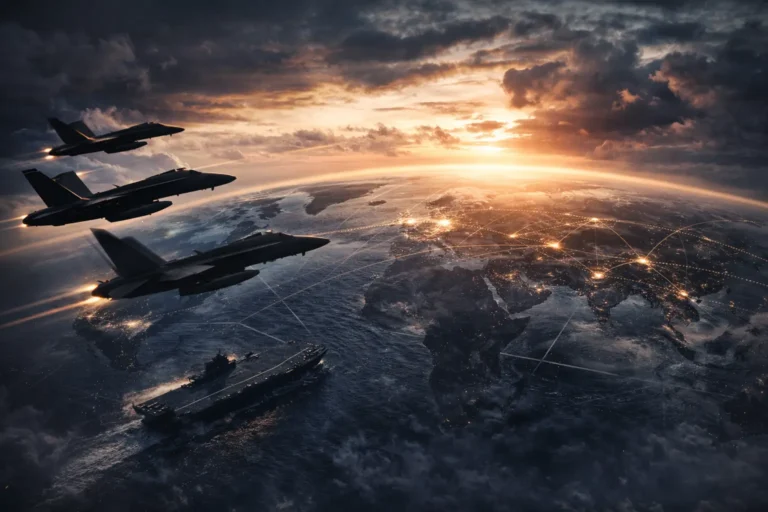
Every time missiles are launched, warships move into contested waters, or world leaders exchange sharp warnings, the phrase “World War 3” begins trending online. Social media reacts instantly. Headlines intensify. Anxiety spreads.
But history teaches a critical lesson: global wars do not begin with hashtags. They begin when alliances activate, when treaties are invoked, and when multiple great powers are pulled into the same battlefield at the same time.
In 2026, the global security landscape is tense but highly structured. Military alliances, nuclear deterrence, economic interdependence, and diplomatic channels all shape the boundaries of escalation. To understand what would actually trigger a third world war, we must examine how those systems function today.
What Actually Defines a World War?
A world war is not simply a large conflict. It becomes global when multiple major powers engage across different regions simultaneously, often because alliance commitments force them to respond.
World War I expanded after a regional European crisis triggered a web of mutual defense treaties. World War II spread when alliance systems drew continents into sustained combat.
In today’s world, a true global war would likely require:
- Direct involvement of several major military powers
- Fighting across multiple theaters
- Formal alliance activation
- Large-scale mobilization beyond one region
That threshold is far higher than most social media discussions suggest.
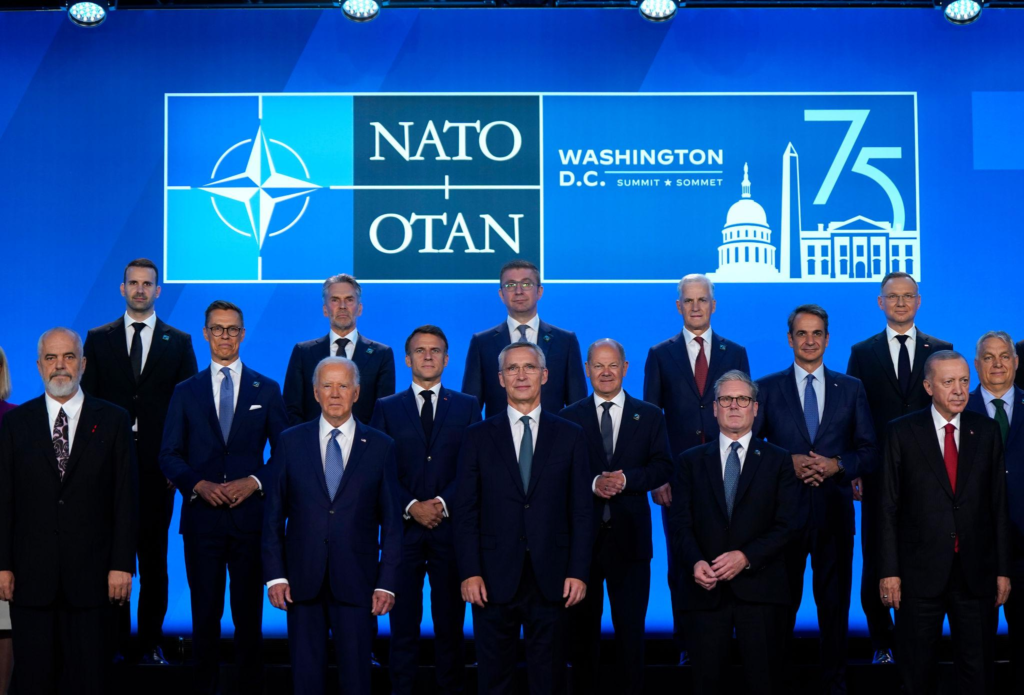
NATO and Article 5: The Strongest Escalation Mechanism
One of the most powerful collective defense systems in existence is NATO.
At the center of NATO is Article 5, which states that an armed attack against one member is considered an attack against all. This clause has been invoked only once — after the September 11 attacks in 2001.
If a NATO member were directly attacked by another major power and Article 5 were formally triggered, dozens of countries could be drawn into coordinated military action.
However, Article 5 is not automatic. Member states must collectively determine that the threshold for collective defense has been met. That deliberation acts as a brake on immediate escalation.
A direct strike on NATO territory remains one of the clearest structural triggers for a broader war.
Russia, Ukraine, and the Limits of Alliance Boundaries
Tensions involving Russia and Ukraine have reshaped European security calculations. However, Ukraine is not a NATO member.
That distinction is critical.
While NATO countries have provided support to Ukraine, the absence of a formal treaty obligation has prevented automatic alliance entry into direct combat with Russia.
If a NATO country itself were attacked, the situation would change dramatically. Treaty obligations would then come into play, and escalation risks would increase significantly.
Until that threshold is crossed, the conflict remains regionally contained.
The U.S.–China Equation and Taiwan
Another major flashpoint lies in the Indo-Pacific, particularly involving China and Taiwan.
China considers Taiwan part of its territory. The United States maintains a policy of strategic ambiguity while also being bound by domestic law to provide defensive support to Taiwan.
At the same time, the U.S. holds formal defense treaties with:
- Japan
- South Korea
- Philippines
If a Taiwan conflict drew in treaty-bound allies, escalation could expand rapidly. However, as with NATO, political decisions would determine whether alliances activate.
Nuclear Deterrence: The Ultimate Brake
Nuclear deterrence remains the most powerful structural barrier to global war.
Major nuclear powers include the United States, Russia, China, France, and United Kingdom.
The doctrine of mutually assured destruction means that a large-scale nuclear exchange would result in catastrophic consequences for all sides.
This reality shapes decision-making at the highest levels. Nuclear weapons function primarily as deterrents rather than offensive tools. While they do not eliminate risk, they dramatically raise the cost of escalation.
Regional Conflicts vs Global War
Conflicts in the Middle East, Eastern Europe, and Asia frequently generate global concern. However, most remain regionally bounded unless major alliances are activated.
Limited strikes, proxy wars, or regional escalations do not automatically equal world war. What transforms a regional crisis into a global one is the direct involvement of multiple treaty-bound major powers.
Cyber Warfare and Space: The New Wildcards
Modern warfare includes cyber operations and space-based infrastructure.
A large-scale cyberattack targeting critical infrastructure could provoke retaliation. Attacks on satellites or space assets could disrupt global communications.
If such incidents were attributed to nuclear-armed states and triggered alliance obligations, escalation risks would increase. However, even these scenarios would require deliberate political decisions before expanding into global conflict.
What Would Actually Trigger World War 3?
Based on current alliance structures, the most plausible triggers would include:
- A direct military attack on a NATO member invoking Article 5.
- A large-scale Taiwan conflict drawing in treaty-bound allies.
- A direct confrontation between nuclear powers that spirals beyond containment.
- A catastrophic miscalculation interpreted as intentional aggression.
None of these scenarios are inevitable. But each represents a structural pathway toward wider war.
Why Social Media Declares World War Faster Than Governments Do
Online platforms amplify fear rapidly. Dramatic language spreads within minutes.
Governments, however, operate differently. Leaders assess treaty obligations, economic impact, military readiness, domestic politics, and nuclear deterrence risks.
Global war is not spontaneous. It is the result of layered decisions across institutions.
The Bottom Line
The phrase “World War 3” trends easily because it captures uncertainty in a single expression.
But global war requires far more than isolated strikes or sharp rhetoric. It requires alliances to activate, major powers to commit, and political leaders to choose escalation over restraint.
Today’s world is tense and heavily armed. Yet it is also constrained by deterrence, economic interdependence, and diplomatic frameworks.
History shows that world wars are not accidents of emotion.
They are consequences of structure.
And for now, that structure still holds.

0 Comments