
















By Ronald Kapper
Disclaimer
This article summarizes publicly available investigation reports, scientific commentary, and analysis methods used by researchers and institutions. It does not claim that any recorded UAP footage proves extraterrestrial visitation. Instead, it explains why the vast majority of UAP video material appears ordinary or dull, and why that actually matters to understanding the subject.
Why UAP Video Footage Often Disappoints — And Why That’s Useful
When people imagine videos of unexplained aerial phenomena (UAP), they often picture dramatic footage: strange crafts darting across the sky, impossible physics, and crystal-clear visuals. Yet when most UAP videos are released — whether from civilian witnesses, commercial cameras, or even military sensors — they often look slow, blurry, unremarkable, or downright boring.
At first glance, that sounds disappointing. But there’s a deeper reason why this pattern matters, and why serious researchers treat “boring” footage with respect rather than dismissing it.
The Reality of UAP Video Footage Quality
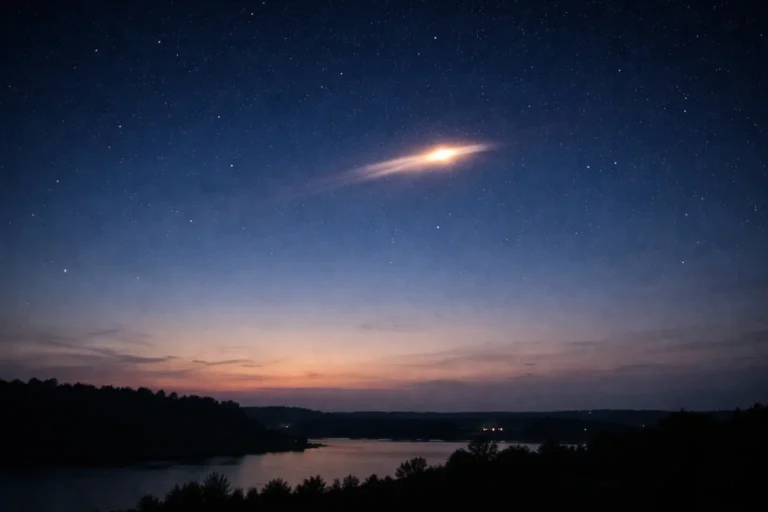
Visit any public database or official summary of UAP recordings and a theme emerges: many videos show faint lights, odd shapes far in the distance, reflections in the glass, or unclear motion that does not reveal a craft’s shape or origin. This is not a fluke — it reflects how real sightings are captured in the real world.
One reason is practical. Most UAP videos are recorded by ordinary cameras — smartphones, dash cams, or security footage — that were not designed to track fast objects in the sky. These devices aren’t equipped with stabilized zoom, high dynamic range, or sensor calibration that can clearly distinguish small aerial objects from background clutter.
Even when higher-grade sensors are used — as in military recordings — the footage can still appear dull because the sensor was not focused on the object until after it was detected. This often leaves long stretches of video where the object is tiny, blurry, or merely a light source with no shape detail.
In the context of serious scientific review, that actually matters. When analysts say a video isn’t dramatic, they are not dismissing it. Instead, they are highlighting the limits of the data quality — and showing why better, calibrated data is needed to draw strong conclusions.
Official Sources and Their View on UAP Video Evidence
Mainstream scientific groups have now weighed in on this directly. In 2022, the United States’ space agency assembled a formal team of experts — the NASA Unidentified Anomalous Phenomena Independent Study Team — to consider how UAP should be studied using scientific data rather than folklore or speculation. Part of their work focused on how data, including video footage, is collected, analyzed, and interpreted. Their findings suggested we need much better data quality and consistent methods before declaring any explanation truly proven.
At the same time, analysts who work on UAP data — including skeptics and professional investigators — stress that many public videos are simply too poor in quality to support extraordinary claims. This means the footage either needs enhancement, better metadata, or cross-referenced sensor data before it can provide anything beyond an interesting anecdote.
In formal government reporting — including annual public summaries from offices such as the All-domain Anomaly Resolution Office — a clear trend appears: after review, roughly half of submitted UAP reports have “common explanations” such as drones, balloons, or sensor artifacts once additional data is considered. That means the remaining half are either unresolved or remain unclear due to data limitations, not because they are confirmed anomalous.
Why “Unexciting” Footage Is Not Irrelevant
This is the heart of the matter: a boring video does not mean nothing happened. Instead, it highlights a few key realities:
1. Most Cameras Are Not Built for UAP Capture
Smartphones and consumer cameras optimize for close, well-lit subjects. An aerial phenomenon at a distance is often tiny, far away, and moving unpredictably — so the camera’s autofocus, light balance, and stabilization simply cannot keep up.
2. The Nature of the Sky Works Against Clarity
The sky is a challenging environment for cameras. Lighting conditions change rapidly, contrast is low at dawn or dusk, and distant lights — airplanes, satellites, or even bright stars like Venus — can all look similar without recognizable reference points in the frame.
3. Real Science Demands High-Quality Data
When serious researchers examine a potential UAP event, they look for hard data — synchronized video with accurate timing, sensor metadata that includes GPS and orientation, and cross-referenced sources such as radar or infrared. Without this, a video remains interesting but not conclusive.
Trusting dull footage over flashy clips is part of this rigorous approach. Scientists are not looking for memes or viral moments — they want hard evidence that can be analyzed with known physics, geometry, and timing.
Case Studies: Boring but Important Footage
Even in high-profile UAP cases where military video was recorded — such as the well-known FLIR and Gimbal footage released by defense agencies — analysts noted that the videos were far from dramatic in their raw form. Often, the object is visible only as a tiny infrared blur against cloud cover or a faint heat signature whose motion is hard to interpret without additional sensor data.
These videos made headlines because they were accompanied by trained pilots, radar traces, and official acknowledgment — not because the footage itself looked like a sci-fi movie.
Why Humdrum Footage Matters More Than the Sensational
A. Filters Out False Alarms
If every bright speck becomes a sensational clip, investigators would drown in noise. Boring footage likely shows common objects, atmospheric distraction, or equipment lag — and dismissing this noise is a critical step toward isolating truly unusual data.
B. Sets a Standard for Quality
The fact that most footage is underwhelming pushes scientists and agencies to demand better data — calibrated cameras, synchronized sensors, and consistent reporting methods. That’s how progress is made.
C. Helps Separate Known from Unknown
“Boring” footage often has an explanation once more data is added — a satellite train, aircraft lights, or lens flare. Only after known causes are ruled out can a case graduate to a genuine mystery.
What the Public Should Expect Going Forward
The future of UAP video analysis is not about viral clips or Hollywood style trailers. Instead, it will be driven by:
- Improved data collection — standardized high-resolution sensors with GPS and time stamps.
- Cross-sensor validation — combining video with radar, infrared, and other readings.
- Metadata transparency — sharing raw files, not compressed clips from social media.
NASA and other agencies are pushing this direction precisely because the current stock of public footage is too unclear to support strong conclusions without careful study.
FAQs
Q: Why do many UAP videos look like shaky, distant lights?
A: Most recordings are from handheld devices that are not optimized for sky tracking. Distant objects, poor focus, and lack of reference points make them appear boring or unclear.
Q: Does boring footage mean there’s no phenomenon?
A: No. It means that the video alone does not contain enough clear data to analyze the event conclusively.
Q: How do investigators deal with boring UAP videos?
A: They seek additional data — radar logs, infrared recordings, or calibrated cameras — and compare multiple sources before drawing conclusions.
Q: Are there examples of high-quality UAP footage?
A: Some military sensor videos have higher quality, but even these look dull on their own and require expert analysis to interpret.
Q: What role does NASA play in analyzing UAP videos?
A: NASA has formed an independent study team to examine how best to collect, analyze, and interpret UAP data, including videos, to build a scientific understanding.
Why This Matters
Understanding why most UAP videos are boring is not about dismissing sightings. It’s about grounding the topic in reality and data. Real science demands clarity over spectacle, facts over fiction, and patient inquiry over sensational headlines. Boring videos teach us a valuable lesson: only careful, methodical collection and analysis will separate what’s ordinary from what might truly be extraordinary.
Reference URLs for Verification
- NASA Unidentified Anomalous Phenomena Independent Study Team — details on scientific approach to UAP data.
https://en.wikipedia.org/wiki/NASA_Unidentified_Anomalous_Phenomena_Independent_Study_Team - Analysis of UAP and UFO videos in investigative practice — techniques and limitations.
https://skepticalinquirer.org/2024/12/quick-guide-to-modern-video-analysis-techniques-for-uap-and-ufos/ - Official summary of Pentagon UAP videos and context.
https://en.wikipedia.org/wiki/Pentagon_UFO_videos

0 Comments