


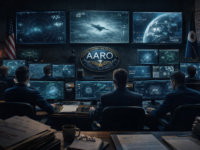

















The 2023 UAP hearings shook a country used to keeping these mysteries on the fringes. For the first time in decades, Congress publicly pressed the government about unexplained objects in our skies and seas. Committees asked direct questions. Witnesses answered under oath. Agencies released reports.
Yet after the tense testimony and glossy press briefings, a surprising thing happened: more questions remained than answers.
In plain terms, here is what was confirmed in 2023, what agencies admit they still cannot resolve, and where the biggest gaps in the public record remain. I trace the facts, official words, and the real holes left behind — so readers can see what we know and what we do not.
What happened in 2023: a quick, plain recap
In 2023, lawmakers held open hearings and requested formal reports about unidentified anomalous phenomena. The hearings focused on what the government is doing now, how it handles reports from pilots and sensors, and whether any recovery programs ever produced alien craft or materials.
The newest official review for fiscal year 2023 was prepared by the joint intelligence and defense offices and summarized the state of play: hundreds of reports were collected, many were explainable, and a number remained unresolved due to lack of reliable data or repeatable observations.
That official posture — transparent in data count, cautious in conclusions — guided much of the public testimony that followed. But congressional exchanges also exposed internal problems: inconsistent reporting pathways, missing sensors near sensitive locations, and uneasy coordination between civilian science agencies and defense teams.
Who was in the room — and why it mattered
Two kinds of witnesses shaped the hearings: technical officials and veterans or whistleblowers.
On the technical side, leaders of the new investigative office answered for the government’s work. They described building a data pipeline, trying to standardize reports, and focusing on safety and national security risks. Their public message: the government now treats UAP as a legitimate data problem requiring collection and analysis, not merely folklore.
On the other side, former service members and whistleblowers gave eyewitness accounts and raised allegations about recovered materials and blocked reporting. These personal testimonies drew headlines and spurred more public pressure. Lawmakers pressed both the technicians and the claimants, creating an unusual collision of methods: science and memory, logs and lived experience.
Entities to know: the All-domain Anomaly Resolution Office led the briefings, while the Office of the Director of National Intelligence published consolidated results that agencies could not fully explain. The hearings themselves took place before committees in the U.S. Senate and House, including the U.S. Senate Armed Services Committee.
Confirmed facts the public can trust
- There was an official, public review for FY 2023. The consolidated report lists the number of reports, short descriptions, and how many were explainable versus unresolved. It was authored by the intelligence and defense offices and released publicly.
- Agencies acknowledged data limitations. The official reports and witnesses were explicit: many useful cases lacked multi-sensor coverage. Low-quality video or single-source sightings are difficult or impossible to resolve. That limitation appears again and again in testimony.
- Some high-quality encounters remain unexplained. A small set of events included credible instrument data from military sensors or multiple trained observers yet still defied ready explanation. Those incidents were flagged as priority cases.
- NASA and science teams urged better data and open methods. Independent scientific reviews encouraged systematic collection and public data-sharing to turn anecdote into analyzable evidence.
- The government has not presented any verified alien hardware or biological materials. Public reports and the consolidated review note no validated evidence of non-terrestrial technology or life. Agencies also investigated past claims and programs and found no confirmed recoveries.
Those five facts form a firm baseline. They are what the public record shows, and they are the points where the government’s own documents and sworn testimony converge.
What the Pentagon and agencies still won’t — or can’t — explain
1. Why so many reports lack usable data
Officials repeatedly said the main obstacle is the quality of data. Many reports come from a single camera or a single witness. Without simultaneous radar, infrared, or other sensor coverage, an incident remains an ambiguous blip. In practical terms, agencies cannot retroactively place sensors around a fleeting light in the sky.
Why it matters: Without solid, multi-sensor evidence, official investigators cannot move from curiosity to conclusive analysis. The result is a long list of unresolved reports that remain mysteries by default.
2. The process for whistleblowers and insiders is still messy
Several witnesses told Congress they feared reporting because pathways were unclear and stigma remained. Lawmakers asked whether the system allows pilots, sailors, and intelligence officers to give detailed accounts without retaliation. Officials acknowledged gaps and promised improvements, but concrete, public tools for protected reporting remained limited in 2023.
Why it matters: If trained observers avoid reporting, high-quality data never enters official channels. That creates blind spots in the system.
3. The full record of historical programs is disputed
Some witnesses claimed older recovery or reverse-research programs existed. Agencies examined archives and past programs; public statements and released reviews did not confirm ongoing possession of alien craft or materials. Still, decades-old programs can be partially documented, classified, or fragmented, leaving room for debate and conspiracy. The agencies’ public position: no verified non-terrestrial materials have been confirmed.
Why it matters: Lack of full archival transparency fuels suspicion and prevents historians from creating a complete account.
4. The “why now” question — resources, priorities, and national security
Officials stressed the main concern is air safety and national security, not alien discovery. But how the Pentagon prioritizes sensors, budgets, and interagency cooperation still looks ad hoc. The office created to centralize work is young, and building technical depth takes years. Congress pressed for clearer budgets and better tasking of sensor networks; answers were cautious and noncommittal.
Why it matters: If priorities are unclear, monitoring gaps will persist and high-value incidents may go undetected.
5. How much classified material truly exists — and who has access
Officials said some material remains classified for national security reasons. That is standard for sensitive sensor data or information tied to ongoing operations. But lawmakers asked whether classification had been used to bury evidence. Agencies denied any cover-up of alien technology, and public reviews found no confirmed extraterrestrial items. Yet classification rules are complex, and public trust suffers when information is withheld.
Why it matters: Without clear, declassified records or third-party audits, public skepticism will persist.
Three sharp examples from testimony
Example 1 — Instrumented encounter with no proven cause: Officials pointed to incidents where radar, infrared, and visual data existed but still failed to identify the object. Investigators said the lack of physical retrieval and the limits of models made conclusive identification impossible.
Example 2 — Veteran claims vs. document trail: Witnesses described unusual finds or cover-ups. Agencies replied that formal records did not corroborate those specific claims. The mismatch between human memory and written files is a recurring tension in the hearings.
Example 3 — Scientific caution from NASA: Independent scientific reviews urged more consistent data and public access so independent teams could test hypotheses. Their reports recommended measurement standards and open data where possible.
What would actually close the gaps? A practical checklist
If the stated goal is to reduce mystery and risk, here are concrete changes that would help — and that came up repeatedly in hearings and reports:
- Standardize a public way for trained observers to file secure, protected reports.
- Prioritize multi-sensor coverage near sensitive airspace and high-traffic corridors.
- Publish declassified datasets and basic metadata so independent scientists can test models.
- Fund long-term analysis teams rather than short-term, media-driven projects.
None of these fixes is glamorous. They are boring, necessary steps toward turning anecdote into evidence.
How to read the hearings without getting lost in hype
Many headlines framed 2023 as a break with the past. In truth, the hearings were a major step for oversight and transparency. But they were also a routine check on a nascent office and an early attempt to standardize an awkward problem set.
Read the hearings as progress in process, not as an X-file moment. The government is collecting more data. That is good. It does not equal discovery. The most useful takeaway: the U.S. now treats these reports as a data problem that needs steady, scientific work.
Disclaimers — what this article is not
This piece summarizes official, public records and testimony. It does not endorse unverified claims, take private testimony at face value, or assert that any sighting proves non-human technology. Where the public record is silent or contradictory, I state that plainly.
Readers should treat whistleblower testimony as a prompt for further inquiry, not as proof. Likewise, I do not speculate about motives behind classification beyond what agencies themselves stated.
FAQs
Q: Did Congress find proof of aliens in 2023?
A: No. Congress received testimony and reports. Officials said no verified non-terrestrial materials have been confirmed in public records.
Q: Are any of the unresolved incidents dangerous?
A: Officials prioritized incidents that posed a flight-safety or national-security risk. Some unresolved cases involved objects near military assets or civilian aircraft. That is why AARO and lawmakers called for better reporting and sensors.
Q: Why won’t agencies declassify everything?
A: Some data touches on classified sensors, intelligence sources, or ongoing operations. Agencies say they balance transparency with operational security. Critics argue more declassification and independent review would build trust.
Q: Will future hearings clear this up?
A: Future hearings can push agencies to improve reporting and budgets. Real change will depend on whether sustained resources are provided to build robust sensor networks and open data systems.
Q: How can the public follow developments?
A: Watch for new consolidated reports from intelligence and defense offices, and for science reviews that push for open data. Independent investigators and reputable news organizations will track major developments as the office matures.
Final note — why this matters
This issue is not just about mystery. It is about safety, oversight, and the integrity of our systems for reporting unusual events. The hearings showed real effort, real data, and real limits. Those limits are fixable — if lawmakers and agencies treat UAP as a long-term program, not a flash headline.
History will judge 2023 not by the moments of drama, but by whether institutions built the right tools after the lights faded. If they do, many of these unresolved incidents will be solved in time. If they do not, the list of unanswered reports will simply grow longer.
For now, the record is honest and incomplete. We should treat it as an invitation: build better sensors, protect witnesses, publish data, and keep asking direct questions. That is how mysteries become answered facts.
Sources and reference URLs
Office of the Director of National Intelligence — 2023 Consolidated Annual Report on Unidentified Anomalous Phenomena.
https://www.dni.gov/index.php/newsroom/reports-publications/reports-publications-2023/3733-2023-consolidated-annual-report-on-unidentified-anomalous-phenomena
All-domain Anomaly Resolution Office (AARO) — Fiscal Year 2023 Consolidated Annual Report (PDF).
https://www.aaro.mil/Portals/136/PDFs/UNCLASSIFIED-FY23_Consolidated_Annual_Report_on_UAP-Oct_25_2023_1236.pdf
U.S. Senate Armed Services Committee — Hearing transcript: AARO briefing, April 19, 2023.
https://www.armed-services.senate.gov/download/transcript-4-19-2023
NASA Independent Study Team — Final report on UAP science approach.
https://science.nasa.gov/wp-content/uploads/2023/09/uap-independent-study-team-final-report.pdf
Reuters / Associated Press coverage summarizing official findings and context.
https://www.reuters.com/technology/space/pentagon-ufo-report-says-most-sightings-ordinary-objects-phenomena-2024-03-08/

0 Comments