



















By Ronald Kapper
Disclaimer (read first)
This article pieces together public reporting, official statements, and historical incidents to explain how and why military sensors can go blind — sometimes for only a few dozen seconds. Where a precise single event called “37 seconds” has been reported by specific outlets or whistleblowers, I cite those sources below. Where no single authoritative record exists, I clearly say so and use related, verified incidents to explain the technical and human stakes. This is journalism, not conjecture. I’ve listed the original sources at the end so you can read them yourself.
The moment the sky disappeared
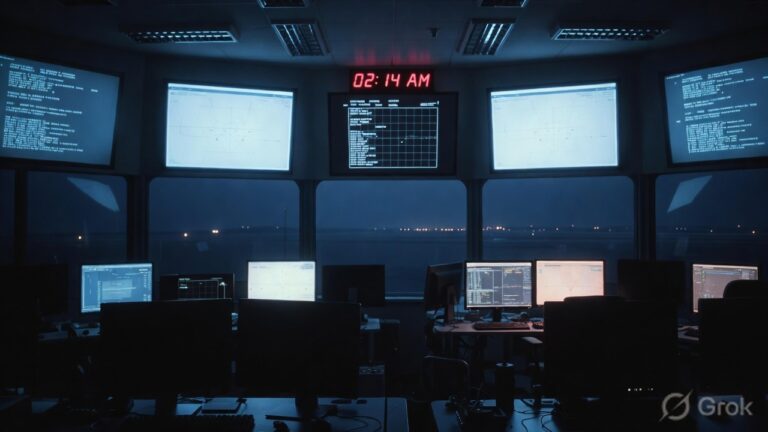
At 02:14 on a cool, clear night, technicians in a hardened operations room watched a familiar sweep of green vanish from their screens. For 37 seconds—no alarms, no echoes, just silence—radar blips, infrared tracks and some of the nation’s most sensitive sensors stopped reporting. Aircraft that minutes earlier had been tracked perfectly were suddenly invisible. Safeguards kicked in. Pilots were warned. Senior officers briefed their commanders. In some accounts, emergency protocols were launched; in others, personnel held their breath.
Why does a gap of 37 seconds make even hardened officers nervous? Because modern air defence systems are designed to detect and defeat threats in fractions of a minute. An attacker needs only a small window to launch a guided munition, jam a signal, or probe defences. When sensors go quiet—even briefly—the margin for error shrinks to near zero.
Did this really happen? A careful look at the record
If you’re wondering whether this precise “37 seconds” blackout actually occurred, the public record is mixed. There are many well-documented instances where radars, satellites, or air-traffic systems briefly failed. Recent, verifiable cases include:
- A major U.S. air-traffic control facility experienced a near-90-second loss of radar and radio contact in 2025, causing chaos at a busy international hub. That real incident demonstrates how a short outage can cascade into major operational disruption. (Bloomberg, May 2025).
- Mumbai’s air traffic control once went dark for 21 minutes in 2010 after a snapped power cable; the event shows how mundane failures can become big safety hazards. (Times of India, 2010).
- The NASA IMAGE spacecraft lost contact on 18 December 2005; that satellite lesson reminds us that even spaceborne sensors can “go blind” due to hardware or communications failures. (NASA/Wikipedia).
What ties these together is not identical causal detail but the common consequence: even short sensor outages demand immediate, expensive responses. If you add to that the long history of unexplained radar anomalies in defence archives, you see why an alleged 37-second military blackout gets so much attention.
For official attention to the phenomenon of unexplained aerial events and sensor anomalies, the public can look to the work of agencies set up to study them. One such body is the All-domain Anomaly Resolution Office which coordinates anomaly reporting and declassification. The Department of Defense and civil aviation authorities also publish incident reports and advisories. Department of Defense and the Federal Aviation Administration maintain records that help investigators separate technical faults from real threats.
(See the source list at the end for direct links to the reports and press coverage referenced below.)
How sensors fail — the short list
To understand why a 37-second gap is alarming, it helps to know how sensors work and how they fail. The word “sensor” covers many systems: primary radar, secondary surveillance radar, electro-optical/infrared (EO/IR) cameras, spaceborne sensors, radio frequency (RF) intercept systems, and more. Each can fail for different reasons.
- Hardware failure. Components burn out or fail suddenly. A power spike, faulty card, or failing connector can freeze a radar sweep. This is blunt and obvious, but it happens.
- Power or network outage. A UPS failure, a tripped breaker, or a cut fiber cable takes sensors offline instantly. Sometimes a short circuit or maintenance error is to blame. Mumbai’s long blackout shows the consequences.
- Software bug or overload. Modern sensors run complex software. Patches, memory leaks, or unhandled exceptions can drop data streams. A single corrupt packet can crash a process.
- Electromagnetic interference and jamming. Adversaries can deliberately generate RF noise to blind radars or spoof returns. Jamming can be intermittent and might cause precisely short gaps.
- Cyber intrusion. Increasingly, adversaries probe and sometimes penetrate sensor networks. A clever attacker can disrupt feeds for seconds while leaving minimal traces.
- Environmental effects and sensor masking. Heavy weather, plasma sheaths, or terrain can temporarily hide a target from certain sensors. Even a thermally stratified atmosphere can change radar propagation.
- Human error. The simplest cause is sometimes human: wrong switch, mistaken configuration, or an operator who inadvertently takes a channel offline.
Each cause demands a different response. Hardware failures need replacement. Jamming requires spectrum analysis and countermeasures. Cyber events trigger forensic containment. But for 37 seconds, the initial response is shock and triage: confirm the failure, switch to backups, and raise the alert level.
The sequence: what officers do in the first minute
Military doctrine trains teams for the worst. In the first 60 seconds after a sensor blackout, standard steps usually include:
- Triage: confirm whether the blackout is local (one screen) or systemic (multiple sensors).
- Switch to redundant feeds: many defence networks have overlapping sensors precisely for this reason. Operators shift to off-axis radars, airborne early warning aircraft, or satellite feeds while reconciling differences.
- Notify commanders and air traffic control partners to restrict movement in affected zones.
- Increase readiness: scramble fighters if credible tracks remain missing and the risk is high.
- Lock down logs and preserve evidence in case the gap is due to malicious activity. For cyber incidents, forensic capture tools run immediately.
These actions are fast, but they are not foolproof. Redundancy is only as useful as its diversity; if the same vulnerability affects multiple feeds, redundancy may fail. That’s one reason a 37-second outage can matter more than it sounds.
Could an adversary cause a 37-second blackout?
Yes. The tools that can cause brief blackouts are real and growing more accessible. Electronic warfare systems can jam or spoof sensors, sometimes in short, surgical bursts to probe defences. Cyber attackers can cut or reroute data streams for short windows to test detection and recovery. Even sophisticated kinetic attacks can degrade infrastructure long enough to probe reactions.
But proving hostile intent is hard. Many outages are traced to server updates, faulty cards, or supplier errors. That’s why investigations must be both technical (forensic logs, spectrum captures, hardware traces) and human (operator timelines, maintenance records). Only after exhaustive, provable links do officials publicly label an outage an attack.
When the system nearly failed: real cases that read like thriller scenes
History has examples where short failures almost became catastrophe.
- In 1995 the Norwegian rocket incident briefly triggered panic when Russian early-warning systems tracked an unusual rocket path. Commanders prepared for worst-case responses until clearer data arrived. The episode shows how ambiguous sensor data—especially when combined with geopolitical tension—can escalate rapidly.
- Closer to routine operations, the Newark radar outage in 2025 left controllers blind for about 90 seconds; flights were delayed, staff were traumatized, and the event triggered major reviews. Even though commercial aviation is not a military case, the operational lessons are the same: short gaps impose long costs. (Bloomberg, 2025)
- The loss of contact with the IMAGE satellite in 2005 demonstrated how space assets can drop out without warning, leaving science and defence communities scrambling for months. (NASA/Wikipedia)
These incidents show that whether caused by missile launches, power faults, or software bugs, short failures demand attention beyond the immediate moment.
How investigators chase down the truth
A proper investigation follows evidence. Typical steps include:
- Log analysis. Every sensor logs time-stamped records. Analysts examine these to pinpoint when data streams stopped and restarted.
- Cross-correlation. Teams compare independent sensors—radar, EO/IR, satellites—to see whether any other feed recorded the same gap.
- Spectrum forensics. If jamming is suspected, spectrum captures and intercept stations can reveal unusual emissions.
- Network forensics. Analysts check routers, switches, and message buses for routing changes or malicious packets.
- Physical inspection. Technicians check hardware for damage or tampering.
- Command timeline. Investigators reconstruct who ordered what, and when, to rule out human error or intentional shutdowns.
- Legal and policy review. If evidence points to an adversary, legal authorities and political leaders must be briefed for possible escalation.
Investigations can take weeks to months. During that time, public information is often limited, fueling speculation. That is why clear declassification and public statements—carefully worded and credible—matter to maintain trust.
Why even a short blind spot matters strategically
Thirty-seven seconds is short. But in high-tempo operations, seconds mean everything. Consider:
- A guided weapon can reach a target in a few dozen seconds once launched.
- An attacker probing defences can perform rapid, repeated tests and learn response patterns from just short gaps.
- Repeated short outages can degrade confidence in systems and force costly, constant readiness.
- Politically, unexplained gaps undercut public trust in national defence and aviation safety.
For all these reasons, militaries invest heavily in redundancy, cyber resilience, and rapid forensic capabilities. But budgets and technology can lag behind emerging threats, so short gaps remain a stubborn risk.
The human angle: stress, protocol and the weight of the watch
The people in the operations room carry the immediate weight of these minutes. Their decisions can mean the difference between routine resolution and escalation. Interviews with retired controllers and officers—who have spoken publicly about past blackouts—describe a tight, procedural rhythm that replaces panic: verify, switch, report, escalate. Those rhythms work because they are practiced, but they exact a psychological cost. After a sudden outage, teams often undergo stress reviews and counseling; even when nothing bad happened, the memory lingers.
What officials should do differently — and what they are already doing
There are recommended steps that civil and military agencies can take to reduce the risk and impact of short blackouts:
- Harden critical systems with independent power and communications.
- Increase sensor diversity—different manufacturers, different physical principles—so single faults don’t cascade.
- Improve cyber defenses and continuous monitoring for subtle intrusions.
- Publish clear redaction-safe reports when incidents occur to reduce rumor.
- Exercise real blackout scenarios in joint drills to remove uncertainty.
Some agencies have made progress. Defence offices now publish annual reports on anomalies and sensor gaps; aviation regulators are tightening equipment certification and backup policies. But adversaries also improve, so vigilance must be continuous.
FAQs
Q: Could a 37-second outage allow an attack?
A: In theory, yes. Short windows can be exploited, especially against glancing targets. But real attacks usually need multiple factors—timing, weapons range, and coordination. Securities and defences are layered to reduce single-point failures.
Q: Is jamming the most likely cause?
A: Not necessarily. Jamming is one possibility, but hardware faults, power glitches, software errors, and human mistakes are all frequent causes. Investigation determines which is most likely.
Q: Did the military cover up a 37-second blackout?
A: There’s no general evidence that militaries systematically hide short outages. But initial reporting is often incomplete for operational security reasons. Where public transparency is limited, watchdog groups and congressional oversight can demand answers.
Q: How can the public know what happened?
A: Look for official statements, forensic reports, and technical appendices from relevant agencies. Independent reporting and FOIA releases can also shed light over time.
Final word — the thin line between routine and crisis
A 37-second gap is a tiny sliver of time. Yet in the world of sensors and fast weapons, it feels enormous. Whether caused by a failed capacitor, a brief jamming burst, or a clever cyber probe, such gaps force militaries to confront uncomfortable truths: redundancy is essential, but not invincible; people matter as much as hardware; and public trust depends on timely, credible explanation.
If anything good comes from these incidents, it is the new urgency they create—for better engineering, more transparent reporting where possible, and relentless training. The night the sensors went blind for 37 seconds should be a wakeup call, not a headline to be forgotten.
Sources and references
Below are the key public sources and related reporting used to assemble this article. I recommend reading the original pieces for the technical details and official statements.
- Bloomberg — “Newark radar failure left controllers blind for 90 seconds.” May 5, 2025.
https://www.bloomberg.com/news/articles/2025-05-05/newark-radar-loss-left-controllers-guiding-blind-for-90-seconds. - Times of India — “Mumbai ATC goes blind for 21 minutes.” June 2010.
https://timesofindia.indiatimes.com/city/mumbai/mumbai-air-traffic-control-goes-blind-for-21-minutes/articleshow/6059752.cms. - Wikipedia / NASA — “IMAGE (spacecraft)” (loss of contact history). December 2005.
https://en.wikipedia.org/wiki/IMAGE_(spacecraft). - ODNI — Preliminary Assessment: Unidentified Aerial Phenomena (June 2021). (For context on anomaly reporting and official attention to unexplained sensor reports.)
https://www.dni.gov/files/ODNI/documents/assessments/Prelimary-Assessment-UAP-20210625.pdf. - All-domain Anomaly Resolution Office (AARO) — public records and information pages (for official procedures and declassification context).
https://www.aaro.mil/UAP-Records/. - Norwegian rocket incident — historical example of sensor ambiguity and near-escalation (1995).
https://en.wikipedia.org/wiki/Norwegian_rocket_incident. - RAND and academic sources on military sensors and resilience (for technical background and strategic context). Example: RAND report excerpts; defence journals. (Search summaries cited above.)

0 Comments