



















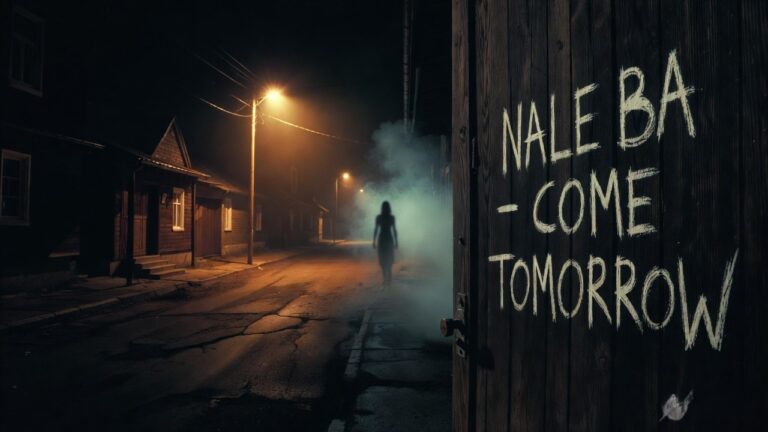
Across quiet streets, aging neighborhoods, and dimly lit residential lanes, a strange message has begun appearing again on doors and walls: “Come Tomorrow.” At first glance the words appear harmless, almost casual, like a note left for a late visitor or a polite excuse to avoid answering the door, but behind those two simple words lies one of the most unsettling urban legends ever whispered in modern folklore. The message is connected to an eerie supernatural warning known as “Nale Ba,” a phrase from the Kannada language that literally translates to “Come Tomorrow,” and for decades people have written those words outside their homes because they believed it could protect them from a wandering spirit that knocks on doors late at night, calls people by their names, and disappears if it is tricked into returning the next day. What makes the legend even more fascinating is that it refuses to disappear even in an age dominated by smartphones, security cameras, and modern cities, because stories about the “Come Tomorrow Curse” have resurfaced once again in 2026, spreading through social media, online forums, and local conversations where people are once again discussing the mysterious phrase that once appeared on thousands of doors.
The origin of the Nale Ba legend stretches back several decades, when rumors began circulating in neighborhoods that something strange was happening during the night. According to early stories shared among residents, a mysterious presence had begun wandering through residential streets after dark, knocking on doors and calling out the names of people living inside the house, but the most disturbing part of the story was that the voice calling out the name sounded familiar to whoever heard it. Sometimes it sounded like a mother calling her child home, sometimes it sounded like a husband asking his wife to open the door, and sometimes it sounded like a close friend who needed help. Because the voice sounded so convincing, many people initially believed someone they knew was standing outside. However, the legend quickly turned darker when stories began spreading that anyone who opened the door after hearing the voice was never seen again, or was found dead under mysterious circumstances, which caused fear to spread rapidly through entire neighborhoods where residents began warning each other not to respond to any voice calling them late at night.
As fear continued spreading, people began searching for ways to protect themselves from the mysterious visitor. According to folklore shared among residents, an elderly woman suggested a clever trick that would confuse the spirit and prevent it from entering homes. Instead of confronting the entity or opening the door, people should write a command outside their house that would force the spirit to leave. That command was the phrase “Nale Ba,” which means “Come Tomorrow.” The idea behind this strange solution was based on the belief that supernatural entities must follow instructions or messages directed toward them. If the spirit arrived at a house and saw the words “Come Tomorrow,” it would obey the instruction and leave, planning to return the following night. When it returned the next day, however, the same message would still be written on the door, which meant the cycle would repeat endlessly and the spirit would never actually enter the house. This unusual method of protection spread quickly, and before long entire neighborhoods began writing the same words outside their doors, gates, and walls.
During the height of the legend, the phrase “Nale Ba” could reportedly be seen everywhere across certain neighborhoods, written in chalk, paint, or charcoal on wooden doors and metal gates. Visitors traveling through those areas often noticed the strange markings and wondered why the same message appeared on so many homes. For residents, however, the words served as a form of psychological protection against a threat that people believed was real. Whether the spirit existed or not, the message created a shared ritual that made entire communities feel safer. Even those who did not completely believe the story often wrote the message anyway, simply because everyone else was doing the same thing and no one wanted to take the risk of leaving their door unmarked.
The legend grew stronger over time because different versions of the story began appearing in different areas. In one version of the tale, the spirit was believed to be the ghost of a young bride who died tragically before her wedding day and returned to wander the streets searching for a husband she never had. In another version, the entity was said to target young men, particularly those who were the main providers for their families, which made the story even more frightening because it suggested the spirit deliberately searched for victims who played important roles within their households. Some versions described the spirit as a demon capable of perfectly imitating human voices, while other versions described it as a wandering witch who used deception to trick people into opening their doors. Over time these variations blended together, creating a complex legend that changed slightly depending on who was telling the story, yet every version of the legend shared the same rule that people repeated again and again: never open the door at night if someone calls your name from outside.
Stories like the Nale Ba legend often become powerful because they tap into deep psychological fears that exist across cultures. One of the most unsettling elements of the story is the idea of hearing a familiar voice outside the door, because human beings are naturally conditioned to trust voices they recognize. The legend takes that instinct and turns it into a trap, suggesting that the voice might not belong to the person you think it does. Another reason the story spread so widely is because it targets the idea of safety inside the home. Most people believe their home is the safest place they can be, yet the legend suggests that danger could be waiting just outside the door, calling your name and asking to be let in. That combination of familiarity and danger creates a powerful narrative that people remember and repeat.
Over time the legend became so well known that it eventually moved beyond local folklore and entered popular culture. Writers, filmmakers, and storytellers became fascinated by the concept of a spirit that imitates voices and manipulates human trust in order to enter homes. Horror stories and films began drawing inspiration from the legend, introducing the idea to audiences who had never heard the original tale. Yet even as the story appeared in entertainment, the original legend continued to circulate independently through word of mouth and online discussions.
In 2026 the legend has resurfaced again, largely because social media platforms allow old stories to spread faster than ever before. Images showing the words “Come Tomorrow” written on doors have appeared online once again, accompanied by discussions about the mysterious legend and its origins. Some people claim the photos are simply modern recreations of an old urban legend, while others insist that the warnings are appearing again for reasons no one fully understands. Paranormal discussion forums have begun revisiting the story, sharing old newspaper clippings, folklore references, and eyewitness accounts from decades ago. Although there is no verified evidence that any supernatural activity is occurring today, the legend has once again captured the imagination of thousands of people who are fascinated by stories that blur the line between folklore and mystery.
Psychologists who study urban legends often explain that stories like Nale Ba spread because they reflect deeper social anxieties. When communities experience uncertainty or rapid change, unusual stories can spread quickly because they offer explanations for strange events that people cannot easily understand. Another factor that helps such legends survive is collective storytelling. Each time someone retells the story, they add new details, which makes the narrative richer and more dramatic. Over time those added details become part of the legend itself, even if no one knows exactly where they originated. The Nale Ba story appears to have evolved in exactly that way, growing gradually as more people contributed their own interpretations and experiences.
What makes the legend particularly remarkable is its ability to survive across generations. Many urban legends fade after a few years when people lose interest, yet this story has continued circulating for decades. It survived the transition from small neighborhoods to large modern cities, and it survived the arrival of the internet where new stories compete constantly for attention. Today the legend occupies a strange place between folklore, cultural memory, and online mystery, where some people treat it as a fascinating piece of history while others still whisper about it late at night as though it might be more than just a story. Even people who do not believe in ghosts sometimes remember the rule associated with the legend: if someone knocks on your door late at night and calls your name, it might be wise to pause for a moment before deciding whether to answer.
Disclaimer
This article explores folklore and urban legends that form part of cultural storytelling traditions. The events described in the legend are not verified supernatural occurrences, and the story is presented for historical and cultural discussion purposes.
Frequently Asked Questions
What does “Nale Ba” mean?
The phrase “Nale Ba” comes from the Kannada language and translates to “Come Tomorrow,” which people believed could trick a wandering spirit into leaving their home and returning the next day instead of entering.
Where did the Nale Ba legend originate?
The story became widely known in neighborhoods across southern India during the late twentieth century, where residents reportedly began writing the message on doors and walls.
Why did people write “Come Tomorrow” on their doors?
According to folklore, the spirit would obey written instructions, so writing “Come Tomorrow” forced the entity to leave and return the next day, trapping it in an endless cycle.
Is there any proof the Nale Ba spirit exists?
There is no scientific or verified evidence confirming the existence of the spirit, and researchers generally classify the story as an urban legend or cultural folklore.
Why is the legend trending again in 2026?
Online discussions, social media posts, and renewed interest in paranormal folklore have brought the story back into public conversation.
References and Source Material
https://en.wikipedia.org/wiki/Naale_Ba
https://homegrown.co.in/homegrown-voices/naale-baa-the-spooky-history-of-karnatakas-very-own-witch-that-wanders
https://folklorechronicles.com/the-nale-ba-legend-the-witch-of-karnataka/
https://www.jahernandez.com/posts/nale-ba-of-bengaluru-karnataka-india

0 Comments