
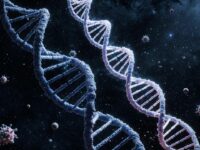
















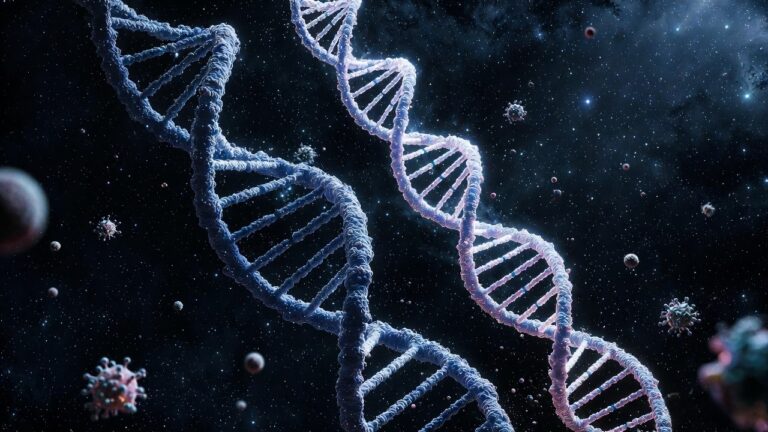
Modern biology has uncovered astonishing details about how life works. From DNA to proteins, the machinery inside living cells follows precise rules. But hidden inside those rules lies a strange possibility — one that has sparked growing debate among scientists.
It is called the mirror life hypothesis.
The idea suggests that life could exist using mirror-image versions of the molecules that build every organism on Earth. If such life existed, it might behave so differently from our own biology that it could be nearly invisible to the systems that normally detect living organisms.
While no mirror life has ever been discovered, the concept is taken seriously enough that scientists are already discussing its scientific implications and potential risks.
In fact, recent warnings from researchers have pushed the topic into global scientific debate.
The Hidden Symmetry of Life
To understand mirror life, we first need to understand a concept called chirality.
Chirality refers to objects that exist in two forms that are mirror images of each other, like your left and right hands. They look similar but cannot be perfectly aligned. Scientists often call them “left-handed” and “right-handed” structures.
Many molecules share this property.
Amino acids, sugars, and other building blocks of life come in mirror forms. Yet life on Earth uses only one specific orientation of these molecules.
For example:
- Proteins in living organisms use left-handed amino acids
- DNA and RNA rely on sugars with a specific orientation
This uniform orientation is known as biological homochirality.
It is one of the fundamental signatures of life as we know it.
What Mirror Life Would Look Like
Mirror life would flip this entire system.
Instead of using the same molecular orientation as ordinary life, a mirror organism would be built from the opposite versions of those molecules.
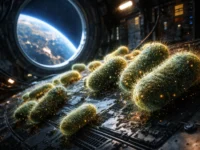
Scientists sometimes describe this idea using mirror bacteria.
These hypothetical microbes would contain:
- Mirror-image DNA
- Mirror-image proteins
- Mirror-image enzymes
Every molecular component inside the cell would be reversed.
The result would be an organism that looks familiar in structure but operates using chemistry that runs in the opposite direction.
From a biochemical perspective, such life could be completely incompatible with normal biology.
Why Mirror Biology Could Be Invisible to Us
Living systems recognize each other using molecular “locks and keys.”
Immune systems identify pathogens by detecting molecular shapes on their surfaces. Enzymes bind to specific chemical structures.
If an organism were built from mirror molecules, those shapes would be reversed.
The biological locks and keys might no longer fit.
Scientists warn that this difference could make mirror organisms extremely difficult for immune systems to recognize or attack.
In other words, our bodies might struggle to detect or destroy them.
The same challenge could apply to:
- Viruses that normally infect bacteria
- Predators that feed on microbes
- Enzymes that break down biological material
The mirror organism might exist outside the usual ecological checks that regulate life.
The Origins of the Idea
The concept of mirror biology dates back more than a century.
French chemist Louis Pasteur discovered molecular chirality in the 1800s while studying crystals and fermentation.
His work revealed that molecules could exist in mirror forms.
Later scientists began wondering why living organisms use only one orientation.
If both versions exist in chemistry, why did life choose just one?
Some researchers proposed that early life might have randomly selected one molecular orientation while the other possibility remained unused.
This raised a provocative idea.
Perhaps somewhere in the universe, life could exist with the opposite chirality.
The Synthetic Biology Connection
For decades, mirror life remained purely theoretical.
But advances in synthetic biology have changed the conversation.
Scientists have already created mirror versions of certain biomolecules in laboratories. These include mirror DNA fragments and mirror proteins.
Such molecules are valuable in medicine because they can resist breakdown by normal biological enzymes.
However, building a complete mirror organism is far more complicated.
A living cell requires thousands of interacting components working together in perfect coordination.
Researchers estimate that creating even a simple mirror bacterium could still be many years away, if it proves possible at all.
Growing Warnings From Scientists
Despite the technical challenges, mirror biology has sparked concern among researchers.
In 2024, a group of scientists published warnings about the risks of creating mirror organisms.
They argued that such organisms could behave in unpredictable ways if released into natural ecosystems.
Because mirror microbes would operate with reversed molecular structures, they might avoid many of the defenses that normally limit biological threats.
Scientists suggested that mirror bacteria could potentially:
- Evade immune responses
- Resist common antibiotics
- Spread through ecosystems without natural predators
Some experts fear this could lead to severe environmental disruption or uncontrolled infections.
For that reason, several research groups have urged caution and stronger oversight of mirror biology experiments.
Could Mirror Life Exist Naturally?
The mirror life hypothesis also raises an intriguing question about the universe.
If chemistry allows mirror molecules, could mirror organisms arise naturally somewhere in space?
Astrobiologists sometimes consider this possibility when thinking about alien life.
On another planet, early biological chemistry might have chosen the opposite molecular orientation.
In that scenario, alien life could share many characteristics with Earth organisms but use reversed molecular building blocks.
To our instruments, such organisms might behave in unfamiliar ways.
They might not interact with our biological systems in predictable patterns.
This remains speculation, but it highlights how little we know about possible forms of life beyond Earth.
Why Life on Earth Uses One Orientation
One of the great puzzles in biology is why life selected a single molecular direction.
Scientists still debate the answer.
Some theories suggest environmental influences during the early stages of life.
Others point to chemical processes that may have gradually favored one orientation.
Once a single direction became dominant, evolution reinforced it.
Every organism that followed inherited the same molecular pattern.
This created the unified biological system we see today.
The Risks of Mirror Microbes
The main reason scientists discuss mirror life cautiously is the potential risk.
Mirror organisms could behave like biological outsiders in Earth’s ecosystems.
Because they would not share the same molecular structure as normal organisms, they might interact with the environment differently.
Some scientists worry that mirror microbes could bypass the natural controls that limit ordinary bacteria.
A 2024 report warned that such organisms could potentially cause serious health or ecological consequences if created without careful safeguards.
For this reason, many researchers are calling for global discussions about how mirror biology should be regulated.
Scientific Benefits of Mirror Molecules
Despite the concerns, mirror chemistry itself has promising applications.
Mirror molecules can sometimes remain stable longer in the body because natural enzymes cannot easily break them down.
Researchers are exploring these molecules for:
- Advanced pharmaceuticals
- Long-lasting therapeutic compounds
- New biochemical tools
In these cases, scientists focus on individual mirror molecules, not entire organisms.
Most researchers agree that studying mirror chemistry can be valuable as long as experiments avoid creating self-replicating mirror life.
Why the Mirror Life Debate Matters
The discussion around mirror life reflects a broader challenge in modern science.
Technological advances now allow researchers to manipulate biology in ways that were unimaginable a generation ago.
Synthetic biology can design cells, edit genomes, and create entirely new biochemical systems.
With these abilities comes responsibility.
Scientists must consider not only what can be done, but also what should be done.
The mirror life debate is a clear example of this challenge.
The Search for Alien Biology
The idea of mirror life also influences how scientists search for life beyond Earth.
Most instruments used in astrobiology are designed to detect familiar biological molecules.
If alien organisms used mirror chemistry, they might not produce the signals scientists expect.
Future missions studying other planets and moons may need to consider this possibility.
Understanding the limits of Earth-based biology could help researchers design better tools for detecting unfamiliar forms of life.
Final Thoughts
The mirror life hypothesis sits at the edge of modern biology.
It explores the possibility that life could exist using reversed versions of the molecules that build every organism on Earth.
No mirror organisms have ever been discovered, and scientists emphasize that such life remains hypothetical.
Yet the idea is powerful because it challenges assumptions about what life must look like.
By studying mirror chemistry and its implications, researchers are gaining new insight into the origins of life, the limits of biology, and the responsibilities that come with advanced biotechnology.
Whether mirror life ever exists in reality remains unknown.
But the discussion itself is pushing science to think more carefully about the future of life on Earth — and perhaps beyond it.
Frequently Asked Questions
What is mirror life?
Mirror life refers to hypothetical organisms built from mirror-image versions of the molecules used in normal biology.
Has mirror life been discovered?
No. Scientists have created mirror molecules in laboratories, but no mirror organism has ever existed.
Why could mirror organisms be dangerous?
Because their molecular structures would be reversed, immune systems and natural biological defenses might struggle to recognize them.
Could alien life use mirror chemistry?
Some researchers believe it is possible that life on other planets could use the opposite molecular orientation from life on Earth.
Are scientists trying to create mirror organisms?
Most researchers say creating full mirror organisms would be extremely difficult and should be approached with strict oversight.
Sources and References
https://www.britannica.com/science/mirror-life
https://wyss.harvard.edu/news/researchers-call-for-global-discussion-about-possible-risks-from-mirror-bacteria/
https://www.scientificamerican.com/article/creating-mirror-life-could-be-disastrous-scientists-warn/
https://www.nature.com/articles/d44151-025-00003-7
https://en.wikipedia.org/wiki/Mirror-image_life
https://asm.org/articles/2025/may/mirror-bacteria-reflecting-alternate-chirality
https://www.the-scientist.com/mirror-microbes-understanding-the-how-and-why-of-hypothetical-life-73348

0 Comments