

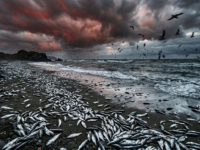













There is something deeply unsettling about a quiet morning suddenly broken by the sight of thousands of lifeless animals scattered across land or floating in water, events that feel almost unnatural, almost scripted, yet they are very real, documented, and in many cases still not fully understood by science despite years of investigation and technological advancement.
Across different parts of the world, from remote oceans to small towns, mass animal deaths have occurred without warning, sometimes wiping out entire populations in days, sometimes repeating in patterns that scientists struggle to decode, leaving behind more questions than answers and forcing researchers to confront a difficult truth: nature still holds mysteries we cannot fully control or explain.
Before diving into specific cases, it is important to understand what scientists call these events. A mass mortality event is when a large number of animals from a single species die in a short period, often with devastating ecological consequences. These events are not new, but research suggests they are becoming more frequent, especially among birds, fish, and marine species.
At the same time, experts warn against jumping to apocalyptic conclusions, because while some causes remain unclear, many events are linked to complex combinations of environmental stress, disease, and human activity, even if the full picture is still missing.
The Night Birds Fell From the Sky
In late December 2010, a small town in Arkansas woke up to a shocking sight, thousands of red-winged blackbirds scattered across streets, rooftops, and gardens as if the sky itself had dropped them.
Witnesses described hearing loud pops in the night, followed by birds falling in large numbers, creating a scene that looked almost unreal. Initial theories ranged from poisoning to disease, but autopsies showed internal injuries, suggesting the birds had collided with objects mid-air.
Some experts linked the event to fireworks that may have startled the birds into chaotic flight during the night, a time when their vision is poor, yet even this explanation did not fully satisfy researchers because similar incidents occurred in nearby regions within days, raising questions about whether multiple factors were involved.
Even today, the Arkansas bird deaths remain one of the most widely discussed unexplained wildlife events, not because there are no theories, but because none fully explain the scale and timing of what happened.
Rivers Turning Into Graveyards
Just days after the bird incident, another disturbing event unfolded when around 100,000 fish were found dead in an Arkansas river, floating in massive clusters that stretched for miles.
What made this event particularly strange was that only one species appeared to be affected, which ruled out many common causes like widespread water contamination, leaving scientists uncertain about the exact trigger.
In other parts of the world, similar scenes have repeated themselves, with millions of fish washing ashore overnight, often linked to oxygen depletion, algae blooms, or sudden temperature changes, yet in many cases, investigators cannot pinpoint a single definitive cause.
Research shows that low oxygen levels, toxins, and environmental shifts can combine to create deadly conditions in water bodies, but the unpredictability of these events continues to challenge scientists.
The Saiga Antelope Catastrophe
One of the most shocking mass deaths in recent history occurred in 2015, when more than 60,000 saiga antelope died within just a few days across Central Asia.
This was not a gradual decline or a slow-moving disease outbreak, it was sudden, fast, and devastating, wiping out a huge portion of an already endangered species.
Scientists eventually identified bacterial infection as a contributing factor, but what triggered the bacteria to become deadly at such a massive scale remains unclear, with theories pointing to unusual weather conditions, humidity, and environmental stress acting together in ways that are still not fully understood.
The event highlighted a critical issue in modern science: sometimes the cause is not a single factor, but a complex chain reaction that is difficult to recreate or predict.
Oceans of Death: When Marine Life Disappears Overnight
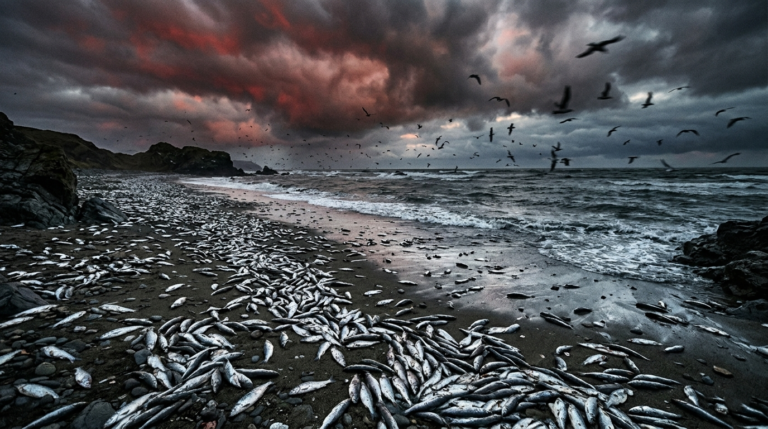
In coastal regions around the world, there have been incidents where millions of fish, sardines, or anchovies suddenly appear dead in harbors and beaches, turning vibrant ecosystems into silent, lifeless zones.
One such case occurred in California, where millions of sardines were found dead in a marina, creating a thick layer of fish that made it nearly impossible for boats to move.
Scientists suggested that the fish may have been trapped in a confined space and consumed all available oxygen, leading to suffocation, yet this explanation still leaves open questions about what drove such massive numbers into that space in the first place.
Marine die-offs are among the most complex to study because the ocean is vast, dynamic, and often poorly monitored, meaning crucial data is lost before scientists can even begin their investigation.
When Disease Moves Faster Than Science
Disease is one of the leading causes of mass animal deaths, accounting for a significant portion of recorded events, yet even here, there are mysteries.
For example, the sudden spread of viruses among animal populations has led to millions of deaths within months, such as outbreaks that wiped out large numbers of piglets or marine species.
What makes these events difficult to understand is not just the disease itself, but how quickly it spreads and why it suddenly becomes so lethal, often jumping from mild outbreaks to catastrophic die-offs without clear warning signs.
Scientists believe that environmental stress, climate changes, and human interference may weaken animal populations, making them more vulnerable, but the exact tipping point often remains unknown.
Climate Extremes and Invisible Triggers
Extreme weather events, including sudden cold waves, heat stress, or droughts, have been linked to mass deaths in animals ranging from livestock to wild species.
In Mongolia, for instance, severe winter conditions once killed millions of animals, disrupting both ecosystems and human livelihoods.
But even when weather is involved, it is rarely the only factor. Often, these events occur when multiple stressors combine, such as reduced food supply, disease, and environmental pressure, creating conditions that animals simply cannot survive.
Scientists describe these as “multi-cause events,” where no single trigger can fully explain the outcome, making them particularly difficult to predict or prevent.
Why Science Still Struggles to Explain Everything
Despite advancements in data collection, satellite monitoring, and environmental science, many mass animal deaths remain partially unexplained for several reasons.
First, these events often happen suddenly and in remote locations, meaning critical evidence is lost before researchers arrive.
Second, ecosystems are incredibly complex, and even small changes in temperature, chemistry, or population dynamics can have massive consequences when combined.
Third, there is still limited long-term data on many species, making it difficult to identify patterns or predict future events.
Even large-scale studies analyzing hundreds of mass die-offs have concluded that while we understand some causes, there is still a significant gap in knowledge when it comes to how these factors interact.
The Bigger Picture: Are These Events Increasing?
Research suggests that mass animal deaths are being reported more frequently, especially among marine life and birds, though scientists are still debating whether this reflects an actual increase or simply better reporting.
What is clear, however, is that human activity is playing a growing role, through pollution, habitat destruction, and climate change, all of which add stress to ecosystems and may increase the likelihood of sudden die-offs.
At the same time, nature itself remains unpredictable, capable of producing rare and extreme events that do not follow clear patterns or expectations.
A Necessary Disclaimer
It is important to approach these घटनाएँ carefully and responsibly.
Mass animal deaths are not signs of an impending apocalypse, nor are they evidence of hidden conspiracies or unknown supernatural forces. In most cases, scientists do find partial explanations rooted in environmental science, biology, and climate dynamics, even if the full picture is not always complete.
Ongoing research continues to improve our understanding, and many mysteries that once seemed unsolvable have eventually been explained through persistent investigation.
Conclusion
Mass animal deaths sit at the intersection of science, mystery, and environmental reality, reminding us that the natural world is far more complex than we often assume.
Some events are explained, others remain partially understood, and a few continue to puzzle even the most experienced researchers, not because science has failed, but because nature operates through systems that are deeply interconnected and still being explored.
What these घटनाएँ ultimately reveal is not just the fragility of ecosystems, but also the limits of our current knowledge, and the urgent need to study, monitor, and protect the natural world before more of these mysteries turn into permanent losses.
FAQs
What is a mass animal death event?
It is a situation where a large number of animals from the same species die within a short time, often due to environmental, biological, or unknown causes.
Are these events increasing?
Studies suggest they are being reported more frequently, especially among birds and marine life, though better monitoring may also play a role.
Are mass die-offs a sign of the end of the world?
No, scientists clearly state these are natural or environmental घटनाएँ, not apocalyptic signs.
What is the most common cause?
Disease is one of the leading causes, followed by environmental factors like pollution, toxins, and climate stress.
Why are some cases never fully explained?
Because multiple factors often act together, and key data is sometimes lost before researchers can analyze the event.
References / Sources
- https://content.time.com/time/specials/packages/completelist/0,29569,2040762,00.html
- https://vcresearch.berkeley.edu/news/rise-mass-die-offs-seen-among-birds-fish-and-marine-invertebrates
- https://www.cbsnews.com/pictures/mysterious-mass-animal-deaths/
- https://www.nationalgeographic.com/animals/article/150113-mass-die-off-disease-animals-environment-science
- https://en.wikipedia.org/wiki/Mass_mortality_event
- https://pmc.ncbi.nlm.nih.gov/articles/PMC4313809/
- https://www.reuters.com/article/lifestyle/science/mass-bird-deaths-rare-not-apocalyptic-experts-idUSTRE70534T/

0 Comments