




Disclaimer: This article reports witness accounts, long-term monitoring efforts, and published studies about the Hessdalen lights. It aims to present verified references and balance local testimony with scientific investigation. Some claims remain unsettled and readers should treat eyewitness reports with healthy curiosity. This piece is a journalistic summary, not a definitive scientific paper.
The first time you hear about Hessdalen, it sounds like a ghost story.
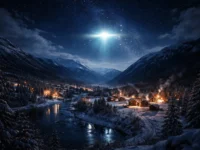
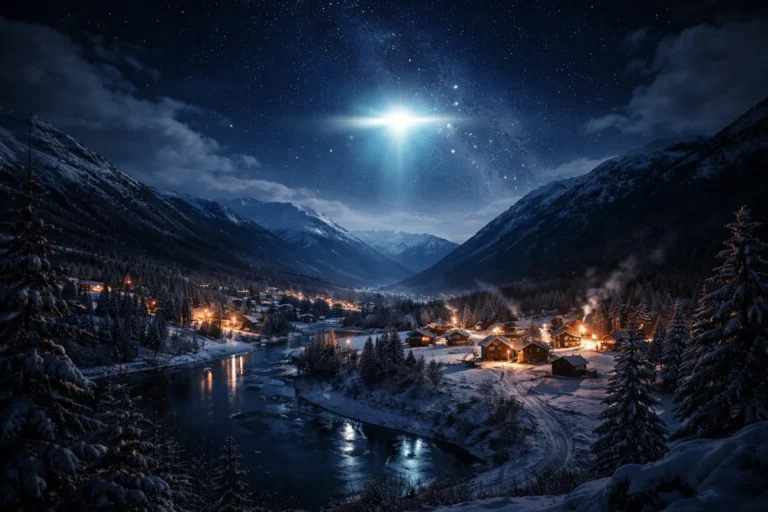
Small farms. Long winters. A scattering of houses where the valley narrows, and every so often — almost as if on cue — bright orbs appear in the sky and dance, hover, split, or zip across the horizon. Locals have kept notebooks. Tourists have come with cameras. Scientists have set up instruments. The lights have become part of the valley’s identity: an annual rhythm for locals and researchers alike.
Below, I walk through the human stories, the plain facts from long-term study, the leading ideas scientists have tested, and the best-checked sources you can use to follow the record yourself.
Bold history: people who saw the lights first
Reports of strange lights in the Hessdalen region date back decades. The phenomenon rose to national attention in the early 1980s when sightings increased sharply and photographers captured eerie images. Those years brought journalists and curious visitors, and then came a volunteer science effort that would run for years. Local storekeepers remember the winter tourists; a retired teacher still carries a stack of notes from friends who swore they watched a glowing ball drift above a frozen field.
What matters is not a single dramatic tale, but the sheer pattern: lights reported at the same valley, repeatedly, over decades. That repetition turned mystery into something that could be studied.
What scientists did — and what they still do
Starting in the 1980s, a coordinated effort known as Project Hessdalen began to collect data. Volunteers and researchers installed cameras, magnetometers, and other instruments. An automatic measurement station—running cameras and sensors around the clock—was later installed to capture any new appearances without relying on wait-and-see field teams.
The value of a fixed station is simple: it reduces the chance that a strange sight is actually a car headlight, airplane, or camera artefact. With continuous data, researchers could compare video, light spectra, and electromagnetic readings. Some campaigns produced technical reports and peer-reviewed papers that tested different ideas about the origin of the lights.
How the lights behave — the odd, repeatable features
Eyewitness and instrumental records show repeated behaviours:
- The lights come in multiple colors, most often white, yellow or red.
- They can hover for seconds to hours, and sometimes split into multiple points.
- They move in odd ways: sudden bursts of speed, slow hovering, and patterns that look like intelligent movement to some observers.
- The phenomenon appears both at night and in daylight, though night sightings are easier to notice.
- Activity spikes have happened — for example in the early 1980s — and then settles down to fewer but still regular sightings.
These traits make Hessdalen different from ordinary atmospheric or astronomical events. The pattern, repeated over time, is the reason it remains a matter of study.
Leading scientific ideas (plain language)
Scientists have floated several plausible explanations. No single theory has earned universal agreement, but some ideas fit parts of the record:
- Natural plasma or charged-particle phenomena. Some researchers suggest ionized gas or plasma pockets form under specific geological or atmospheric conditions and glow as they move. This idea fits with certain spectral readings and with the way lights can split or flicker.
- Ground emissions and mineral effects. The valley’s bedrock contains certain minerals; in combination with groundwater and atmospheric conditions, some think the interaction might produce light-emitting reactions. A controversial study suggested elements like scandium and titanium were found in residues near sightings — a finding that sparked debate and further testing.
- Optical illusions and common lights misidentified. A conservative but important argument: some or many sightings may be headlights, aircraft, or bright planets distorted by air layers, seen at odd angles. This explains a portion of the reports but not all instrument-documented events.
- Ball lightning and other rare electrical events. Ball lightning is a poorly understood electrical phenomenon sometimes reported during storms. Some Hessdalen events could be similar in nature.
- Unknown atmospheric chemistry or physics. A handful of scientists propose that the lights are evidence of an atmospheric process not well captured by current models — a humbling possibility but one that requires more hard data.
The core point: the phenomenon resists a single tidy explanation. That’s why continuous monitoring and careful, published studies are essential.
Why this matters beyond mystery
At first glance, Hessdalen is an odd, charming tale you might put in a travel guide sidebar. At second glance, it becomes a valuable scientific test-bed: a place where repeated, localised luminous phenomena let researchers build instruments, gather long-term data, and refine models of atmospheric optics, plasma physics, and human perception.
The tools and lessons from Hessdalen can apply to other unexplained lights worldwide — from desert ghost lights to coastal glows — and can help separate hoaxes and misidentifications from phenomena that really challenge our understanding.
The town itself: how residents live with the lights
For people who live in and around the valley, the lights are a real, present thing. Some families have become modest tourist hosts. Others are skeptical, tired of media attention. Schools use the phenomenon to teach science: students learn to operate cameras and log sightings. Local authorities occasionally field calls from curious visitors. This is not a Hollywood set — it’s a small community whose rhythms include occasional nights of strangers watching the sky.
What the instruments have captured — the best evidence
Project Hessdalen’s automatic measurement station (AMS) and occasional field campaigns have yielded the most persuasive evidence: videos, spectral data, and environmental readings tied to observed lights. Peer-reviewed papers and long-form technical reports (linked at the end) describe measurements consistent with luminous phenomena that are not simply car headlights or ordinary lights. These measurements are why the case has stayed in scientific magazines and technical reports rather than just folklore.
Common mistakes to avoid when you read about Hessdalen
- Don’t assume every internet claim is a verified scientific result. Some sensational headlines stretch or misinterpret data.
- Beware of jumping from “unexplained” to “extraterrestrial.” Unexplained means simply that current evidence doesn’t provide a final answer — not that aliens are confirmed.
- Treat eyewitness reports as valuable but fallible. Human memory and perception are excellent in many contexts and unreliable in others, especially at night or under stress.
What would convince scientists?
Clear, repeatable, multi-instrument recordings that show a direct physical signature tied to a source. For example, a spectral fingerprint conclusively matching a known chemical reaction — or high-resolution radar plus optical footage showing a craft or a physical object. Right now, the records are intriguing and sometimes scientifically rigorous, but not definitive enough to claim a single explanation.
How you can observe responsibly (if you travel there)
If you plan to visit:
- Respect private property and local life.
- Use a tripod and long-exposure camera settings for night photography.
- Bring a notebook and log time, weather, and direction rather than just filming.
- If you find data that looks useful, share it with Project Hessdalen or scientific groups studying the lights. Citizen science has been central to understanding this phenomenon.
FAQs — the things readers ask first
Q: Are the lights confirmed as extraterrestrial?
A: No. There is no verified evidence that the lights are alien craft. Most scientific work focuses on natural or physical explanations. The label “unexplained” simply means the best evidence so far has not produced a single, agreed answer.
Q: How often do the lights appear?
A: Sightings peaked in the early 1980s. Since then, activity has varied; some years see a few dozen sightings, others only a handful. The automatic monitoring station records when events occur and helps create a longer-term pattern.
Q: Could the lights be camera artefacts?
A: Some images and videos are camera artefacts or misidentifications. But several multi-instrument recordings—video plus spectral data, magnetometer readings, and eyewitness logs—make it unlikely that all documented events are artefacts.
Q: Has anyone reproduced the lights in a lab?
A: Not in a way that fully matches the range of behaviours seen in the valley. Researchers have reproduced plasma and electrical phenomena with some similar traits, but not a single lab result that explains every detail of Hessdalen lights.
Q: Where can I see the best, most reliable information?
A: Peer-reviewed papers, the Project Hessdalen website, and long-form technical reports are the most reliable public sources. Local Norwegian news and long-term academic studies provide context and data.
Final thought — a town that keeps the night honest
Hessdalen is not a closed case. It is the kind of place scientists actually love: a repeatable, local phenomenon that resists easy categorization. The lights are a reminder: sometimes the world holds small puzzles that last for decades. Those puzzles are where careful people—citizen volunteers, journalists, and researchers—meet curiosity and keep asking good questions.
If you read the reports, look at the careful measurements, and listen to residents, you come away impressed not by the mystery alone, but by how a quiet valley became a living lab for patient, human inquiry.
References & Proof
(These are placed here for verification and follow-up reading.)
- Project Hessdalen (official site, background and AMS info): https://www.hessdalen.org/
- Hessdalen lights — Wikipedia overview and references: https://en.wikipedia.org/wiki/Hessdalen_lights
- Long-term scientific survey (Teodorani — PDF report): https://hessdalen.org/reports/scex1802217251.pdf
- Project Hessdalen AMS station page (technical): https://old.hessdalen.org/station/
- Time magazine — human story and context of Hessdalen coverage: https://time.com/3824196/see-the-norwegian-town-at-the-center-of-a-ufo-mania/
- ResearchGate — Project Hessdalen planning and surveys: https://www.researchgate.net/publication/371247495_PROJECT_HESSDALEN_NEXT_AGE_-RESEARCH_PLANNING
- For comparison — Marfa lights (Texas) overview and scientific perspective: https://en.wikipedia.org/wiki/Marfa_lights

0 Comments