













By Ronald Kapper
A Quiet Shift That Could Change Everything
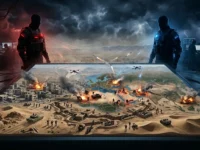
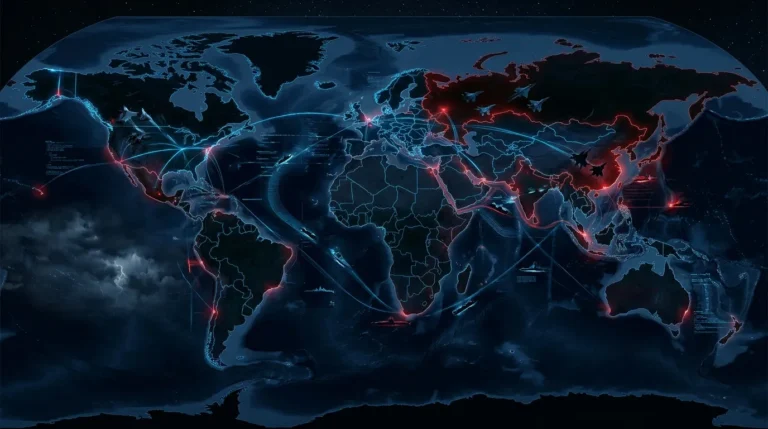
There is no official announcement, no dramatic global speech, no single moment that defines it — yet the world is changing faster than most people realize. Power is no longer centered in one place, and alliances are no longer simple. What we are witnessing is a silent redraw of the global power map, one that could define how conflicts begin, escalate, and even end in the coming decades.
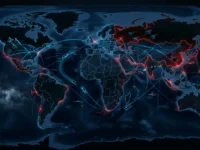
For decades, global politics felt predictable. Countries chose sides, blocs formed, and conflicts followed familiar patterns. Today, that structure is dissolving. In its place, something far more complex is emerging — a web of overlapping alliances, flexible partnerships, and strategic friendships that shift depending on the situation.
And here’s the uncomfortable truth: the more alliances the world builds, the more fragile peace appears to become.
The End of the Old World Order
For most of the modern era, global power was shaped by clear blocs. During the Cold War, it was simple: two superpowers, two sides, and a balance that, while tense, was predictable.
That clarity is gone.
Today’s world is not bipolar — it is multipolar, fragmented, and constantly shifting. Countries are no longer choosing permanent sides. Instead, they are building relationships based on immediate interests: trade here, security there, technology somewhere else.
This shift has created what experts call “multi-alignment,” where nations engage with multiple rival blocs at once. India, for example, works closely with Western nations in security frameworks while also engaging with BRICS and maintaining ties with Russia.
This isn’t confusion. It’s strategy.
The Rise of Mini-alliances
Instead of large, rigid blocs, the world is now full of smaller, purpose-driven alliances — often called “mini-laterals.” These are faster, more flexible, and focused on specific goals.
The QUAD: A Strategic Signal
The Quadrilateral Security Dialogue, or QUAD, brings together the United States, India, Japan, and Australia. It is not a formal military alliance, yet it plays a critical role in shaping Indo-Pacific security, focusing on maritime safety, cyber threats, and technology cooperation.
It exists largely as a response to rising Chinese influence — not through direct confrontation, but through coordination and presence.
AUKUS: Technology Becomes a Weapon
AUKUS, involving the US, UK, and Australia, goes a step further. It focuses heavily on advanced military technologies — nuclear-powered submarines, AI systems, cyber warfare capabilities.
This marks a major shift. War is no longer just about armies and weapons. It is about data, algorithms, and control of emerging technologies.
BRICS and the Global South Are Rewriting the Rules
While Western alliances strengthen, another force is quietly rising — the Global South.
BRICS, originally an economic grouping, is evolving into something far more influential. Its expansion to include new countries reflects a broader ambition: to challenge Western dominance and reshape global systems.
This is not just about economics. It is about influence over supply chains, energy routes, and global decision-making.
Countries that were once considered peripheral are now central to global strategy. And they are no longer content to follow — they want to lead.
The Hidden Pattern: Alliances Are Multiplying Conflict
At first glance, alliances are meant to prevent war. The logic is simple: if countries stand together, enemies will hesitate.
But reality is far more complicated.
Each alliance creates a counter-alliance. Every security pact triggers a reaction. Over time, this creates a chain of tension that spreads across regions.
This is why, despite more alliances than ever before, the world continues to see conflicts in multiple regions — from Eastern Europe to the Middle East to maritime Asia.
Instead of stabilizing the system, alliances are fragmenting it.
The Indo-Pacific: The New Center of Gravity
If there is one region where this transformation is most visible, it is the Indo-Pacific.
Here, global power struggles are playing out in real time.
The United States has shifted focus toward the region, strengthening alliances like QUAD and AUKUS to counter China’s growing influence.
China, in response, is expanding its own influence through economic corridors, infrastructure investments, and strategic partnerships.
The result is a slow but steady build-up of tension — not necessarily open war, but a constant state of competition.
And unlike the Cold War, this competition is not confined to military power. It includes trade, technology, supply chains, and even digital infrastructure.
Europe’s Strategic Awakening
Europe is no longer just reacting — it is adapting.
The war in Ukraine forced European nations to rethink their dependence on external powers, especially in energy and defense. NATO has grown stronger, but internal tensions remain over how far to go and how much to spend.
At the same time, Europe is exploring new partnerships, sometimes even balancing between the United States and China depending on economic needs.
This dual approach reflects a broader trend: alliances are no longer exclusive. They are selective.
Technology Is Now the Battlefield
One of the biggest changes in global conflict is where it happens.
The next major war may not begin with tanks or missiles — it may start with a cyberattack, a disrupted supply chain, or a collapsed financial system.
Alliances today are increasingly built around:
- Artificial intelligence
- Semiconductor supply chains
- Cybersecurity
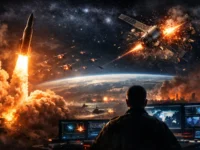
- Space technology
These are not traditional battlegrounds, but they are just as critical.
A disruption in chip supply, for example, can cripple entire economies. Control over data can influence elections, markets, and military systems.
This is why alliances like AUKUS are investing heavily in advanced technologies — because future conflicts will be fought in these invisible arenas.
The Economic War Beneath the Surface
While military alliances grab headlines, economic alliances are just as powerful — and often more dangerous.
Trade blocs, sanctions, and supply chain partnerships are being used as tools of pressure.
The decoupling between major economies, especially between the US and China, is reshaping global trade.
Countries are now asking difficult questions:
- Who controls critical resources?
- Where should manufacturing happen?
- Can supply chains survive a crisis?
The answers to these questions will determine not just economic stability, but also national security.
A World Without Permanent Friends
Perhaps the most striking change is this: there are no permanent allies anymore — only permanent interests.
Countries are switching roles depending on the issue. A nation can be a defense partner in one region and an economic competitor in another.
This creates a world that is harder to predict and easier to destabilize.
It also means that conflicts may no longer follow clear lines. Future wars could involve overlapping alliances, shifting loyalties, and unexpected players.
What This Means for the Future of Conflict
The new power map suggests that future conflicts will look very different:
- More regional, less global — but with global consequences
- Less direct warfare, more indirect pressure
- Faster escalation due to interconnected systems
- Greater role of technology and economics
In short, conflict is becoming more complex, more unpredictable, and potentially more dangerous.
A Necessary Disclaimer
This article is based on current geopolitical trends, policy analyses, and publicly available data. Global politics is fluid, and alliances can evolve rapidly depending on leadership changes, economic shifts, and unexpected events. The interpretations presented here are analytical in nature and should not be viewed as definitive predictions.
Final Thoughts: The World Is Rearranging Itself
We are living through a moment that future generations will study closely.
Not because of a single war or crisis, but because of a slow, almost invisible transformation.
The alliances forming today are not just about defense — they are about shaping the future. They determine who controls technology, trade, and influence.
And in doing so, they are quietly deciding how the next conflicts will unfold.
The map has not been officially redrawn yet.
But make no mistake — it already has changed.
FAQs
1. What are global alliances and why are they important?
Global alliances are partnerships between countries for security, economic, or strategic purposes. They shape how nations respond to threats and influence global stability.
2. Why are alliances increasing now?
Rising competition between major powers, especially the US and China, has led countries to form new partnerships for security and influence.
3. What is the QUAD alliance?
The QUAD is a strategic grouping of the US, India, Japan, and Australia focused on Indo-Pacific security and cooperation.
4. Is BRICS a military alliance?
No, BRICS is primarily an economic and political grouping, but it is increasingly influencing global strategic dynamics.
5. Will these alliances lead to war?
Not necessarily, but they increase tension and competition, which can raise the risk of conflict if not managed carefully.

0 Comments