

















By Ronald Kapper
Disclaimer
This story reports on public testimony, declassified videos, and investigative reporting. I aim to summarize what is in the record, note where accounts differ, and cite primary sources so you can read them yourself. I do not claim to know the ultimate origin of the object described. Where official investigators or journalists reached different conclusions, I make that clear.
The night the instruments agreed — and then didn’t
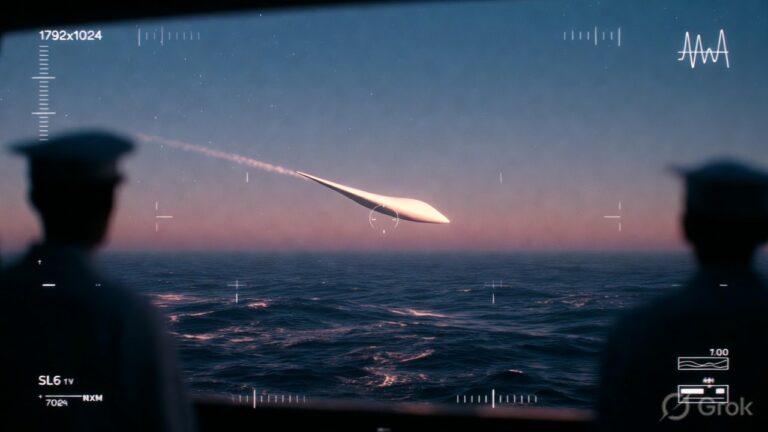
On a clear November day in 2004, a carrier strike group off the coast of southern California recorded something that made the people watching stare in disbelief. Over several hours, crews tracked an object that behaved in ways their instruments and experience said should be impossible. The details are crisp: shipboard radar picked it up; pilots saw it with their own eyes; a fighter jet’s infrared targeting pod filmed it; and sailors on the deck reported visual sightings. Four different types of sensing — radar, electro-optical video, infrared imaging and human observation — all recorded the same brief, strange motion. That coincidence is what makes this case a standout in modern anomaly studies.
To put it plainly: when different instruments agree, investigators normally breathe easier. Cross-sensor confirmation normally rules out simple mistakes. But here, the instruments agreed on a trajectory and behavior that forced technical experts to ask, “How could that movement happen without leaving other traces?” The episode became the focal point for years of reporting and, eventually, new official inquiries.
Who saw it — the key players on the record
The encounter involved the carrier USS Nimitz and its cruiser support, the USS Princeton. Among the pilots who gave vivid testimony was David Fravor, who later described the object as smooth, white, and shaped like a Tic Tac candy. Other aviators and radar operators from the group also provided accounts that were consistent enough to make investigators sit up and take notice. The combination of technical logs and sworn testimony would later be the material journalists and investigators used to press for transparency.
What the four sensor types recorded — the raw picture
The four confirming sensing modes can be summarized like this:
- Shipboard radar: Operators on the escort cruiser tracked discrete returns at various altitudes and speeds at odd intervals. Those returns sometimes appeared and vanished, and at other times moved quickly between maritime and aerial altitudes.
- Cockpit visual: Pilots on intercept missions saw a white, smooth object hovering or moving with unusual agility; their eyewitness accounts described motion that did not match known aircraft behavior.
- Infrared (FLIR) video: A weapons officer’s targeting pod recorded an infrared signature of a target that appeared to accelerate and change position in ways not consistent with the apparent size and apparent environment. That video, later released, is one of the most cited pieces of evidence.
- Electro-optical / deck observers: Sailors on deck and intelligence personnel watching raw sensor feeds reported visual and instrument correlation; they heard radio chatter from pilots describing what their eyes and instruments were showing.
Put together, the mosaic looked like the same object being tracked by different tools at overlapping times. That is rare and technically valuable.
Why four-sensor agreement matters more than a single blurry clip
A shaky phone video is interesting; a single radar ping is data. But when multiple independent systems register the same timing and relative motion, the barriers to simple explanations climb. In engineering and science, convergent evidence lowers the odds that the phenomenon is an artifact of one sensor type. That is why this case got sustained attention from journalists, independent researchers, and government offices.
Still, convergence solves only one problem: it raises the next. If four systems show the same extraordinary motion, then either multiple systems are failing in consistent ways, or the motion really happened. And if it happened, how did it not leave the collateral effects physics predicts — heat, sonic signature, exhaust, or wideband electromagnetic emissions? Those unanswered questions are why investigators pressed to preserve and study the raw logs.
The tape that landed the story on the front page
A turning point came when journalists obtained and published portions of the infrared footage and transcribed pilot radio calls. The video shows a small infrared return against the sea surface, and audio captures the bewildered voices of aviators as they tried to track and intercept the object. The visual, when paired with the radar logs and eyewitness testimony, transformed an anecdote into a record that could be analyzed. Public attention followed, and so did official scrutiny.
This footage later became part of the set of videos that the U.S. government acknowledged as authentic and released to the public. That official recognition shifted the conversation from “did this happen?” to “what does the data mean?”
The impossible move — what made experts frown
The movement that raised eyebrows was not merely speed. It was a pattern: abrupt changes in velocity and direction without apparent means to mediate the forces such motion would create. To accelerate to high speed then stop, or to make rapid lateral shifts, an object must expend energy and produce reactions in the environment. Think shock waves, heat, sonic booms, or visible exhaust. Yet observers wrote down a motion that showed few of those fingerprints.
Engineers asked practical questions: what propulsion could produce that acceleration and leave no plume? What thermal signature would be necessary? What structural design could survive massive instantaneous g-loads? Those are not academic queries; they are design constraints. The simpler the reported motion, the harder the engineering problem becomes.
How investigators tried to explain it — the usual and unusual leads
Investigators moved through a checklist of possibilities:
- Sensor error or artifact: Could radar clutter, software bugs, or FLIR artifacts explain it? Sometimes yes; sometimes no. Sensors can misregister due to sea surface reflections, atmospheric ducting, or calibration flaws. Yet the multi-sensor agreement narrowed this avenue.
- Birds, balloons, or drones: These explain many sightings but not rapid, repeated, high-speed maneuvers recorded in this case.
- Experimental human craft: Secret vehicles always attract speculation. If so, why would such programs operate near a busy carrier group and risk exposure? And why would multiple data streams match so cleanly?
- Adversary probe or countermeasure: A foreign platform could in theory test defenses. But the energy and material demands implied make this scenario difficult, not impossible.
- Novel physics or unknown phenomenon: This ranks last not because it’s impossible, but because extraordinary claims require extraordinary evidence—multiple, reproducible instruments, raw data access, and peer review.
Investigations emphasized method: preserve raw logs, cross-compare time stamps, and apply forensic checks — not jump to dramatic conclusions.
The human layer — credibility, memory and testimony
Technical logs matter, but people provide context. Pilots trained to read instruments and aircraft dynamics gave consistent accounts. Deck observers corroborated. That human layer forced journalists and investigators to treat the case as more than a sensor glitch.
Human testimony is not perfect. Memory is fallible. But when trained professionals independently describe similar movement and when their reports line up with instrument records, credibility grows. That is what happened here, and it is why the case remains a staple for those who study hard anomalies.
What official bodies concluded — careful, not sensational
Publicly, official summaries and follow-ups have been cautious. Agencies acknowledged the authenticity of some of the video and said the events were “unidentified” — not proof of extraterrestrial craft, not definitive evidence of enemy technology, simply unexplained after initial review. That language signals both seriousness and restraint: the data matter, but conclusions must wait for better evidence.
Government interest increased after these episodes, and new offices and processes were stood up to catalog anomalies and push for better instrumentation and reporting standards. The goal: move from anecdote to science. If that is to happen, investigators need raw sensor logs, preserved chains of custody, and coordinated multi-instrument observation campaigns.
Why this case still matters for science and security
There are two reasons this encounter is important.
First, the case is a test of investigative rigour. It shows how multiple sensors, careful chain-of-evidence handling, and disciplined analysis can move questions from rumor to study. Good data make good science possible.
Second, the encounter matters for defence. If an object can appear and perform risky maneuvers near military assets, even if its origin is unknown, it is a potential safety or intelligence concern. That alone justifies careful, transparent study. The stakes are not only curiosity but safety and national security.
What would resolve the mystery? — the ideal evidence set
To move from mystery to understanding, analysts need a narrow set of high-value items:
- Raw, time-stamped sensor logs from radar, EO/IR, and any intercepting platforms.
- Spectrum captures showing emissions, if any, across RF bands.
- Environmental data: pressure, temperature, sea state, wind.
- Chain-of-custody records proving the data were not altered.
- Independent corroborating observations from civil aviation or satellites.
If researchers could assemble that kit for multiple cases, they could begin testing hypotheses and, where appropriate, publish peer-reviewed analyses.
FAQs
Q: Did multiple sensors really record the same object?
A: According to the public record in this case, yes — shipboard radar, pilot visual observation, infrared (FLIR) video and electro-optical feeds showed overlapping timing and motion. That convergence is why the episode gained attention.
Q: Does multi-sensor agreement prove the object was alien?
A: No. Multi-sensor data rule out many mundane errors, but they do not prove origin. They do make the case worth deeper scientific and technical study.
Q: Could this be explained by classified human craft?
A: It is one possible explanation. But it raises logistical and risk questions. If a secret program can perform such feats, the security implications are enormous. Investigators look for corroborating leaks, procurement records, or test logs to support that claim.
Q: What did the U.S. government do after this case?
A: Officials acknowledged the video footage and increased attention led to more structured anomaly reporting and the creation or empowerment of offices tasked with tracking such events. The emphasis has been on better data collection and interagency coordination.
Final thought — when instruments agree, curiosity must follow method
This case is not fodder for headline drama; it is a laboratory for method. Four independent sensing modes agreeing is rare and valuable. It forces a sober response: preserve everything; test every mundane explanation; then, if anomalies remain, let disciplined science and engineering try to explain what the instruments recorded.
The sky will always offer mysteries. How we handle the data determines whether those mysteries stay stories or become knowledge.
Sources and reference URLs
(These are the primary public sources and investigative pieces referenced in this article. Read them to see the original videos, pilot testimony, and official responses.)
- Pentagon UFO videos / background on Nimitz & other videos — https://en.wikipedia.org/wiki/Pentagon_UFO_videos.
- History.com — When Top Gun Pilots Tangled with a Baffling Tic-Tac — https://www.history.com/articles/uss-nimitz-2004-tic-tac-ufo-encounter.
- Popular Mechanics — The Truth About the Navy’s Nimitz Encounter — https://www.popularmechanics.com/military/research/a63549222/navy-ufo-witnesses-nimitz-encounter/.
- National Geographic — What the Pentagon report says about UAPs — https://www.nationalgeographic.com/science/article/what-the-pentagon-report-says-about-ufos.
- CBS News coverage of pilot testimony and hearings — https://www.cbsnews.com/news/tic-tac-ufo-sighting-uap-video-dave-fravor-alex-dietrich-navy-fighter-pilots-house-testimony/.

0 Comments