











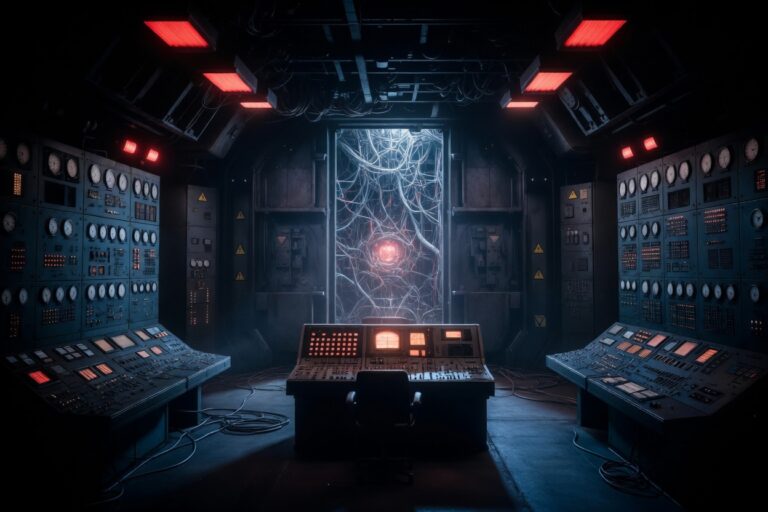
There is a terrifying question that has haunted military planners for decades, one that feels like it belongs in science fiction but is rooted in real-world strategy: what happens if a country is attacked so completely that no leaders are left alive to respond?
During the Cold War, this was not a hypothetical fear. It was a real possibility. And out of that fear came one of the most chilling systems ever designed — a mechanism that could make the final decision even if no human remained to make it.
It was called the Dead Hand.
A Necessary Madness Born From Fear
To understand why such a system was created, you have to go back to the darkest years of the Cold War. The world was divided into two armed camps, both holding enough nuclear weapons to destroy civilization many times over.
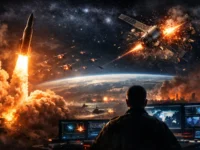
The biggest fear was not just war — it was a “decapitation strike.” That meant a sudden, overwhelming attack designed to wipe out leadership, communication networks, and command centers in one blow. If successful, the attacked nation would be unable to respond.
From a strategic perspective, that created a dangerous imbalance. If one side believed it could strike first and eliminate retaliation, the temptation to act might grow.
So the Soviet Union built a system to remove that possibility entirely.
The logic was simple and terrifying: even if the entire chain of command was destroyed, retaliation would still happen.
What Exactly Was the Dead Hand System?
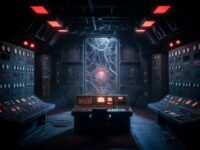
The Dead Hand system, known internally as “Perimeter,” was not a single device but a network of sensors, communication systems, and automated decision protocols.
Dead Hand was designed as a backup command structure that could take over if all human leadership was gone. It ensured that nuclear missiles could still be launched even in the worst-case scenario.
At its core, it acted as a “fail-deadly” mechanism — a concept where failure does not stop the system, but instead guarantees a devastating response.
How the System Actually Worked
Despite its myth-like reputation, the Dead Hand system was not a simple “press button, end world” machine. It followed a sequence of conditions and checks.
First, during times of extreme crisis, human leaders would activate the system. It was not running constantly in full automatic mode.
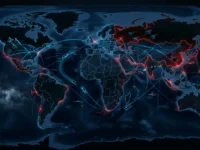
Once active, it began monitoring a range of environmental and military signals:
- Seismic activity
- Radiation levels
- Air pressure changes
- Communication disruptions
These inputs were used to determine whether a nuclear strike had taken place.
If the system concluded that a nuclear attack had occurred and that communication with leadership had been lost, it moved to the final stage.
A special command missile would be launched across the country. Instead of carrying a nuclear warhead, it carried instructions. As it traveled, it transmitted launch orders to nuclear silos and command centers, effectively triggering a full-scale retaliation.
In other words, even if every command bunker was destroyed, the system could still complete the chain of command.
Was It Fully Automatic? The Truth Is More Complicated
One of the biggest misconceptions about the Dead Hand system is that it was completely autonomous, like a machine deciding the fate of the world without any human involvement.
The reality appears more complex.
Evidence suggests that the system was semi-automatic. Human activation was required at the beginning, and in some versions, additional confirmation steps may have existed before a full launch.
This distinction matters. There is a difference between a system that can act independently after activation and one that is entirely beyond human control.
Still, even in its semi-automatic form, the implications are staggering.
It represents a shift from human judgment to pre-programmed logic in the most critical decision imaginable.
The Psychological Weight of a Machine That Cannot Be Stopped
Beyond the technical details, the Dead Hand system introduces a deeper, more unsettling question: what does it mean to remove human choice from the equation?
Traditional nuclear strategy relied on decision-makers — leaders who could assess, hesitate, reconsider, or even refuse to act.
Dead Hand removes that hesitation.
It is built on a cold assumption: that retaliation must happen, no matter the circumstances, no matter who is left alive to witness it.
This creates a paradox. The system is meant to prevent war by making war unwinnable. But in doing so, it also guarantees that if war begins, it cannot be stopped.
The Role of Deterrence: Why It Might Have Worked
As disturbing as it sounds, the Dead Hand system may have served its intended purpose.
Nuclear deterrence depends on certainty. If an enemy believes retaliation is unavoidable, the incentive to strike first disappears.
Dead Hand reinforced that certainty.
Even if a surprise attack succeeded beyond expectations, even if every leader was eliminated, retaliation would still follow.
This closed the door on any strategic advantage from a first strike.
In that sense, the system may have reduced the chances of nuclear war rather than increased them.
Does the Dead Hand Still Exist Today?
This is where things become uncertain and controversial.
Reports suggest that some version of the system remains operational, though likely modernized and integrated with newer technologies.
There is no public confirmation of its exact status, capabilities, or level of automation today.
But the idea has not disappeared.
In fact, similar concepts are now being discussed in the context of artificial intelligence and modern warfare. As decision times shrink due to faster weapons and detection systems, the pressure to automate responses is increasing.
That raises a new concern: are we moving closer to a world where machines play a larger role in life-and-death decisions?
The AI Angle: A Future Echo of the Past
The Dead Hand system was not built using modern AI, but its logic mirrors the direction of current military thinking.
As hypersonic missiles reduce response time to minutes, human decision-making becomes harder. There may not be enough time to verify information, consult advisors, and make a careful choice.
This creates a dangerous temptation: automate the response.
Experts have already warned that advanced systems could one day detect, decide, and act faster than humans ever could.
The risk is obvious.
A false signal, a misinterpretation, or a technical glitch could trigger irreversible consequences.
The Thin Line Between Safety and Catastrophe
One of the most disturbing aspects of the Dead Hand system is how close it brings the world to accidental disaster.
Imagine a scenario where sensors misread data. A natural event, a technical failure, or even a cyber attack could mimic the signals of a nuclear strike.
If the system interprets that as confirmation, the result could be catastrophic.
There have already been close calls in nuclear history, where false alarms nearly led to launches. Adding automation into that equation increases both speed and risk.
The margin for error becomes almost zero.
A Real System, Not a Myth
For years, the idea of a doomsday machine felt like fiction. Something imagined in movies, not built in reality.
But the Dead Hand system was real.
It was developed, tested, and integrated into military strategy. Its existence was later confirmed by former officials and analysts, though many details remain classified.
And that is what makes it so unsettling.
This is not a theoretical concept. It is a system that existed — and may still exist — designed to act when no one is left to stop it.
A Necessary Warning, Not a Sensational Claim
It is important to approach this topic carefully.
The existence of systems like Dead Hand does not mean that nuclear war is inevitable or imminent. These systems were created in a specific historical context, under extreme pressure and fear.
They are part of a broader strategy aimed at preventing war, not starting it.
At the same time, they reveal how far nations were willing to go to ensure survival — even if that meant building systems that could outlive human control.
Conclusion: The Machine That Waits in Silence
The Dead Hand system represents one of the most extreme ideas ever put into practice.
A machine that waits.
A system that listens for signs of destruction.
A mechanism that ensures retaliation even when no one remains to order it.
It sits at the intersection of technology, fear, and strategy — a reminder of how close the world once came to removing humans from the most critical decision of all.
And perhaps the most unsettling part is this:
It was never meant to be used.
FAQs
What is the Dead Hand system?
The Dead Hand, also known as Perimeter, is a Cold War-era nuclear control system designed to automatically launch retaliatory missiles if a nuclear attack destroys leadership and communication systems.
Is the Dead Hand fully automatic?
Most evidence suggests it is semi-automatic, requiring human activation before it can operate independently.
Why was the Dead Hand created?
It was designed to guarantee retaliation and prevent a first strike by making nuclear war unwinnable for any attacker.
Does the system still exist today?
Reports indicate that some version may still be operational, though details are unclear and not publicly confirmed.
Could a machine really launch nuclear weapons?
In theory, systems like Dead Hand could initiate launches under specific conditions, but safeguards and human involvement are believed to still exist.
References & Sources
- https://en.wikipedia.org/wiki/Dead_Hand
- https://www.military.com/history/russias-dead-hand-soviet-built-nuclear-doomsday-device.html
- https://www.britannica.com/technology/Dead-Hand
- https://www.wired.com/2009/09/mf-deadhand/
- https://www.maxwell.af.mil/News/Commentaries/Display/Article/1942374/america-needs-a-dead-hand/

0 Comments