


















For years, public conversation about Unidentified Aerial Phenomena has revolved around one dramatic possibility: the existence of alien life. Headlines, hearings, and online debates have repeatedly returned to that question. However, inside defense policy circles, another explanation is often discussed more quietly. Some experts believe the delay in full disclosure may not involve extraterrestrials at all. Instead, they argue that secrecy surrounding UAP cases could be tied to highly classified American weapons programs funded through what is commonly known as the black budget.
This theory does not claim aliens are being hidden. It suggests something different. It proposes that the government may be reluctant to clarify certain incidents because doing so could expose advanced technologies that remain strategically sensitive. In this view, disclosure is complicated not by cosmic mysteries, but by national security priorities.
It is important to state clearly that this remains a theory. No official confirmation supports the idea that UAP cases are being used to shield secret weapons programs. However, the structure of defense funding and historical precedent make the discussion worth examining.
What Is a Black Budget?
The term “black budget” refers to classified funding authorized by Congress for defense and intelligence programs that require secrecy. While the total amount allocated to classified programs is sometimes reported in broad figures, specific projects and capabilities are rarely detailed publicly.
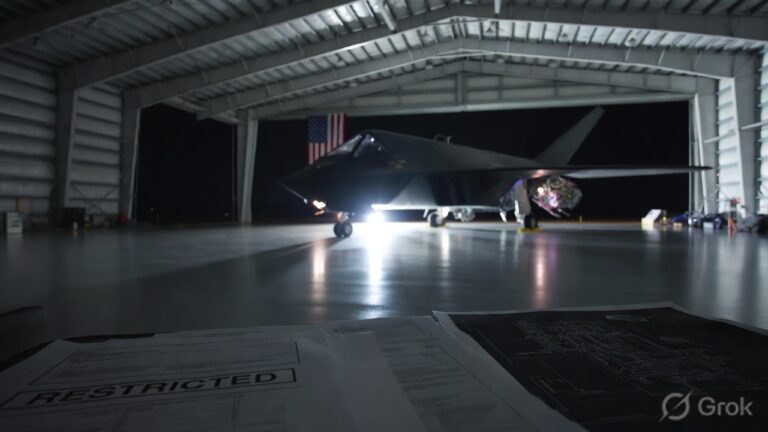
Each year, billions of dollars are directed toward research and development efforts that include stealth aircraft, next-generation propulsion systems, cyber capabilities, and advanced surveillance technologies. These programs are often tested in restricted airspace, far from public view. The secrecy surrounding them is designed to prevent foreign adversaries from gaining insight into U.S. technological advantages.
Historically, many major defense breakthroughs were developed in classified environments before being revealed to the public. The F-117 stealth fighter, for example, remained secret for years before its existence was acknowledged. Similar secrecy surrounded early drone programs and advanced reconnaissance platforms.
Because of this history, some analysts argue that unusual aerial sightings could occasionally involve experimental platforms not yet disclosed.
The Reverse-Engineering Narrative
In recent years, public interest intensified following statements by former officials and whistleblowers who alleged that elements within the defense establishment were engaged in reverse-engineering recovered materials of unknown origin. These claims gained significant attention during congressional hearings and media interviews.
However, no publicly verified evidence has confirmed that the U.S. government possesses extraterrestrial craft or non-human technology. Defense officials have consistently stated that they have not verified claims of alien hardware.
An alternative explanation offered by some experts is that what appears extraordinary in limited sensor footage may represent advanced domestic or foreign technology under development. If a platform demonstrates unconventional flight characteristics or low detectability, it may appear unfamiliar even to trained observers.
From this perspective, secrecy could stem from the need to protect ongoing technological advancements rather than conceal contact with non-human intelligence.
Why Disclosure Could Be Complicated
If certain UAP cases involve classified testing or sensitive defense systems, officials may face a dilemma. Acknowledging the true nature of a sighting could reveal capabilities that the military prefers to keep undisclosed. Remaining silent, however, can fuel speculation.
National security often requires balancing transparency with strategic advantage. Revealing too much about propulsion breakthroughs, materials science, or electronic warfare systems could compromise deterrence strategies.
Some defense analysts argue that this balance may partially explain why certain UAP cases remain unresolved in public reports. Officials may classify incidents not because they lack explanations, but because the explanations themselves are sensitive.
This does not confirm that UAP sightings are American technology. It highlights how secrecy functions within defense institutions.
Historical Precedent for Secrecy
Throughout modern military history, classified programs have operated for years before public acknowledgment. The development of stealth technology in the late twentieth century is one clear example. Early sightings of unusual aircraft shapes were sometimes dismissed or misunderstood before the programs were revealed.
Similarly, advanced drone programs were tested long before their capabilities were widely known. Observers who encountered early prototypes without context might have described them as unconventional or unfamiliar.
The existence of such precedents does not prove that current UAP cases are linked to black budget systems. It does, however, demonstrate that secrecy surrounding defense innovation is not unusual.
The Role of Modern Investigations
The Department of Defense established the All-domain Anomaly Resolution Office to centralize UAP reporting and analysis. Public summaries from this office have emphasized that most reviewed cases involve ordinary explanations such as drones, balloons, or sensor errors. A smaller number remain unresolved due to limited data.
Officials have stated that they have not found evidence of extraterrestrial origin in the cases studied so far. At the same time, they have acknowledged that some incidents require further technical review.
If classified technology plays any role in certain cases, that information would likely remain protected under existing security laws. The public summaries would therefore remain limited in scope.
The Strategic Advantage Argument
Military superiority often depends on maintaining surprise. If the United States were developing propulsion systems, materials, or detection-avoidance technologies significantly ahead of competitors, disclosing those capabilities prematurely could weaken strategic positioning.
Some analysts argue that it would be logical to allow speculation to persist rather than confirm sensitive breakthroughs. From a strategic standpoint, ambiguity can serve as a defensive asset.
However, this argument remains speculative. There is no public evidence confirming that UAP secrecy is deliberately used as cover for advanced weapons programs. It is one possible explanation among several.
Public Curiosity and Congressional Oversight
Congress has increased oversight of UAP investigations in recent years. Lawmakers have requested briefings and mandated reports through defense authorization legislation. Transparency has become a recurring theme in hearings.
At the same time, classified briefings continue behind closed doors. Members of Congress with appropriate clearance receive information that cannot be shared publicly.
This structure reinforces the idea that some aspects of national security remain inaccessible to general audiences, even during periods of heightened interest.
A Necessary Disclaimer
There is currently no verified public evidence confirming that UAP cases involve reverse-engineered alien craft or hidden American weapons systems. Official statements from the Department of Defense have consistently stated that no extraterrestrial technology has been confirmed.
The theory that disclosure delays are tied to black budget programs remains speculative. It is discussed by analysts and commentators but has not been officially validated.
Responsible reporting requires distinguishing between documented facts and interpretive theories.
Why the Debate Persists
The debate continues because secrecy creates space for interpretation. When information is limited, assumptions often fill the gap. For some observers, alien explanations seem plausible. For others, classified technology provides a more grounded answer.
What is certain is that advanced defense research exists and is funded through classified channels. What is not certain is whether any of that research intersects directly with unresolved UAP cases.
Until more detailed information becomes available, both skepticism and curiosity will remain part of the conversation.
Frequently Asked Questions
Is there proof that UAP secrecy hides black budget weapons?
There is no confirmed public proof. The theory is based on how classified defense programs operate, not on released documentation linking them to specific cases.
Has the government confirmed reverse-engineering alien craft?
No. Defense officials have stated that they have not verified such claims.
What is a black budget program?
It is a classified defense or intelligence project funded through authorized but undisclosed allocations.
Why would advanced technology remain secret?
Revealing sensitive capabilities could compromise national security or strategic advantage.
Will full disclosure happen soon?
There is no confirmed timeline for broader disclosure beyond existing investigative reports.
Conclusion
The Tech Leak theory offers an alternative lens through which to view the ongoing UAP disclosure debate. Instead of focusing on extraterrestrial possibilities, it centers on the realities of national defense secrecy and classified innovation.
Whether this explanation proves accurate or not, one fact remains clear: transparency in matters of security moves slowly. The tension between public curiosity and strategic protection will likely continue.
As discussions evolve, careful distinction between confirmed information and speculation remains essential.
Sources and Reference Material
U.S. Department of Defense Official Statements:
https://www.defense.gov/
All-domain Anomaly Resolution Office (AARO):
https://www.aaro.mil/
U.S. Congressional UAP Hearing Records:
https://oversight.house.gov/
Congressional Budget Documents on Classified Spending:
https://www.cbo.gov/
National Archives – Historical Classified Program Releases:
https://www.archives.gov/

0 Comments