
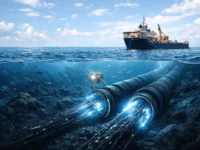













There is a quiet truth about the modern world that most people never think about until it suddenly breaks: the global economy does not run on money, it runs on movement. Ships, oil tankers, container vessels, data cables, and energy pipelines form the invisible arteries of civilization, and when even one of those arteries gets blocked, the shock is immediate, global, and deeply destabilizing.
Right now, those arteries are under pressure in ways that feel uncomfortably close to something bigger. Not a single war, not a single region, but a pattern that is starting to look like a system under strain.
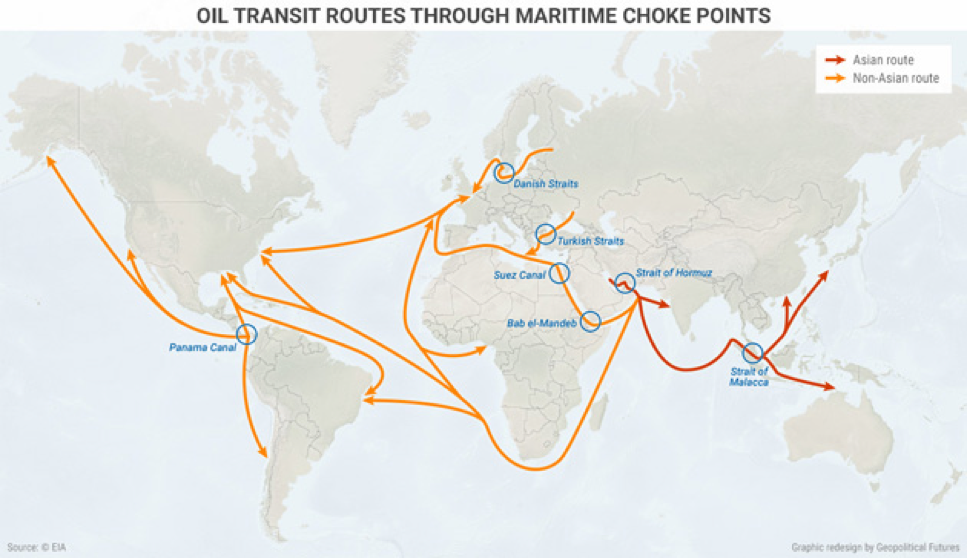
Take the Strait of Hormuz, one of the most critical maritime chokepoints on Earth. Around one-fifth of the world’s oil consumption passes through this narrow corridor, making it one of the most sensitive pressure points in the global system.
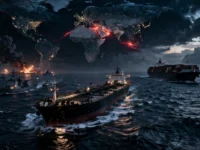
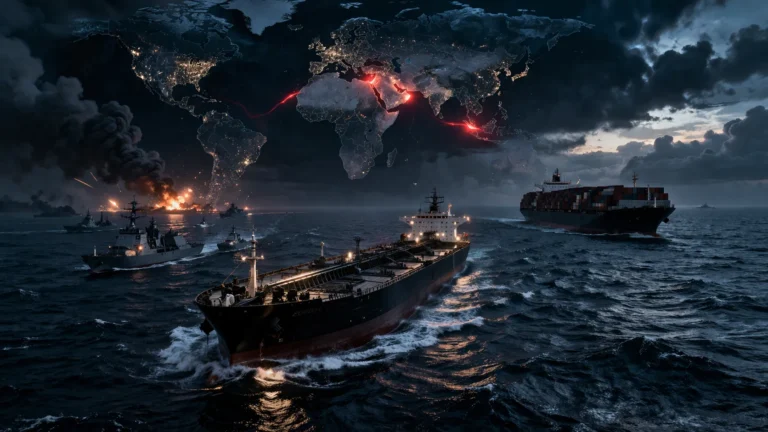
When conflict escalated in early 2026, that chokepoint didn’t just become tense, it became unstable. Military strikes triggered a chain reaction that led to shipping disruptions, vessel attacks, and a dramatic drop in maritime traffic.
This is not just a regional issue. When a chokepoint like this is disrupted, it does not stay contained. Energy prices spike, shipping routes shift, insurance costs rise, and supply chains begin to fracture. The ripple spreads across continents within days.
And this is only one chokepoint.
The global system depends heavily on a handful of narrow passages like the Suez Canal, the Strait of Malacca, and the Bab el-Mandeb. In fact, more than 90% of seaborne oil trade passes through just a small number of these routes.
That concentration is not efficiency. It is vulnerability.
When Two Chokepoints Fail at Once
What makes the current moment particularly dangerous is not just the tension at one location, but the possibility of simultaneous disruption.
For the first time in modern history, analysts are now openly discussing scenarios where multiple chokepoints could be compromised at the same time.
Shipping companies have already started rerouting vessels away from high-risk zones like the Suez Canal and the Red Sea, choosing longer and more expensive routes around Africa.
This may sound like a logistical inconvenience, but the reality is far more serious.
Every additional mile increases fuel costs, delays deliveries, and creates bottlenecks at ports that were never designed to handle sudden surges. Over time, this builds into something much larger: inflation, shortages, and economic instability.
The United Nations has already warned that disruptions in these routes can increase food prices, energy costs, and pressure on vulnerable economies.
In other words, a blocked sea lane can quickly turn into a cost-of-living crisis on the other side of the world.
Why Smaller Nations Are Becoming the Center of Big Power Rivalries
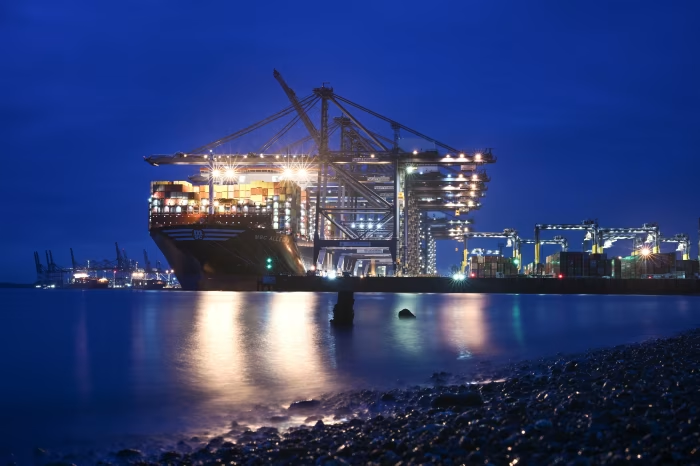
One of the most striking shifts in global geopolitics is where power struggles are happening.
Not in the capitals of major powers, but in smaller nations, coastal regions, and strategic islands that sit close to these chokepoints.
These locations are no longer just geographic points on a map. They are leverage.
Control a small port near a key route, and you gain influence over trade flows worth trillions. Control a narrow strait, and you gain the ability to disrupt entire economies without firing a single shot.
This is why smaller nations are increasingly becoming the stage for larger rivalries.
In many cases, these countries are not the ones driving the conflict. They are the terrain on which it unfolds.
Military bases, naval patrols, proxy groups, and strategic investments are turning these regions into pressure points.
The Strait of Malacca, for example, carries nearly 29% of global maritime oil trade, making Southeast Asia one of the most strategically sensitive regions in the world.
Similarly, the Red Sea corridor connects Europe and Asia through the Suez Canal, making it a critical artery for global commerce.
When tensions rise in these areas, the stakes are never local. They are global.
The Fragile Peace: How Close the World Is to a Multi-Front Conflict Scenario
It is important to approach this topic carefully. There is no confirmed global war underway, and many diplomatic efforts continue behind the scenes.
But the structure of current tensions is what makes analysts uneasy.
Instead of a single large conflict, the world is seeing multiple smaller tensions emerging at the same time:
- Maritime disputes in key trade corridors
- Regional conflicts affecting energy supply routes
- Proxy confrontations between major powers
- Strategic competition over infrastructure and ports
Individually, each of these can be managed.
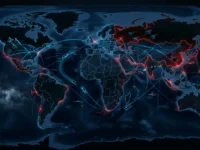
Together, they create a system where a crisis in one region can trigger reactions in another.
For example, the disruption of energy flows through the Strait of Hormuz has already shown how quickly global markets react, with oil prices rising and shipping operations adjusting within days.
Now imagine a scenario where:
- One chokepoint is blocked
- Another is under threat
- A third is facing military tension
At that point, the system is no longer absorbing shocks. It is amplifying them.
This is what experts refer to as a multi-front stress scenario, where different regions are under pressure simultaneously, creating a cascading effect.
The Supply Chain Illusion
For decades, globalization has been built on the assumption that goods will always move freely.
That assumption is now being tested.
When chokepoints are disrupted, companies are forced to rethink how they move goods. Some are shifting production closer to home. Others are diversifying routes or building redundancy into their supply chains.
But these changes take time.
In the short term, the system remains highly exposed.
Even temporary disruptions can lead to:
- Delays in manufacturing
- Shortages of key materials
- Increased costs for consumers
- Financial instability in trade-dependent economies
This is not speculation. It is already happening in early stages.
A World Defined by Geography Again
For a long time, technology made geography feel less important.
Digital communication, air travel, and global trade networks created the illusion of a borderless world.
But chokepoints remind us that geography still matters, and in some cases, it matters more than ever.
A narrow strip of water, just a few kilometers wide, can influence global energy prices, political stability, and economic growth.
That reality is reshaping how nations think about security.
Naval power is becoming more important. Strategic alliances are shifting. Infrastructure projects are being evaluated not just for economic value, but for geopolitical risk.
The Human Impact Behind the Headlines
It is easy to think of these issues in abstract terms: oil flows, trade volumes, shipping lanes.
But behind every disruption are real consequences for people.
Higher fuel prices mean more expensive food.
Shipping delays mean shortages of essential goods.
Economic instability means job losses and financial stress.
The impact is not evenly distributed. It often hits the most vulnerable economies first and hardest.
That is why global organizations are increasingly warning about the broader consequences of these disruptions, not just for markets, but for stability itself.
A Careful Reality Check
It is important not to jump to conclusions or assume worst-case scenarios are inevitable.
Global systems are resilient, and history shows that even major disruptions can be managed with coordination and diplomacy.
At the same time, ignoring the risks would be equally unwise.
The current pattern of tensions, especially around key trade routes, suggests a system that is under pressure and becoming more complex to manage.
The real question is not whether a single event will trigger a global crisis.
It is whether multiple smaller disruptions could align in a way that creates something larger than the sum of their parts.
FAQs
Q1: What is a trade chokepoint?
A trade chokepoint is a narrow geographic route, such as a strait or canal, through which a large volume of global trade passes. These areas are critical because disruptions can affect global supply chains.
Q2: Why is the Strait of Hormuz so important?
It carries around 20% of global oil consumption and a significant share of natural gas trade, making it essential for global energy supply.
Q3: Can disruptions in one region affect the entire world?
Yes, because global trade networks are interconnected, a disruption in one chokepoint can impact prices, supply chains, and economies worldwide.
Q4: Why are smaller nations becoming more important in global politics?
Many smaller nations are located near strategic trade routes, giving them geopolitical importance despite their size.
Q5: Is the world heading toward a global conflict?
There is no confirmed global conflict, but multiple regional tensions and strategic rivalries are increasing complexity and risk in the global system.
Disclaimer:
This article is based on publicly available information, recent geopolitical developments, and economic analysis. It does not predict or confirm future conflicts but explores plausible scenarios discussed by experts and institutions. Readers are encouraged to interpret the information within the broader context of evolving global events.

0 Comments