















By Ronald Kapper
The War You Don’t See Coming
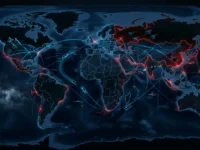
There is a strange pattern emerging across the world, and once you notice it, it becomes impossible to ignore. Wars are happening, but not in the way most people expect. There are no official declarations, no clear beginnings, and often no clear endings. Yet the destruction is real, the stakes are massive, and the players involved are some of the most powerful nations on Earth.
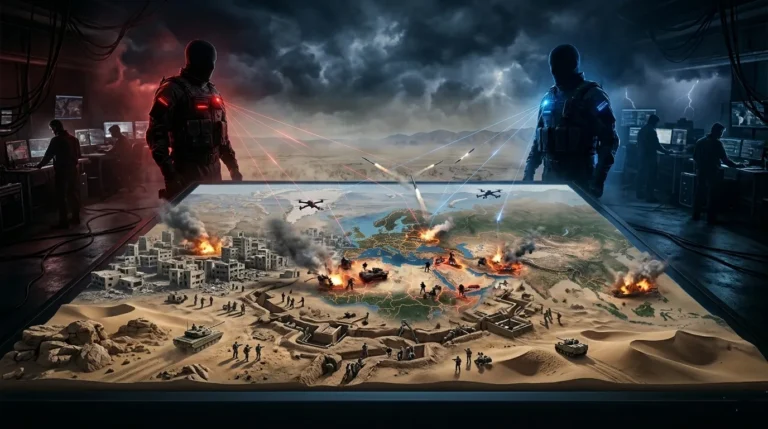
This is the age of proxy wars — conflicts where major powers stay in the shadows while others fight on their behalf.
And right now, they are rising again.
What Exactly Is a Proxy War?
A proxy war is not a traditional war between two nations. It is something far more indirect and, in many ways, far more dangerous.
In simple terms, it is a conflict where powerful countries support smaller groups, governments, or militias to fight for their interests without stepping onto the battlefield themselves.
This support can include weapons, funding, intelligence, training, or even strategic planning. The key idea is simple: influence the outcome of a war without being seen as directly involved.
This approach allows major powers to avoid direct confrontation — especially when that confrontation could escalate into something far worse.
Why Proxy Wars Are Coming Back
Proxy wars are not new. They were a defining feature of the Cold War, when global powers avoided direct conflict due to the fear of nuclear escalation.
What is new is how rapidly they are returning — and how many regions they now affect.
1. Fear of Direct War
The biggest reason is also the simplest: direct war between major powers is too risky.
In a world filled with nuclear weapons and advanced military systems, a direct clash could spiral out of control in hours.
Proxy wars offer a way to compete without crossing that line.
2. Plausible Deniability
One of the most powerful advantages of proxy warfare is deniability. Governments can support one side while publicly claiming neutrality.
This creates a gray zone where responsibility becomes blurred, making it harder for opponents to respond directly.
3. Lower Cost, Higher Flexibility
Fighting through proxies is cheaper and politically safer. There are fewer casualties at home, less public backlash, and more flexibility in strategy.
States can increase or reduce involvement without the pressure of a formal war.
The Middle East: A Web of Hidden Wars
If there is one region where proxy warfare is most visible, it is the Middle East.
Take Yemen. What began as a local conflict quickly turned into a larger struggle involving regional powers. On one side, the Houthi movement receives support from Iran, while on the other, the Yemeni government is backed by Saudi Arabia and its allies.
The result is a devastating war that has lasted for years, with millions affected — yet the main players remain one step removed.
Syria tells a similar story. The conflict evolved into a battleground where global and regional powers backed different sides, turning a domestic crisis into an international struggle.
And even today, tensions involving Iran, Israel, and the United States continue to show how proxy networks can stretch across multiple countries at once, creating a chain reaction of conflict.
Ukraine: A Modern Example With Global Stakes
The war in Ukraine is often described as a direct conflict, but it also carries strong elements of proxy dynamics.
Major powers are not fighting each other directly, yet they are deeply involved through military aid, intelligence sharing, and economic pressure.
This creates a situation where the battlefield is local, but the consequences are global.
It is a reminder that proxy wars are no longer limited to smaller regions — they can shape the entire world order.
Africa: The Silent Frontline
While global attention often focuses on high-profile conflicts, another proxy battleground is emerging quietly in parts of Africa.
In regions like the Sahel, external powers are increasingly competing for influence through local actors, resources, and security arrangements.
These conflicts rarely dominate headlines, but they are shaping the future of global power in significant ways.
The Dangerous Advantage of Proxy Warfare
At first glance, proxy wars may seem like a safer alternative to direct conflict.
But in reality, they come with their own set of risks — some of which may be even harder to control.
1. They Last Longer
Proxy wars tend to drag on. Since the main powers are not directly exposed, there is less pressure to end the conflict quickly.
2. They Expand Easily
What starts as a local conflict can quickly spread as more actors get involved.
3. Civilians Pay the Price
These wars often take place in fragile regions, where infrastructure is weak and humanitarian conditions deteriorate rapidly.
Yemen, for example, has become one of the world’s worst humanitarian crises as a result of prolonged proxy conflict.
Technology Has Changed the Game
Today’s proxy wars are not just fought with guns and tanks.
They are also fought with drones, cyber attacks, surveillance systems, and advanced weapons that can be supplied without direct involvement.
This makes it easier for powerful nations to influence conflicts from a distance.
It also makes these wars harder to detect, harder to control, and harder to end.
The Line Between War and Peace Is Disappearing
One of the most unsettling aspects of modern proxy warfare is how it blurs the line between war and peace.
Countries can be deeply involved in conflict without ever officially being at war.
This creates a constant state of tension, where conflicts simmer beneath the surface, ready to escalate at any moment.
It is no longer about whether a war has started — it is about how far it has already spread without being noticed.
Why This Trend Is Likely to Continue
There is little indication that proxy wars will slow down anytime soon.
In fact, several factors suggest they may become even more common:
- Increasing rivalry between major powers
- Rapid advancements in military technology
- Growing competition over resources and influence
- Weak global institutions struggling to manage conflicts
All of these factors point toward a future where indirect warfare becomes the norm rather than the exception.
A Necessary Disclaimer
This article is based on publicly available data, academic research, and ongoing geopolitical developments. Global conflicts are complex and constantly evolving. Interpretations presented here are analytical in nature and should not be considered definitive conclusions or predictions.
Final Thoughts: The Wars of the Future Are Already Here
The world has not become more peaceful — it has simply become more subtle.
Wars are no longer always declared. Battles are no longer always visible. And power is no longer always exercised in obvious ways.
Proxy wars allow major powers to compete, influence, and even fight without crossing the line into open war.
But that line is becoming thinner every day.
And if history has taught us anything, it is this: when conflicts are hidden, they are often the hardest to stop.
FAQs
1. What is a proxy war in simple terms?
A proxy war is when powerful countries support other groups or nations to fight on their behalf instead of fighting directly.
2. Why do countries prefer proxy wars?
They reduce the risk of direct conflict, especially between nuclear powers, and allow involvement without full responsibility.
3. Are proxy wars increasing today?
Yes, many modern conflicts show signs of indirect involvement by major powers.
4. Which regions are most affected by proxy wars?
The Middle East, parts of Africa, and Eastern Europe are major regions where proxy dynamics are visible.
5. Are proxy wars more dangerous than direct wars?
They can be, because they last longer, involve multiple actors, and are harder to resolve.

0 Comments