

















For more than seventy years, the topic of unidentified flying objects—now officially referred to by governments as Unidentified Anomalous Phenomena (UAP)—has existed in a strange and uncomfortable space between national security secrecy, scientific curiosity, and public fascination. Pilots have reported encounters with strange craft, radar operators have detected objects behaving in ways that defy known technology, and intelligence agencies have quietly collected reports from around the world, yet for decades the public was given only fragments of the full story while the majority of documents remained locked away behind layers of classification.
Now, however, a growing number of lawmakers, investigators, and defense officials believe the secrecy surrounding UAPs is approaching a historic turning point, and many analysts are pointing to July 2026 as the moment when long-standing barriers could finally begin to break down.
The phrase being used in political circles and research communities is dramatic but revealing: “the point of no return.”
According to people closely following the issue, the idea behind this phrase is simple. Once governments begin releasing a significant portion of their classified UAP data, it may become impossible to return to the decades-old pattern of silence and denial that defined the topic for much of the twentieth century.
Even if the released material does not prove extraterrestrial involvement, the simple act of transparency could reshape public understanding of mysterious aerial encounters, forcing governments to openly discuss questions that were once considered too sensitive to acknowledge.
And that is why the months leading to the middle of 2026 are now being watched carefully by researchers, journalists, and policymakers around the world.
The Long History of Government Secrecy Around UFOs
The story of government secrecy around UFOs began shortly after World War II, during a period when global tensions were rising and new technologies were emerging at an astonishing pace. In 1947, reports of strange flying objects began appearing across the United States, capturing the attention of newspapers and military authorities alike.
One of the most famous early incidents occurred near Roswell, New Mexico, where the U.S. Army initially announced that it had recovered a “flying disc” before quickly changing the explanation to a weather balloon. The sudden shift in the official narrative created decades of speculation, with some researchers claiming that the event marked the beginning of a long pattern of secrecy surrounding unexplained aerial encounters.
In response to the rising number of sightings, the U.S. Air Force launched several investigations, including Project Sign, Project Grudge, and later Project Blue Book, which operated from 1952 until 1969. These programs collected thousands of reports from pilots, civilians, and radar stations across the country.
Officially, the Air Force concluded that most sightings could be explained by natural phenomena, aircraft misidentifications, or atmospheric conditions. Yet when historians later examined the archives, they discovered that a small but persistent percentage of cases had remained unexplained even after careful analysis.
Those unexplained cases became the foundation of modern interest in UAPs, because they suggested that some sightings involved objects demonstrating capabilities far beyond conventional aircraft technology.
Despite these mysteries, the subject slowly faded from official attention after Project Blue Book was closed in 1969, and for decades the topic of UFOs became associated more with science fiction and speculation than with serious government investigation.
But that perception began to change in the twenty-first century.
Military Encounters That Changed the Conversation
One of the most important turning points in the modern UAP debate came when military pilots began speaking publicly about encounters that could not easily be explained.
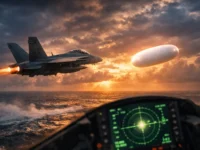
In 2004, U.S. Navy pilots flying from the aircraft carrier USS Nimitz encountered a strange object off the coast of California that appeared to move with extraordinary speed and agility. The object, later nicknamed the “Tic Tac,” reportedly accelerated rapidly, changed direction instantly, and showed no visible propulsion system.
Years later, several videos recorded by U.S. Navy fighter jets were released to the public, showing unidentified objects moving in ways that puzzled experienced aviators. The footage, which became widely known as the FLIR, Gimbal, and GoFast videos, sparked global debate and forced governments to address the issue more openly than ever before.
In 2020, the U.S. Department of Defense officially confirmed that the videos were authentic recordings of unidentified aerial phenomena, a statement that marked one of the most significant official acknowledgments in the history of the UFO discussion.
That confirmation changed the tone of the conversation almost overnight.
Instead of dismissing sightings outright, governments began framing them as a legitimate national security concern, particularly because unidentified objects operating in restricted military airspace could represent advanced technology from foreign adversaries.
Congressional Hearings and the Push for Transparency
The push for transparency gained momentum when lawmakers began demanding greater oversight of military and intelligence investigations related to UAPs.
In recent years, congressional hearings have featured testimony from military pilots and intelligence officials who described encounters with objects performing maneuvers beyond known aerospace capabilities. These hearings were significant because they brought the topic into the open political arena rather than leaving it confined to classified briefings.
Members of Congress from both major political parties have argued that the public deserves greater transparency about the phenomenon, especially if unidentified craft are operating in controlled airspace.
Several legislative measures have also been introduced requiring government agencies to review historical UFO records and determine which documents can be safely declassified.
These laws are part of a broader effort to create a more structured system for investigating and reporting UAP sightings, ensuring that pilots and military personnel can report encounters without fear of ridicule or career consequences.
And it is within this legislative framework that the 2026 deadline has begun to take shape.
Why July 2026 Is Becoming a Key Moment
According to analysts following the disclosure process, July 2026 represents an important milestone in the timeline created by recent transparency laws and intelligence review procedures.
Several agencies have been tasked with reviewing decades of classified material related to UFO sightings, radar data, and military encounters, and those reviews are expected to produce reports and declassified documents over the coming years.
While the exact scope of the material that will be released remains unclear, researchers believe the upcoming disclosures could include previously hidden case files, radar recordings, pilot testimony, and technical assessments of unidentified craft behavior.
The concern among some officials is that once the first significant wave of documents is released, the demand for further transparency will grow rapidly.
Journalists, scientists, and independent investigators will begin examining the newly available information, asking new questions and searching for connections between previously isolated incidents.
At that point, keeping the remaining information secret could become increasingly difficult.
This is why some observers believe the process may reach a “point of no return” once disclosure begins in earnest.
What Governments Might Reveal—and What They Might Not
Despite the excitement surrounding potential disclosures, experts caution that expectations should remain realistic.
Government files may contain detailed reports of unexplained aerial encounters, but that does not necessarily mean they will provide definitive answers about the origin of those objects.
In many cases, UAP investigations simply conclude that the available data is insufficient to determine what was observed.
However, even incomplete information could still be extremely valuable to scientists and researchers.
Radar logs, sensor data, and pilot testimonies could help researchers better understand how these objects behave and whether they represent unknown natural phenomena, advanced experimental technology, or something entirely different.
At the same time, national security considerations will likely limit how much information governments are willing to release, particularly if the data involves sensitive military systems.
As a result, the disclosure process may unfold gradually rather than through a single dramatic revelation.
The Global Impact of UAP Transparency
The growing discussion about UAP transparency is not limited to one country.
Governments around the world have begun taking the phenomenon more seriously, with several nations establishing official programs to study unexplained aerial encounters.
France, for example, has maintained a long-running government office dedicated to investigating UFO sightings, while other countries have released archives of historical cases collected by their air forces.
As more governments begin sharing information, the possibility of international cooperation on UAP research is becoming increasingly realistic.
Scientists have also begun exploring the phenomenon with greater seriousness, recognizing that unexplained aerial observations could potentially reveal new atmospheric processes or previously unknown technological capabilities.
Regardless of the ultimate explanation, the global scientific community now sees value in examining these events with open curiosity rather than dismissing them outright.
A Necessary Disclaimer
It is important to emphasize that no publicly available evidence currently proves that UFOs are extraterrestrial spacecraft.
Most governments and scientific institutions continue to treat UAP sightings as unexplained observations rather than evidence of alien technology.
Many sightings eventually turn out to have ordinary explanations involving weather phenomena, sensor errors, experimental aircraft, or misidentified objects.
However, a small percentage of cases remain unresolved even after detailed investigation, which is why the topic continues to attract serious attention.
The goal of transparency efforts is not to confirm a specific theory but to provide the public with accurate information about what governments have actually recorded.
What Happens After the Deadline?
If the predicted wave of disclosures does occur around 2026, it could reshape how the world approaches the study of unidentified aerial phenomena.
Scientists may gain access to data that was previously unavailable, allowing them to analyze unusual flight patterns or sensor readings in greater detail.
Governments may also develop clearer protocols for reporting and investigating sightings, ensuring that valuable information is not lost or ignored.
Perhaps most importantly, the public conversation around UFOs could finally shift from speculation toward evidence-based discussion.
For decades the topic has been shaped by secrecy, rumor, and conspiracy theories.
Transparency has the potential to replace those uncertainties with documented facts.
And once that process begins, it may be impossible to reverse.
That is why many researchers believe the coming months could represent one of the most significant turning points in the long and mysterious history of unidentified aerial phenomena.
FAQs
Why is July 2026 being discussed as a major deadline for UFO secrets?
Several transparency initiatives and document review programs related to UAP investigations are expected to reach important milestones around 2026, potentially leading to the release of previously classified records.
What does the term UAP mean?
UAP stands for Unidentified Anomalous Phenomena, a modern term used by governments and researchers to describe objects or events observed in the sky that cannot immediately be identified.
Have governments confirmed the existence of alien spacecraft?
No. Governments have confirmed that unidentified aerial objects have been observed, but there is currently no verified evidence proving extraterrestrial origin.
Why were UFO records kept secret for so long?
Many records were classified because they involved sensitive military technology, radar systems, or national security concerns during the Cold War.
Could the 2026 disclosures reveal new scientific discoveries?
It is possible that newly released data could help scientists better understand unexplained aerial phenomena, but the exact content of the documents remains unknown.
References and Source Material
U.S. Department of Defense UAP statements
https://www.defense.gov
NASA Independent Study on Unidentified Aerial Phenomena
https://science.nasa.gov/uap
U.S. Congressional hearings on UAP investigations
https://www.congress.gov
National Archives UFO records and Project Blue Book files
https://www.archives.gov/research/military/air-force/ufos
Office of the Director of National Intelligence UAP reports
https://www.dni.gov/index.php/what-we-do/unidentified-aerial-phenomena

0 Comments