



















By Ronald Kapper
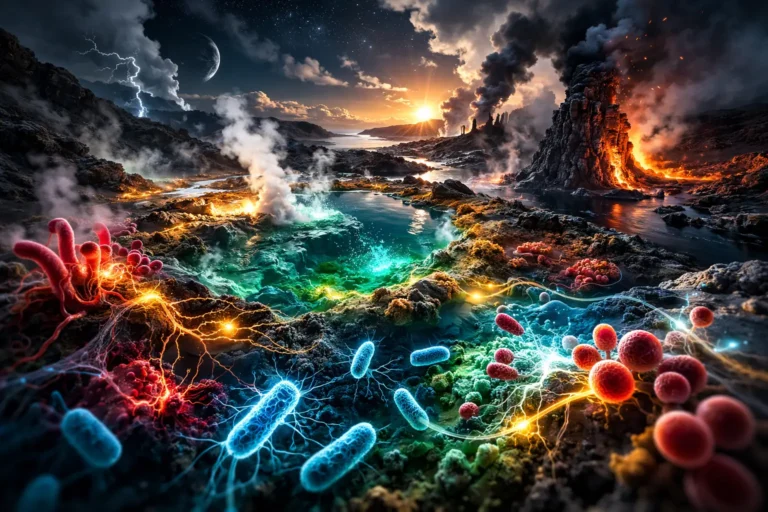
Imagine a world where breathing is optional — where life draws power not from air, but from rocks, gases and electricity itself. That is not science fiction. It is Earth.
For decades we were taught: oxygen equals complex life. But the planet has kept a stubborn, secret life beneath and beyond the blue sky — creatures that survive, reproduce and even build ecosystems with no oxygen at all. These organisms, called extremophiles when they live in fierce settings, force us to rethink biology, the origin of life, and where life might exist beyond Earth.
This piece is a fast, lively tour through the most jaw-dropping discoveries: microbes that make methane in total darkness, bacteria that “breathe” electricity, communities living kilometres underground, and clever microbes that run entire chemical cycles without a single breath of air. I’ll show the evidence, explain why it matters, and end with practical FAQs and clear source links.
The bold headline: life that doesn’t need oxygen — real and everywhere
Oxygen is powerful — it gives many organisms an efficient way to release energy. But many microbes never learned to use it. Some ancient lineages never needed it in the first place and thrived by other chemistry. Others evolved to exploit chemical energy deep in rocks and sediments.
NASA astrobiology and multiple scientific reviews document how methanogens and other anaerobes survive by using hydrogen, carbon dioxide, sulfate and other compounds instead of oxygen. These microbes are not rare curiosities; they are major players in Earth’s global chemistry and are abundant in places once thought sterile.
How do they make a living? Chemistry replaces air
If oxygen isn’t present, microbes still need a way to move electrons — that’s the heart of metabolism. Here are the main playbooks:
- Methanogens (archaea): They combine hydrogen (H₂) and carbon dioxide (CO₂) to make methane (CH₄). This is ancient chemistry — some of the simplest, oldest metabolisms on Earth. Methanogens thrive in swamps, hot springs, deep sediments and inside animal guts.
- Sulfate-reducers: These bacteria breathe sulfate (SO₄²⁻) instead of oxygen. They live in cold marine sediments and around hydrothermal vents, powering local food webs by breaking down organic matter and releasing sulfide.
- Anammox bacteria (anaerobic ammonium oxidation): These microbes convert ammonium and nitrite directly into nitrogen gas. They run part of the global nitrogen cycle without oxygen, reshaping nutrient flows in oceans and sediments.
- Electric-breathing microbes: Some bacteria move electrons out of their cells into minerals or conductive surfaces — effectively “breathing” rock or electricity when oxygen is absent. This unusual strategy expands what we think of as respiration.
- Rock-eaters in the deep subsurface: In miles-deep groundwater and ancient rock, microbes survive on hydrogen produced by water-rock reactions and on minerals like pyrite — living off rock chemistry alone. Recent work shows entire communities thriving in ancient, oxygen-free groundwaters.
Real places, real proof — the scenes of the science
These metabolisms are not just lab curiosities. They shape real ecosystems.
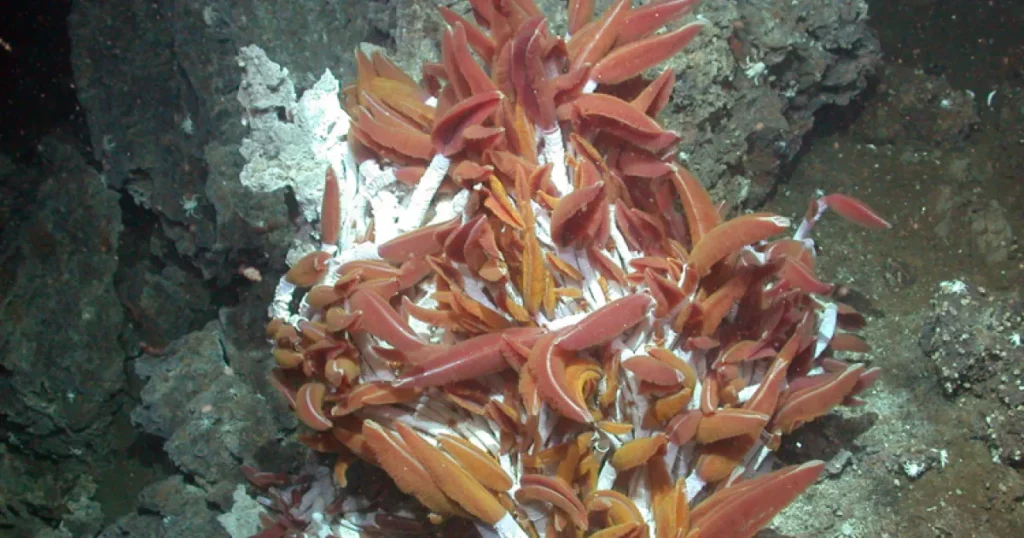
Deep-sea hydrothermal vents. Around high-temperature vents, sunlight never reaches. Chemosynthetic microbes use hydrogen sulfide and other chemicals to power food webs. Tube worms, clams and shrimp all depend on those microbes. Work over decades has documented thriving vent ecosystems that rely entirely on non-oxygen chemistry.
Ancient deep groundwaters and deep mines. Researchers have pulled water and rock samples from deep mines and ancient aquifers where microbes live in water isolated for thousands to millions of years. Some of these microbes breathe sulfur or live on hydrogen, showing life can persist far from oxygenated surface conditions.
Hot springs and salty, alkaline pools. Unique microbes found in Mars-like alkaline, salty pools grow easily with no oxygen, offering analogs for what life might look like on other planets. NASA-supported studies highlighted species that thrive in such conditions.
Electric-breathing discoveries. Labs have documented bacteria that move electrons to solid surfaces rather than to oxygen. That shows respiration can be far more flexible than we assumed and broadens the list of possible energy sources for life, even on other worlds.
Why this rewrites biology — the big implications
- Life is chemically flexible. Biology is not fixed to one kind of energy. Evolution found many ways to power life. That widens the types of environments we must consider habitable.
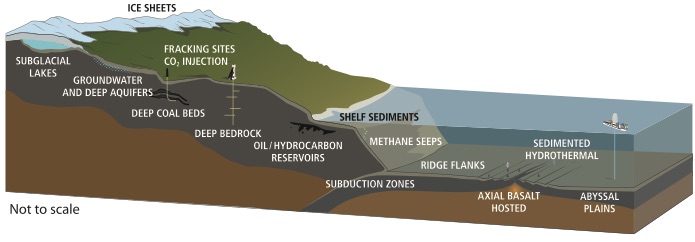
- The subsurface is a huge biomass reservoir. Microbial life below the surface may match or exceed surface life in cell numbers. If most life is hidden underground and runs on rock chemistry, our view of Earth’s living mass shifts dramatically.
- New biosignatures for the search for life. If life can thrive without oxygen, remote planets with no oxygen still might host life. Methane, unusual chemical gradients, or electricity-driven chemistry could be signs of life on Mars, icy moons, or exoplanets. NASA astrobiology draws this link clearly.
- Biotechnology and energy ideas. Electricity-breathing microbes and methanogens offer templates for new technologies: bioenergy, waste processing, and living systems that run on chemicals, not sunlight. Early research points to practical uses already under study.
A few headline studies worth knowing
- A major review on extremophiles lays out how diverse life is across pH, salt, heat and oxygen gradients. It documents the metabolic tricks microbes use to survive extremes.
- Studies of deep subsurface aquifers and ancient groundwaters show productive microbial communities maintained by hydrogen and internal oxygen production (from chemical reactions and microbial dismutation). These findings reveal surprising sources of energy and even pockets of oxygen created underground.
- Research on hydrothermal vents and anaerobic methane oxidation (AOM) demonstrates whole ecosystems driven by sulfur and methane chemistry — ecosystems independent from sunlight and atmospheric oxygen.
What this means for life beyond Earth
If microbes on Earth can run on hydrogen, sulfate, or electricity, then worlds without oxygen — for example Mars, icy moons like Europa and Enceladus, or rocky exoplanets — could host life. The search for life must look for chemical fingerprints, not only oxygen or chlorophyll. NASA and many research teams now prioritize these non-oxygen biosignatures in mission planning.
Disclaimer
Science is ongoing. Lab and field studies show robust evidence that many microbes live and thrive without oxygen on Earth. But finding life beyond Earth remains unproven. The existence of non-oxygen metabolisms on Earth expands the set of candidate environments where life might exist, yet it does not guarantee life elsewhere. The studies cited below provide direct evidence for Earth-based microbes and the chemical processes they use; extrapolations to other worlds are scientific hypotheses grounded in those studies, not proven facts.
How scientists find these microbes — a quick look at methods
- Drilling and sampling: Deep mines and boreholes provide physical samples of rock and ancient water. Scientists use sterile tools and careful contamination controls to ensure the microbes found are native to those depths.
- Metagenomics: Instead of culturing organisms, researchers sequence environmental DNA and reconstruct genomes. Large-scale environmental sequencing has revealed thousands of new microbial lineages and their metabolic genes.
- Isotope and chemical measurements: Ratios of carbon, sulfur and other elements reveal biological processing. For example, methane with particular carbon signatures points to biological production.
- Lab cultures: When possible, microbes are grown in controlled conditions to confirm metabolism. This remains challenging — many anaerobes grow slowly or require complex partners — but cultured strains provide direct evidence of metabolism.
FAQs
Q: Can complex animals live without oxygen?
A: Complex animals usually rely on oxygen because it yields far more usable energy per food molecule. Some animals tolerate low oxygen or survive short periods without it, but sustained complex multicellular life (animals, plants) typically needs oxygen. Microbes, however, are fine without it.
Q: Are these microbes dangerous?
A: Most extremophiles live far from human contact (deep sea, deep rock, toxic pools). They do not pose a direct threat. Some anaerobes are pathogens in humans, but those are not the same species that live in deep subsurface or vent environments.
Q: How old is anaerobic life on Earth?
A: Very old. Early Earth had little oxygen. The earliest life likely used chemical energy rather than oxygen, so anaerobic metabolisms probably predate oxygen-based respiration by billions of years.
Q: Could these organisms survive on Mars?
A: Some metabolisms — especially methanogenesis and rock-based chemistries — match conditions that might exist beneath Mars’ surface. That makes subsurface Mars a prime target in the search for life. NASA astrobiology highlights such possibilities.
Q: What new discoveries are scientists chasing?
A: Researchers seek direct cultures of new lineages, clearer maps of subsurface biomass, proof of energy sources in ancient waters, and biosignatures that could be detected on other worlds. New sequencing and drilling projects keep expanding the frontier.
Short primer for non-scientists: what to remember
- Not all life needs oxygen.
- Many microbes live off rock and gas chemistry in total darkness.
- These microbes reshape our ideas about habitability on Earth and beyond.
- The evidence comes from careful fieldwork, lab experiments and advanced DNA studies — not guesswork.
Final thought — a planet full of hidden life
Earth keeps surprising us. The places we once thought dead are alive with slow, patient organisms that built entire ecosystems from hydrogen, sulfur, methane and even rocks. That hidden web of life rewrites a chapter of biology: life is not one recipe but many. For those hunting life in the cosmos, that is thrilling news — the ingredients of living systems are wider than we imagined.
Sources and references
Below are the source pages used for this article. No links were embedded in the main text; these URLs are provided here for verification and deeper reading.
- NASA Astrobiology — Microbes Could Survive Thin Air of Mars
https://astrobiology.nasa.gov/news/microbes-could-survive-thin-air-of-mars/ - Merino, N. et al., Living at the Extremes: Extremophiles and the Limits of Life in Planetary Context (2019, PMC)
https://www.ncbi.nlm.nih.gov/pmc/articles/PMC6476344/ - Zeng, X. et al., Microorganisms from deep-sea hydrothermal vents (2021, PMC)
https://www.ncbi.nlm.nih.gov/pmc/articles/PMC10077256/ - Ruff, S. E. et al., Hydrogen and dark oxygen drive microbial productivity in ancient groundwaters (Nature Communications, 2023)
https://www.nature.com/articles/s41467-023-38523-4 - Martínez-Espinosa, R. M. et al., Microorganisms and Their Metabolic Capabilities in the Nitrogen Cycle (2020, PMC)
https://www.ncbi.nlm.nih.gov/pmc/articles/PMC7349289/ - Times of India / news on electricity-breathing bacteria (reporting Rice University discovery) — for the electricity respiration study reference (journal sources cited within):
https://timesofindia.indiatimes.com/science/scientists-discover-bacteria-that-breathe-electricity-instead-of-oxygen/articleshow/121419822.cms - Wikipedia & summaries (background on deep biosphere and deep subsurface discoveries) — for a quick overview and links to original studies:
https://en.wikipedia.org/wiki/Deep_biosphere - ScienceDaily — NASA Scientist Discovers New Species Of Organism In Mars-like Environment (2003 press summary)
https://www.sciencedaily.com/releases/2003/07/030731081613.htm

0 Comments